
Car Strut Inspection & Replacement in Daytona Beach, FL
Struts are structural suspension components that do more than control bouncing. On many vehicles, the strut also helps locate the wheel, supports the coil spring, connects to the steering knuckle, and provides a mounting point for the upper suspension assembly.
When a strut becomes worn, leaks hydraulic fluid, develops internal damping problems, has a damaged piston rod, or is paired with a failed mount or bearing, the vehicle may bounce excessively, clunk over bumps, feel unstable, pull or wander, develop irregular tire wear, or make noise while steering.
Jimmy’s Mobile Care provides car strut inspection and replacement in Daytona Beach, FL. We inspect the strut assembly and surrounding suspension components before recommending replacement so a bad upper mount, broken spring, loose steering component, worn tire, or separate shock-absorber problem is not mistaken for a failed strut.
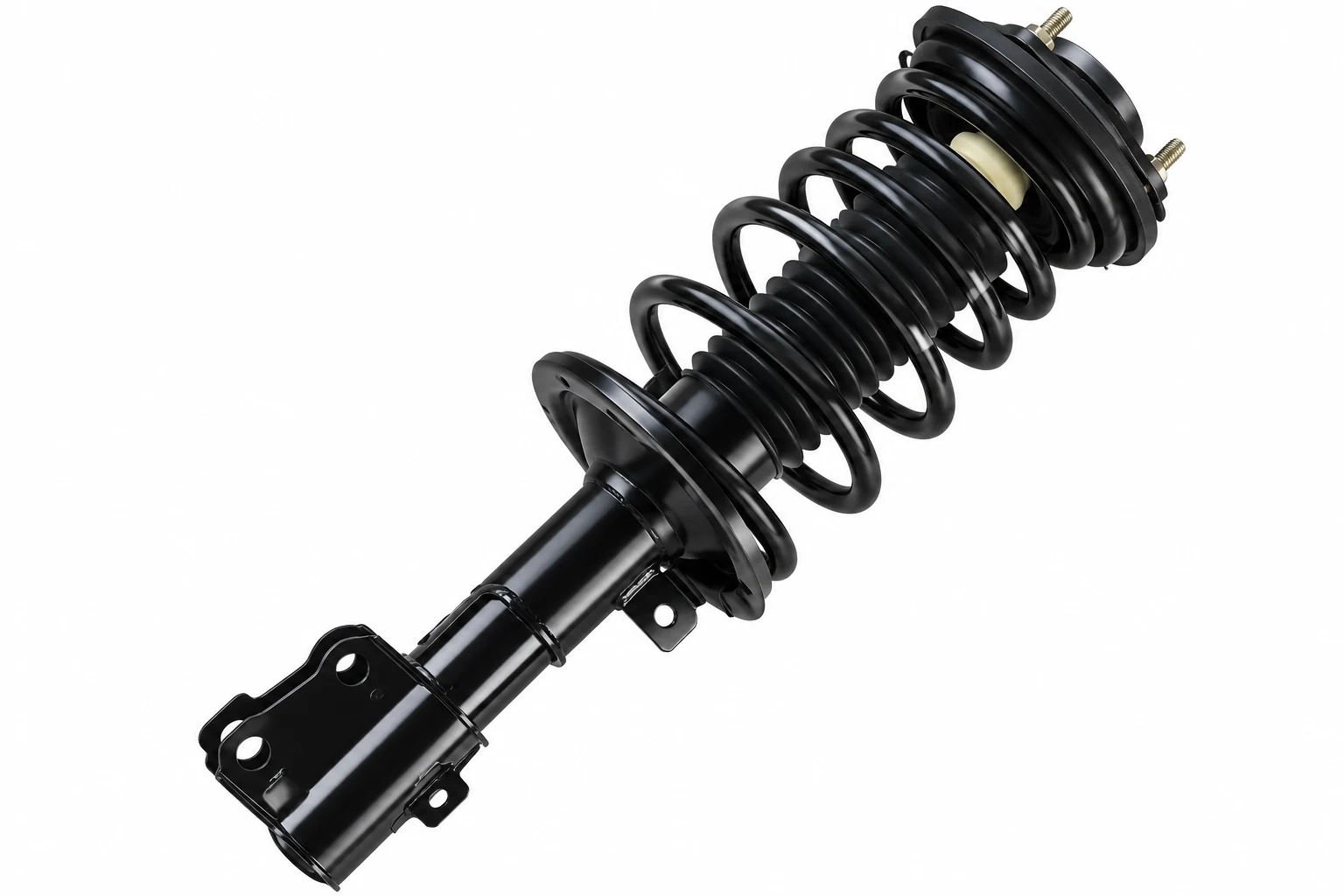
Mobile Strut Inspection in Daytona Beach
Strut inspection should evaluate both the damping function and the structural parts of the assembly.
Depending on the vehicle and symptoms, inspection can include checking:
- Strut body
- Piston rod
- Hydraulic fluid leakage
- Upper strut mount
- Strut bearing
- Coil spring
- Upper and lower spring seats
- Spring isolators
- Dust boot
- Bump stop
- Steering-knuckle attachment
- Strut mounting bolts
- Upper mounting studs and nuts
- Brake-hose and ABS-wire brackets
- Corrosion
- Physical damage
- Suspension travel
- Excessive bouncing
- Steering movement
- Tire wear
- Ride height
- Related suspension and steering components
The goal is to determine exactly which part of the strut assembly is causing the problem.
Struts and Shock Absorbers Are Different Components
Jimmy’s Mobile Care has a separate page for shock absorber inspection and replacement because a strut is not simply another name for a shock.
Strut
A strut is a structural suspension component that typically combines:
- Hydraulic damping
- Suspension support
- Spring mounting
- Steering-knuckle attachment
Depending on the suspension design, it may also influence:
- Camber
- Steering geometry
- Wheel alignment
Shock Absorber
A standalone shock absorber primarily controls suspension movement.
It usually mounts separately from the spring and generally does not serve as a major structural wheel-location component.
That distinction affects both diagnosis and replacement procedures.
What Does a Car Strut Do?
A strut performs several jobs at the same time.
It helps:
- Control suspension compression
- Control suspension rebound
- Support the coil spring assembly
- Maintain wheel position
- Provide structural connection to the steering knuckle
- Stabilize the vehicle over bumps and dips
On many front suspensions, the strut also turns when the steering wheel is moved.
Because the strut performs multiple functions, failure can produce both ride-quality and steering-related symptoms.
MacPherson Strut Suspension
The MacPherson strut is one of the most common front suspension designs.
A typical MacPherson strut assembly includes:
- Strut cartridge or damper
- Coil spring
- Upper mount
- Strut bearing
- Spring seats
- Bump stop
- Dust boot
The lower section of the strut usually bolts directly to the steering knuckle.
The upper portion attaches to the vehicle body.
This compact design eliminates the need for an upper control arm on many vehicles.
Front Struts
Front struts are common on:
- Passenger cars
- Crossovers
- Compact SUVs
A front strut frequently performs both suspension and steering functions.
Possible front-strut symptoms include:
- Clunking over bumps
- Excessive bouncing
- Steering noise
- Poor handling
- Uneven front tire wear
- Fluid leakage
- Wandering or instability
The surrounding suspension should be inspected before the strut is condemned.
Rear Struts
Some vehicles use struts at the rear as well as the front.
A rear strut may combine:
- Damping
- Spring support
- Structural wheel location
Rear strut replacement differs from a separate rear shock because the coil spring may be part of the strut assembly.
The vehicle’s actual suspension design should be identified before ordering parts.
How a Strut Controls Suspension Movement
Inside the strut is a hydraulic damper.
As the suspension compresses and rebounds, a piston moves through hydraulic fluid.
Internal valving controls fluid movement and resists suspension motion.
This helps prevent the vehicle from continuing to bounce after:
- Road bumps
- Dips
- Braking
- Cornering
- Acceleration
A worn strut may still support the suspension physically while no longer providing proper damping.
Gas-Charged Struts
Many modern struts use both:
- Hydraulic oil
- Pressurized gas
The gas charge helps reduce oil aeration and maintain consistent damping.
A gas-charged strut is still primarily hydraulic.
The gas itself does not normally support vehicle weight like an air spring.
Signs of Bad Struts
Possible symptoms include:
- Excessive bouncing
- Clunking over bumps
- Fluid leaking from strut
- Poor handling
- Vehicle wandering
- Excessive body movement
- Front-end dive during braking
- Irregular tire wear
- Steering noise
- Popping while turning
- Damaged strut mount
- Broken coil spring
- Vehicle sitting unevenly
- Harsh bottoming
These symptoms can also result from other suspension components.
Inspection should determine whether the strut itself or another part of the strut assembly has failed.
Leaking Strut
Struts contain hydraulic fluid.
A worn piston-rod seal can allow fluid to leak from the upper portion of the strut body.
Possible evidence includes:
- Oil running down strut housing
- Dirt sticking to oily surface
- Wetness extending down the body
Significant leakage usually indicates internal seal deterioration.
However, minor surface film should be distinguished from an active leak.
Strut Sweating vs. Actual Leakage
A small amount of light residue around a strut seal may not always indicate immediate failure.
A more serious leak usually shows:
- Wet fluid streaks
- Large oily area
- Fluid collecting below seal
The complete condition and damping performance should be considered before replacement.
Can a Strut Be Bad Without Leaking?
Yes.
A strut can lose damping ability internally without showing visible fluid leakage.
Internal wear can affect:
- Valves
- Piston
- Seals
- Gas pressure
Possible symptoms include:
- Excessive bouncing
- Poor road control
- Repeated body movement
A dry exterior does not guarantee that the strut is functioning properly.
Excessive Bouncing
One of the primary signs of reduced strut damping is excessive suspension oscillation.
After a bump or dip, the vehicle should settle in a controlled manner.
A worn strut may allow repeated movement.
However, suspension tuning varies considerably between vehicles, so bouncing should be evaluated together with other evidence.
Bounce Test for Struts
A traditional bounce test involves pressing down firmly on a corner of the vehicle and watching how quickly it settles.
If it continues oscillating, damping may be weak.
The test has limitations because modern suspension systems can be difficult to compress manually.
A strut can also fail only under:
- Higher speeds
- Greater loads
- Rapid suspension movement
A bounce test should therefore be treated as one clue rather than definitive proof.
Clunking Strut
A clunk from the strut area may come from:
- Upper strut mount
- Loose mounting nuts
- Strut bearing
- Broken spring
- Loose lower mounting bolt
- Internal strut damage
Other suspension parts can also make similar noises, including:
- Sway-bar links
- Ball joints
- Control-arm bushings
- Tie rods
The noise source should be identified before parts are replaced.
Strut Mount
The upper strut mount attaches the strut assembly to the vehicle body.
It commonly contains:
- Rubber isolator
- Metal mounting plate
- Studs or bolts
On steering struts, it may also incorporate a bearing.
A worn mount can cause:
- Clunking
- Vibration
- Excessive strut movement
- Steering noise
A bad mount does not necessarily mean the damper inside the strut is bad.
Strut Bearing
Front struts that rotate with the steering commonly use an upper bearing.
The bearing allows the strut and spring assembly to turn smoothly.
A worn or seized strut bearing can cause:
- Popping while steering
- Binding
- Spring wind-up
- Steering that does not return smoothly
- Noise at low speed
The bearing should be distinguished from the hydraulic strut itself.
Popping Noise While Turning
A popping or snapping noise while steering can occur when:
- Strut bearing binds
- Coil spring winds up
- Upper mount moves abnormally
As the steering wheel turns, the spring may twist because the bearing is not rotating smoothly.
When the stored tension releases, it can create a pop.
Other steering components should also be inspected.
Strut Mount Clunk
A worn upper mount can allow the top of the strut to move excessively.
This may create a clunk over:
- Small bumps
- Driveway entrances
- Uneven pavement
Replacing only the hydraulic strut will not correct a failed upper mount unless the mount is replaced at the same time.
Coil Spring on a Strut
Many strut assemblies use a coil spring surrounding the strut.
The spring supports vehicle weight.
The strut controls the movement of the spring.
These are separate functions.
A worn strut does not automatically mean the spring needs replacement.
A broken or sagging spring does not automatically mean the hydraulic strut has failed.
Broken Coil Spring
A coil spring can break because of:
- Corrosion
- Fatigue
- Impact
- Age
A broken spring can cause:
- Vehicle sitting low
- Clunking
- Noise while turning
- Sharp spring end contacting tire or suspension
- Uneven ride height
A broken spring requires separate attention from the strut’s damping condition.
Sagging Coil Spring
If one side of the vehicle sits lower than the other, a sagging or broken spring is more likely than a worn hydraulic strut.
Normal ride height is primarily supported by the springs.
The spring should be evaluated before assuming the strut is responsible for the low corner.
Strut Spring Seat
The spring seat supports the coil spring at the top or bottom of the strut assembly.
Possible problems include:
- Corrosion
- Cracks
- Broken seat
- Spring not seated correctly
A damaged spring seat can allow abnormal spring position or noise.
Spring Isolator
Rubber spring isolators help prevent metal-to-metal contact between the coil spring and its seat.
A worn or missing isolator can create:
- Squeaking
- Creaking
- Vibration
The isolator may be serviced separately depending on the assembly design.
Strut Dust Boot
The dust boot protects the piston rod from:
- Sand
- Dirt
- Road debris
A torn boot does not necessarily mean the strut has failed.
However, exposure can damage the piston-rod surface and shorten seal life.
Strut Bump Stop
The bump stop cushions the suspension near the end of compression travel.
A deteriorated bump stop can result in:
- Harsh bottoming
- Increased impact on strut
- Noise
Many complete strut assemblies include a new bump stop.
Bare-strut replacement may require the original bump stop to be inspected and reused or replaced separately.
Bent Strut
A strut can become bent from:
- Collision
- Pothole impact
- Curb strike
- Severe suspension damage
Possible symptoms include:
- Alignment cannot be corrected
- Camber significantly out of range
- Binding
- Uneven tire wear
- Vehicle pulling
If the strut is bent, surrounding components should be checked for damage as well.
Damaged Strut Body
Physical strut damage can include:
- Dents
- Bent mounting ears
- Cracks
- Severe corrosion
Damage near the lower knuckle attachment can affect suspension geometry and structural integrity.
A damaged structural strut should not be treated as only a ride-quality issue.
Strut Corrosion
Surface rust is common on suspension components.
More serious corrosion can affect:
- Spring seat
- Mounting ears
- Strut body
- Fasteners
If structural metal has become badly weakened, replacement may be needed even if the damper itself still functions.
Strut and Steering Knuckle
On a MacPherson-style suspension, the strut commonly bolts directly to the steering knuckle.
This connection helps locate the wheel.
Removing the strut may therefore alter:
- Camber
- Wheel alignment
This is a major difference between strut and standalone shock replacement.
Strut-to-Knuckle Bolts
The lower strut-to-knuckle connection commonly uses large bolts.
These bolts may be:
- Standard locating bolts
- Camber-adjustment bolts
- Factory eccentric bolts
Their position can influence alignment.
Installation should preserve or properly restore the suspension geometry.
Camber After Strut Replacement
Because the strut helps determine wheel position, front camber can change when the strut is removed and reinstalled.
Even small changes at the knuckle connection can affect:
- Tire contact
- Steering
- Tire wear
This is why alignment is commonly recommended after strut replacement.
Does Strut Replacement Require an Alignment?
In many vehicles, yes, an alignment check is recommended after strut replacement, particularly when the strut bolts directly to the steering knuckle.
Alignment is more likely to be affected when:
- Camber changes at mounting bolts
- Knuckle position is disturbed
- Vehicle uses eccentric adjustment bolts
- Suspension components were already worn
The exact need depends on suspension design.
This differs from many standalone shock replacements, which often do not disturb alignment geometry.
Struts and Tire Wear
Worn struts can contribute to irregular tire contact with the road.
Possible patterns include:
- Cupping
- Scalloping
- Uneven tread wear
However, tire wear can also come from:
- Alignment
- Wheel imbalance
- Tire defects
- Loose steering components
- Worn control-arm bushings
Tire condition should support, not replace, a proper strut inspection.
Cupped Tires and Bad Struts
Poor damping can allow the tire to repeatedly load and unload against the road.
This can contribute to cupped or scalloped tread patterns.
Once the tire has developed substantial uneven wear, replacing the strut will not restore the damaged tread.
Both suspension condition and tire condition should be addressed.
Struts and Steering Stability
Because front struts form part of the steering and suspension structure, worn or damaged components can affect how the vehicle feels.
Possible complaints include:
- Wandering
- Delayed response
- Instability over bumps
- Steering noise
Other possible causes include:
- Tie rods
- Ball joints
- Control arms
- Tires
- Alignment
The complete front suspension should be inspected.
Struts and Braking
Struts do not create braking force.
However, weak damping can allow greater suspension movement during braking.
Possible effects include:
- Excessive nose movement
- Reduced body control
- Less stable feel on rough pavement
Actual brake-system problems should still be diagnosed separately.
Nose Dive During Braking
Front-end dive is influenced by:
- Suspension geometry
- Spring rate
- Strut damping
- Vehicle weight transfer
Worn struts can contribute to excessive movement, but spring condition and suspension design should also be considered.
Strut Bottoming Out
A strut may reach the end of its compression travel if:
- Bump stop is damaged
- Coil spring is weak or broken
- Vehicle is overloaded
- Incorrect strut is installed
Repeated bottoming can damage the strut.
The cause should be addressed instead of replacing the damper alone.
Strut Topping Out
Topping out occurs when the strut reaches full extension harshly.
Possible causes include:
- Incorrect strut
- Broken spring
- Modified suspension
- Internal strut problem
A replacement must match the vehicle’s correct suspension travel.
Front Strut Noise Over Bumps
A front-end noise can come from several components located close together.
Possible sources include:
- Strut
- Strut mount
- Strut bearing
- Coil spring
- Sway-bar link
- Ball joint
- Control-arm bushing
Inspection is needed to isolate the source instead of replacing the most obvious component.
Strut Noise When Turning
Noise while steering may be more related to:
- Upper strut bearing
- Spring binding
- Upper mount
- Steering linkage
than the hydraulic damper itself.
If the vehicle is stationary and the noise occurs while the steering wheel is turned, the upper bearing deserves particular attention.
Strut Squeaking
Squeaking can come from:
- Spring isolator
- Upper mount
- Rubber components
- Nearby suspension bushings
A squeak alone does not prove hydraulic strut failure.
The location and movement causing the sound should be identified.
Strut Rattle
A rattle can result from:
- Loose upper mount
- Loose lower bolt
- Damaged bump stop
- Internal strut wear
- Nearby suspension component
Mounting hardware should be checked before the strut itself is condemned.
Strut Replacement Options
There are two common approaches to conventional strut replacement:
- Bare strut
- Complete loaded strut assembly
The correct choice depends on the condition of the rest of the components.
Bare Strut Replacement
A bare strut typically includes the hydraulic strut body but not the complete spring assembly.
The original:
- Coil spring
- Upper mount
- Bearing
- Spring seats
- Dust boot
- Bump stop
may need to be transferred or replaced separately.
This requires safely compressing the coil spring.
Complete Strut Assembly
A complete or loaded strut assembly typically includes:
- Strut
- Coil spring
- Upper mount
- Bearing where applicable
- Spring seats
- Bump stop
- Dust boot
The assembly is usually preassembled.
This can reduce the amount of spring disassembly required during installation.
Quick Strut
“Quick strut” is a term commonly used for a complete preassembled strut assembly.
Depending on brand, it can include the major components needed for installation.
The term does not mean every complete assembly is identical in:
- Spring rate
- Ride quality
- Damping
- Component quality
The replacement should still be matched correctly to the vehicle.
Loaded Strut Assembly
A loaded strut is another common term for a complete strut assembly.
The primary benefit is that the spring and upper components are assembled before installation.
This can be particularly useful when the original:
- Spring is old
- Mount is worn
- Bearing is noisy
- Bump stop is deteriorated
However, complete assembly replacement is not automatically required in every case.
Bare Strut vs. Complete Strut Assembly
A bare strut may be reasonable when:
- Original spring is healthy
- Upper mount is good
- Bearing is good
- Other assembly components remain serviceable
A complete assembly may make more sense when several components are worn.
The decision should be based on component condition rather than a universal rule.
Strut Cartridge
Some older or specialized strut designs use a replaceable insert or cartridge inside a reusable strut housing.
In those systems, the outer housing remains on the vehicle and only the internal damper cartridge is replaced.
This is different from most modern sealed strut assemblies.
Coil Spring Compression
Bare-strut service may require compressing the coil spring before the upper mount can be removed.
A compressed suspension spring stores substantial energy.
Improper handling can cause serious injury.
A proper spring compressor and safe procedure are required.
Why Strut Spring Compression Is Dangerous
The coil spring supports a large portion of the vehicle’s weight.
When compressed, it stores significant mechanical energy.
If a compressor slips or fails, the spring can release violently.
For this reason, improvised methods should not be used.
Complete Strut Assembly and Spring Compression
Installing a complete preassembled strut often avoids disassembling the original spring-and-mount assembly.
That can reduce:
- Labor
- Spring-compression work
- Need to reuse worn components
The original assembly still must be removed safely from the vehicle.
Strut Mount Replacement
If the upper mount is worn, it may be replaced during strut service.
Common reasons include:
- Cracked rubber
- Excessive movement
- Clunking
- Corrosion
- Failed bearing
Installing a new strut with a badly worn mount can leave suspension noise unresolved.
Strut Bearing Replacement
On vehicles using a separate upper strut bearing, the bearing can often be replaced during assembly service.
Replacement may be appropriate if it has:
- Rough movement
- Binding
- Noise
- Excessive play
A noisy bearing does not necessarily require replacing the hydraulic damper if the strut itself remains good.
Coil Spring Replacement During Strut Service
A coil spring should not automatically be replaced just because the strut is being replaced.
Spring replacement may be appropriate if it is:
- Broken
- Sagging
- Severely corroded
- Physically damaged
If the spring is healthy and a bare strut is being installed, it may be reused.
Should Struts Be Replaced in Pairs?
In most conventional applications, replacing struts in pairs on the same axle is generally preferred.
For example:
- Both front struts
- Both rear struts
This helps maintain similar:
- Damping
- Ride response
- Handling
A single replacement may still be reasonable when a relatively new strut was damaged by impact and the opposite side remains comparable.
Can You Replace Only One Strut?
Physically, one strut can often be replaced.
However, if one strut has worn out from normal age and mileage, the opposite side has usually experienced similar use.
Unequal damping can affect:
- Handling
- Ride consistency
That is why axle-pair replacement is commonly recommended.
Do All Four Struts Need Replacement?
Not automatically.
Some vehicles may use:
- Front struts and rear shocks
- Struts at all four corners
If only one axle has worn struts, the other axle should be inspected rather than automatically replaced.
The shock-absorber page applies to positions using separate shocks.
Strut Life Expectancy
There is no single mileage at which every strut should be replaced.
Service life depends on:
- Road conditions
- Vehicle weight
- Driving style
- Pothole exposure
- Suspension design
- Component quality
The need for replacement should be based on:
- Leakage
- Damping performance
- Damage
- Mount condition
- Vehicle behavior
rather than mileage alone.
Do Struts Need Routine Replacement?
Struts are wear components, but there is no universal replacement interval that applies to every vehicle.
They should be inspected when:
- Suspension symptoms develop
- Tires show unusual wear
- Other suspension work is being performed
- Leakage is noticed
Condition matters more than an arbitrary mileage number.
Struts on Lowered Vehicles
Lowered suspension systems may require struts designed for:
- Reduced ride height
- Shorter travel
- Different spring rates
Installing a factory-length strut on a significantly lowered suspension can result in:
- Poor operating position
- Reduced travel
- Bottoming
Modified vehicles should be evaluated as a complete suspension system.
Struts on Lifted Vehicles
Some lifted crossovers or suspension systems require struts or spacers specifically designed for the increased height.
Incorrect geometry can affect:
- Suspension travel
- CV-joint angles
- Alignment
- Top-out behavior
Parts should be matched to the actual suspension setup.
Performance Struts
Performance struts may provide:
- Firmer damping
- Faster response
- Adjustable settings
- Compatibility with lowering springs
A stiffer strut does not automatically improve a stock vehicle.
Damping should be matched to:
- Spring rate
- Tire
- Vehicle weight
- Intended use
Adjustable Struts
Some performance struts allow adjustment of:
- Rebound
- Compression
- Both
Adjustment can alter:
- Ride firmness
- Handling response
The correct settings depend on the suspension package and intended driving conditions.
Electronic Struts
Some vehicles use electronically controlled struts.
These may adjust damping based on:
- Drive mode
- Steering input
- Vehicle speed
- Body movement
- Road conditions
An electronic strut may have:
- Wiring connector
- Solenoid valve
- Electronic control
A suspension warning light does not automatically mean the strut itself has failed.
The electrical system should be diagnosed.
Adaptive Struts
Adaptive suspension systems vary damping automatically.
Possible faults include:
- Internal strut failure
- Damaged wiring
- Connector problem
- Sensor fault
- Control-module fault
A replacement must be compatible with the vehicle’s suspension-control system.
Magnetic Ride Struts
Some vehicles use magnetorheological dampers.
These contain fluid whose damping properties are electronically changed.
They are highly application-specific.
Substituting a conventional strut can create:
- Warning lights
- Incorrect suspension behavior
unless a properly engineered conversion is used.
Air Struts
Air struts combine:
- Air spring
- Damper
They can support vehicle weight and control ride height.
This is different from a conventional coil-spring MacPherson strut.
Air-strut problems can involve:
- Air leak
- Compressor system
- Height sensor
- Electronic control
- Damper
These systems require different diagnosis.
Self-Leveling Struts
Some vehicles use strut systems that help maintain ride height under varying loads.
Replacement should match the original system unless a proper conversion has been designed.
Installing a standard conventional strut in place of a self-leveling unit can change ride and load behavior.
OEM vs. Aftermarket Struts
Replacement struts are available from:
- Original-equipment manufacturers
- Established aftermarket companies
- Economy aftermarket suppliers
Important factors include:
- Correct fit
- Damping calibration
- Spring rate on complete assemblies
- Mount quality
- Bearing quality
- Electronic compatibility
- Durability
A part that bolts into place may still produce different ride characteristics from the original equipment.
Complete Strut Assemblies and Ride Height
Complete strut assemblies include replacement springs.
Because of that, installation can sometimes change ride height compared with worn original springs.
If the replacement spring specification differs from the original suspension package, the vehicle may sit higher or lower than expected.
Correct application is important.
Strut Replacement
Once inspection confirms that the strut assembly requires replacement, the general procedure can include:
- Confirm the vehicle uses a strut at the affected wheel.
- Inspect both struts on the axle.
- Inspect tires and related suspension components.
- Check the coil spring, mount, bearing, and other assembly components.
- Raise and safely support the vehicle.
- Remove the wheel.
- Support the steering knuckle or suspension as necessary.
- Disconnect brake-hose or ABS-wire brackets attached to the strut.
- Disconnect any sway-bar link attached directly to the strut where applicable.
- Mark or document alignment-related mounting positions when appropriate.
- Remove the lower strut-to-knuckle bolts.
- Support the strut assembly.
- Remove the upper mounting nuts.
- Remove the complete strut assembly from the vehicle.
- Inspect the mounting points and steering knuckle.
- For bare-strut service, safely compress the coil spring.
- Remove the upper mount and bearing.
- Transfer or replace the spring and related components as appropriate.
- Install the replacement strut or complete assembly.
- Install the upper mounting hardware.
- Reconnect the strut to the steering knuckle.
- Reconnect brackets and suspension attachments.
- Torque fasteners according to vehicle specifications.
- Reinstall the wheel.
- Lower the vehicle.
- Verify suspension height and steering operation.
- Road-test the vehicle when appropriate.
- Have wheel alignment checked or performed when required by the suspension design.
Exact procedures vary significantly by vehicle.
Front Strut Replacement
Front strut replacement can be more involved because the assembly may be connected to:
- Steering knuckle
- Sway-bar link
- Brake hose bracket
- ABS wiring
- Coil spring
- Upper bearing
Care is needed to avoid:
- Stretching brake hoses
- Pulling CV axles excessively
- Damaging ABS wiring
The steering knuckle should be supported appropriately while the strut is disconnected.
Rear Strut Replacement
Rear strut replacement depends heavily on suspension design.
Upper mounts may be accessible through:
- Trunk
- Cargo area
- Rear seat
- Interior trim
Some rear struts may require significant interior disassembly even though the suspension itself is straightforward.
Strut Replacement and Sway-Bar Link
Some vehicles attach the sway-bar link directly to the strut.
The link may need to be disconnected during strut removal.
If the link:
- Has excessive play
- Has torn boots
- Is seized
- Is damaged during removal
replacement may be appropriate.
It does not automatically need replacement with every strut.
Strut Replacement and Brake Hose
Brake hoses and ABS wires may be secured to brackets on the strut.
These components should be:
- Disconnected from brackets carefully
- Not stretched
- Returned to correct routing
A strut replacement should not place tension on the brake hose or wheel-speed sensor wiring.
Strut Replacement and Tie Rods
Tie rods are separate steering components.
They are generally not replaced simply because the struts are being changed.
However, if steering looseness or damaged tie rods are found during inspection, they should be addressed separately.
Strut Replacement and Ball Joints
Ball joints are also separate suspension components.
A worn ball joint can cause:
- Clunking
- Steering looseness
- Tire wear
A bad ball joint should not be mistaken for a worn strut.
Strut Replacement and Control Arms
Control-arm bushings and ball joints help position the wheel.
Damage or looseness in these components can cause handling symptoms similar to worn struts.
Replacing struts will not correct excessive control-arm movement.
Strut Replacement and Alignment
After the installation is complete, alignment should be considered because strut removal can change:
- Camber
- Toe indirectly
especially where the strut mounts to the steering knuckle.
A proper alignment helps protect:
- Tires
- Steering stability
- Handling
New Struts but Vehicle Still Clunks
If new struts are installed and a clunk remains, possible causes include:
- Upper mount
- Strut bearing
- Sway-bar link
- Ball joint
- Control-arm bushing
- Loose hardware
If a bare strut was installed with an old mount, the mount may still be the source of the noise.
New Struts but Vehicle Still Bounces
If new struts do not improve suspension control, possible causes include:
- Incorrect replacement components
- Springs
- Tires
- Other worn dampers
- Installation problem
The entire suspension should be evaluated.
New Struts and Vehicle Sits Higher
A vehicle may sit higher after complete strut assemblies are installed because:
- Old springs were sagging
- New springs have full original height
- Replacement spring rate differs
- Incorrect assembly was installed
The application should be verified if the ride-height difference is excessive.
New Struts and Steering Feels Different
Steering may feel different after replacement because:
- Alignment changed
- New strut bearing has different resistance
- Old parts were severely worn
A substantial pull, crooked steering wheel, or abnormal handling should prompt an alignment and installation check.
Strut Replacement Cost
Strut replacement cost depends on factors such as:
- Vehicle year, make, and model
- Front vs. rear
- Bare strut vs. complete assembly
- One side vs. axle pair
- Spring condition
- Upper mount and bearing condition
- Electronic or adaptive suspension
- Corroded or seized hardware
- Interior access
- Alignment requirements
A conventional complete front strut on one vehicle can be very different from an electronically controlled strut requiring extensive disassembly.
Call Jimmy’s Mobile Care at (386) 308-2509 with your vehicle information and suspension symptoms so we can determine the appropriate inspection and replacement service.
Why Inspect Struts Before Replacing Them?
Many suspension problems can produce similar symptoms.
Is the Strut Actually Leaking?
Significant hydraulic leakage supports strut failure, while minor surface residue may not.
Has the Strut Lost Damping Ability?
A dry strut can still be internally worn.
Is the Upper Mount Bad?
Mount failure can create clunking even when the damper is still functional.
Is the Strut Bearing Binding?
A failed bearing can cause popping and steering problems.
Is the Coil Spring Broken?
A damaged spring can change ride height or create noise.
Is Another Suspension Part Loose?
Sway-bar links, control arms, ball joints, and tie rods can imitate strut problems.
Is the Vehicle Actually Using a Standalone Shock?
Some rear suspensions use shocks rather than struts and should be serviced differently.
Inspecting the complete suspension helps ensure the correct component is repaired.
Mobile Strut Inspection in Daytona Beach
Jimmy’s Mobile Care provides mobile car strut inspection in Daytona Beach for vehicles experiencing:
- Excessive bouncing
- Clunking
- Strut leakage
- Steering noise
- Popping while turning
- Irregular tire wear
- Poor handling
- Damaged strut mounts
- Broken springs
- Suspected worn front or rear struts
We inspect the strut body, mount, bearing, spring, mounting points, and related suspension components to determine which parts actually require replacement.
Mobile Strut Replacement in Daytona Beach
When inspection confirms worn or damaged struts and the repair is appropriate for mobile service, Jimmy’s Mobile Care can replace many conventional front and rear strut assemblies at your Daytona Beach location.
Depending on the application, this may involve:
- Complete preassembled strut replacement
- Bare strut replacement
- Upper mount replacement
- Strut bearing replacement
- Spring transfer
After installation, we verify:
- Secure upper mounting
- Correct knuckle attachment
- Proper spring position
- Safe brake-hose and ABS-wire routing
- Normal steering movement
- Correct suspension operation
Because strut replacement can alter wheel alignment, an alignment may be needed afterward.
Electronic, adaptive, air-strut, heavily modified, severely corroded, or unusually complex suspension systems may require additional equipment or procedures.
Schedule Car Strut Inspection & Replacement in Daytona Beach
A noisy or bouncing suspension does not automatically mean the strut itself has failed.
The problem may involve an upper mount, strut bearing, coil spring, sway-bar link, ball joint, control-arm bushing, steering component, or another suspension part.
And if the vehicle uses a standalone shock absorber rather than a structural strut at that wheel position, the shock should be evaluated separately.
Jimmy’s Mobile Care inspects the strut assembly before replacement so the correct suspension component is repaired.
Call Jimmy’s Mobile Care at (386) 308-2509 to schedule car strut inspection and replacement in Daytona Beach, FL. Call today and we'll come to your location.