
Car Radiator Diagnostics & Replacement in Daytona Beach, FL
Your car’s radiator removes heat from the engine coolant before the coolant circulates back through the engine. When the radiator leaks, becomes restricted, develops damaged tanks or tubes, or can no longer transfer heat effectively, the engine can run hotter than normal or overheat.
Jimmy’s Mobile Care provides car radiator diagnostics and replacement in Daytona Beach, FL. We diagnose the cooling system before replacing the radiator so a leaking hose, thermostat problem, cooling-fan failure, water-pump problem, pressure loss, or another cooling-system fault is not mistaken for a bad radiator.
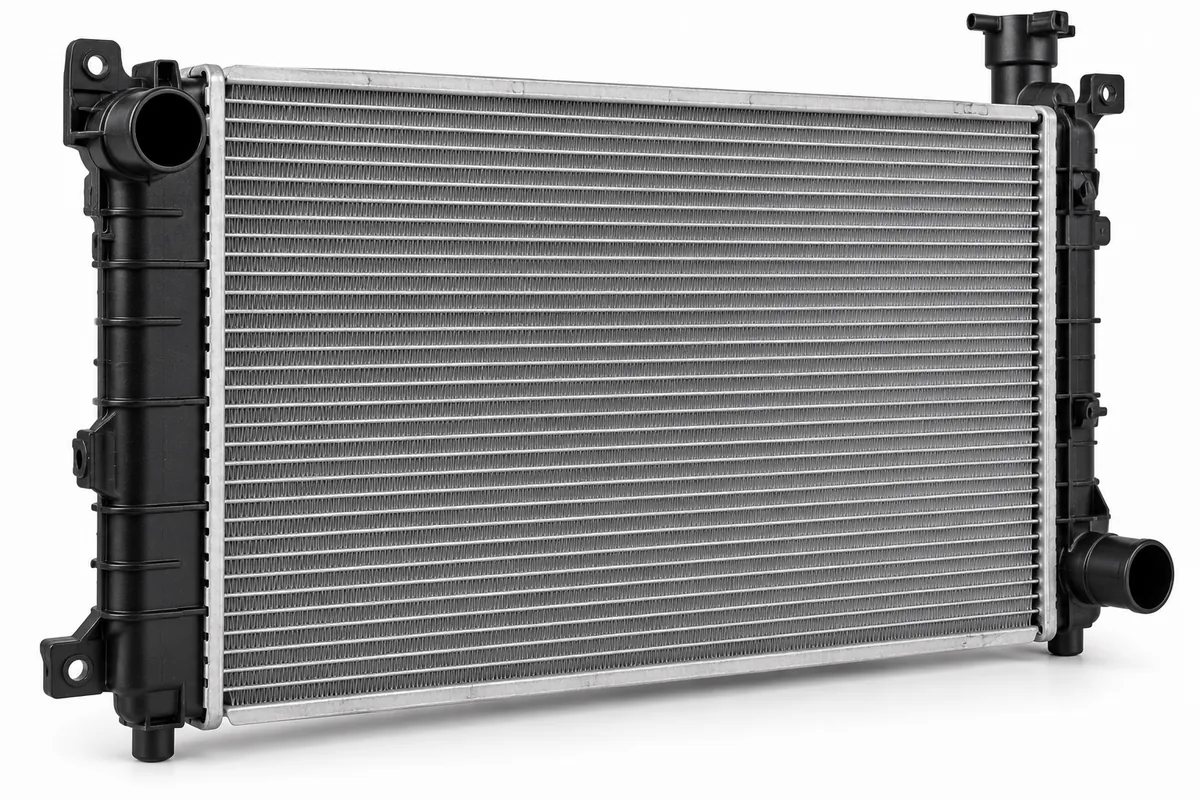
Mobile Radiator Diagnostics in Daytona Beach
A radiator should not be replaced simply because the engine is overheating.
Depending on the symptoms, radiator diagnostics can include checking:
- Coolant level
- Radiator condition
- Radiator tanks and seams
- Cooling fins
- Radiator inlet and outlet areas
- Coolant leaks
- Cooling-system pressure
- Upper and lower radiator hose temperatures
- Coolant circulation
- Radiator temperature distribution
- Cooling-fan operation
- Thermostat operation
- Water-pump circulation
- Coolant condition
- Pressure-cap operation
- Signs of internal restriction
- Signs of external airflow restriction
The objective is to determine whether the radiator itself has failed and, just as importantly, why the cooling system is not controlling engine temperature properly.
What Does a Car Radiator Do?
The radiator is the primary heat exchanger for the engine cooling system.
As the engine operates, combustion produces substantial heat. Coolant absorbs some of that heat as it travels through passages in the engine.
Once the thermostat allows circulation through the radiator:
- Hot coolant enters the radiator.
- Coolant travels through small radiator tubes.
- Heat transfers from the coolant into the radiator.
- Air passes across the radiator fins.
- Heat is released into the surrounding air.
- Cooler coolant returns to the engine.
This cycle repeats continuously while the engine is operating at normal temperature.
Why Radiator Performance Matters in Daytona Beach
The cooling system has to remove heat even when outside temperatures are high.
Daytona Beach driving can involve:
- Hot summer temperatures
- High humidity
- Stop-and-go traffic
- Long periods of idling
- AC operation
- Highway driving
A marginal cooling system may appear normal under lighter conditions but begin overheating when engine load and ambient temperature increase.
That makes proper diagnosis especially important when an overheating complaint occurs only under certain driving conditions.
Signs of a Bad Radiator
Possible radiator problems can produce symptoms such as:
- Engine overheating
- Temperature gauge running higher than normal
- Coolant leaking from the front of the vehicle
- Repeatedly low coolant
- Visible crack in a radiator tank
- Coolant around radiator seams
- Coolant odor
- Steam from the engine compartment
- Uneven radiator temperature
- Coolant discoloration
- Overheating during extended driving
- Overheating under load
These symptoms do not automatically prove that the radiator needs replacement.
Several other cooling-system failures can produce nearly identical symptoms.
Radiator Coolant Leak
A radiator can leak from several different areas.
Common leak locations include:
- Plastic radiator tanks
- Tank-to-core seams
- Aluminum tubes
- Hose connections
- Drain fitting
- Filler neck where equipped
- Transmission-cooler fittings where equipped
Small leaks may leave only dried coolant residue.
Larger leaks may produce:
- Visible dripping
- Steam
- Rapid coolant loss
- Overheating
The exact source should be located before replacing the radiator.
Cracked Radiator
Modern radiators commonly combine an aluminum core with plastic end tanks.
Over time, plastic can become brittle from:
- Heat cycling
- Age
- Cooling-system pressure
- Vibration
A crack may develop in the tank itself or near a hose connection.
A cracked radiator tank generally requires radiator replacement rather than an external patch being treated as a dependable permanent repair.
Radiator Tank Leaks
The tanks distribute coolant across the radiator core.
A leak can develop:
- Through the plastic tank
- Around a hose neck
- At a sensor fitting
- Along the tank-to-core seal
When coolant appears along the edge of a radiator, it is important to determine whether it is actually escaping from the tank seam or running down from a hose or connection above it.
Radiator Seam Leak
The radiator core and tanks must remain sealed while the cooling system is pressurized.
A deteriorated seal between the tank and core can allow coolant to seep or spray from the radiator seam.
Signs can include:
- Wetness along the radiator edge
- Dried coolant deposits
- Coolant odor
- Slow coolant loss
Once the tank-to-core joint has failed, complete radiator replacement is often the practical repair.
Radiator Core Leak
The core contains the small passages that carry coolant through the airflow.
Core damage can result from:
- Corrosion
- Road debris
- Physical impact
- Age
- Improper previous repairs
A core leak can range from a slow seep to rapid coolant loss.
Because the core is directly exposed to airflow, small amounts of leaking coolant may evaporate before creating a large puddle.
Radiator Pressure Testing
Cooling-system pressure testing can help locate leaks that are difficult to see when the engine is cold.
The system is pressurized within the appropriate test range and inspected for coolant escaping from areas such as:
- Radiator
- Radiator hoses
- Water pump
- Thermostat housing
- Coolant fittings
- Reservoir connections
This is useful because a radiator can remain dry while cold but begin leaking as cooling-system pressure rises.
Why a Radiator May Leak Only When Hot
Cooling-system components change as temperature and pressure increase.
A small radiator crack or weakened seam may remain sealed when the vehicle is cold and open when:
- Coolant temperature rises
- System pressure increases
- Plastic expands
- Aluminum expands
This can create an intermittent leak that is difficult to identify after the engine has cooled.
Evidence around the leak area and pressure testing can help locate it.
Radiator Restriction
A radiator does not need to leak in order to fail.
Internal passages can become restricted, reducing coolant flow through portions of the core.
Possible causes include:
- Corrosion
- Deposits
- Contaminated coolant
- Improper coolant mixtures
- Previous stop-leak products
- Internal debris
A restricted radiator may still appear normal from the outside.
Diagnosing a Clogged Radiator
Radiator restriction can sometimes produce an abnormal temperature pattern across the core.
If coolant is flowing properly, heat should be transferred across the radiator in a reasonably consistent manner appropriate to the system design.
A restricted section can create abnormal hot and cold areas.
Diagnosis may include evaluating:
- Inlet temperature
- Outlet temperature
- Temperature distribution
- Coolant flow
- Thermostat behavior
- Cooling-fan operation
A temperature difference alone should be interpreted in context because the radiator is supposed to cool the coolant as it passes through.
Radiator Airflow Restriction
A radiator can also lose cooling efficiency because airflow through the core is restricted.
Possible causes include:
- Leaves
- Dirt
- Road debris
- Bent fins
- Damaged condenser fins in front of the radiator
- Improperly installed covers
- Collision damage
The radiator depends on airflow just as much as it depends on coolant circulation.
A clean internal cooling system can still overheat if sufficient air cannot pass through the heat exchangers.
Bent Radiator Fins
The thin fins between radiator tubes increase the surface area available for heat transfer.
If a large portion becomes:
- Crushed
- Bent
- Packed with debris
- Corroded
airflow and heat transfer can suffer.
A few bent fins do not automatically justify replacing an otherwise good radiator.
The amount and location of damage matter.
Radiator and Cooling Fan Problems
The radiator and cooling fan perform different jobs.
The radiator transfers heat.
The fan moves air through the radiator when vehicle speed does not provide enough natural airflow.
A vehicle that overheats:
- At idle
- In slow traffic
- While stopped with the AC operating
but cools normally at highway speed may have an airflow or cooling-fan problem rather than a failed radiator.
Cooling-fan operation should therefore be checked before blaming the radiator.
Radiator vs. Thermostat Problem
A thermostat controls when coolant is allowed to circulate through much of the radiator circuit.
A thermostat stuck closed can cause rapid overheating even when the radiator is perfectly good.
Possible thermostat-related clues can include:
- Engine temperature rising quickly
- Abnormal hose-temperature pattern
- Lack of expected radiator circulation
The thermostat and radiator serve different functions and should be diagnosed separately.
Radiator vs. Water Pump Problem
The water pump circulates coolant through the engine and cooling system.
If coolant is not circulating correctly because of a pump problem, replacing the radiator will not correct the overheating.
Possible water-pump problems include:
- Impeller damage
- Bearing failure
- Coolant leakage
- Drive problem
Cooling-system diagnosis considers circulation before condemning the radiator.
Radiator vs. Radiator Hose Leak
Coolant near the radiator does not necessarily mean the radiator itself is leaking.
The source may be:
- Upper radiator hose
- Lower radiator hose
- Hose clamp
- Quick-connect fitting
- Hose neck connection
Coolant can run down the radiator and make the radiator appear to be the source.
The leak should be traced to its highest and most direct point whenever possible.
Upper Radiator Hose
The upper radiator hose commonly carries hot coolant between the engine and radiator.
Problems can include:
- Cracking
- Swelling
- Softening
- Leakage
- Damaged connections
The hose and radiator neck should both be inspected when leakage occurs at this connection.
Lower Radiator Hose
The lower hose commonly carries coolant from the radiator back toward the engine or water pump.
A lower hose problem can also cause:
- Coolant loss
- Overheating
- Poor circulation
A damaged hose should not be mistaken for a radiator failure simply because the leak is located near the bottom of the radiator.
Radiator Cap and Cooling-System Pressure
Some vehicles use a pressure cap directly on the radiator, while others place the pressure cap on a separate expansion tank.
The cap helps control cooling-system pressure.
A faulty cap can contribute to:
- Coolant loss
- Premature boiling
- Overflow
- Poor coolant recovery
A pressure-cap problem should be distinguished from a radiator leak before the radiator is replaced.
Radiator and Coolant Reservoir
The radiator and coolant reservoir are separate components.
Depending on system design, the reservoir may:
- Store expanding coolant
- Allow coolant recovery as the engine cools
- Serve as the pressurized expansion tank
A cracked reservoir can create coolant loss that may initially be blamed on the radiator.
The entire cooling circuit should be inspected.
Low Coolant and Radiator Problems
A leaking radiator can cause the coolant level to drop.
But low coolant can also result from leaks at:
- Hoses
- Water pump
- Thermostat housing
- Heater core
- Expansion tank
- Engine gaskets
- Other coolant fittings
Low coolant tells us that the system needs attention.
It does not identify the radiator as the source by itself.
Can Low Coolant Cause Overheating?
Yes.
Coolant must remain at the proper level to circulate heat away from the engine.
When coolant becomes sufficiently low, the system can develop:
- Poor circulation
- Air pockets
- Hot spots
- Unstable temperature readings
- Overheating
The cause of the coolant loss should be identified rather than repeatedly adding coolant.
Air Trapped in the Cooling System
Air can enter the cooling system after:
- Coolant loss
- Radiator replacement
- Hose replacement
- Thermostat replacement
- Water-pump service
- Other cooling-system repairs
Trapped air can interfere with circulation and heater operation.
Some vehicles require specific bleeding or vacuum-filling procedures.
Correctly filling and bleeding the cooling system is an important part of radiator replacement.
Radiator Coolant Condition
Coolant condition can provide useful information about the health of the cooling system.
We look for problems such as:
- Rust contamination
- Heavy deposits
- Oil contamination
- Incorrect mixture
- Mixed incompatible coolant
- Debris
Severe contamination may indicate that simply installing a new radiator is not enough.
The rest of the cooling system may need attention.
Rust Inside the Cooling System
Rust can form when the cooling system has:
- Incorrect coolant
- Excessive water content
- Poor maintenance
- Long-term contamination
Rust and scale can restrict small radiator passages and reduce heat transfer.
Installing a new radiator into a heavily contaminated cooling system without addressing the contamination can shorten the life of the replacement.
Radiator Stop-Leak Products
Cooling-system sealants are sometimes added in an attempt to stop radiator leaks.
While a product may reduce certain small leaks temporarily, sealants can also circulate through small cooling-system passages.
Depending on the product and system, this can contribute to restrictions in:
- Radiator
- Heater core
- Other narrow coolant passages
A physical radiator failure is better evaluated and repaired properly than repeatedly masked with sealant.
Radiator and Engine Overheating
A bad radiator can cause overheating, but overheating itself is not proof of radiator failure.
Other possible causes include:
- Low coolant
- Thermostat failure
- Cooling-fan failure
- Water-pump problem
- Collapsed hose
- Air trapped in the system
- Pressure-cap failure
- Combustion gases entering the cooling system
- Engine mechanical problems
Replacing the radiator without identifying the cause can leave the vehicle overheating.
Overheats at Idle but Not While Driving
This pattern often makes airflow particularly important.
At highway speed, natural vehicle movement forces air through the radiator.
At idle, the cooling fan must provide much of that airflow.
If the vehicle overheats while stopped but cools down while moving, the cooling fan and airflow system should be checked carefully.
The radiator may not be the failed component.
Overheats on the Highway
Overheating at sustained road speed can point toward a different set of concerns, such as:
- Low coolant
- Restricted radiator
- Coolant circulation problem
- Thermostat problem
- Collapsing hose
- Engine-related cooling-system pressure
The operating pattern helps narrow the diagnosis.
Radiator and AC Performance
The AC condenser is commonly mounted directly in front of the radiator.
Both heat exchangers depend on airflow.
With the AC operating, the condenser releases additional heat in front of the radiator.
A marginal cooling system may therefore run hotter when the AC is on.
Possible causes can include:
- Cooling-fan problem
- Blocked airflow
- Radiator inefficiency
- Existing cooling-system fault
This does not automatically mean the AC system itself is causing the overheating.
Radiator Damage From a Collision
The radiator sits near the front of the vehicle and can be damaged in a front-end collision.
Possible damage includes:
- Bent core
- Cracked tank
- Broken mounting point
- Damaged hose connection
- Punctured tube
- Fan interference
Even when the radiator is not visibly leaking immediately after an impact, physical distortion can create later problems.
Radiator Mounts
The radiator is supported by mounts or cushions that help isolate it from vehicle vibration.
Damaged or missing mounts can allow excessive movement.
That can place stress on:
- Plastic tanks
- Hose necks
- Fittings
- Fan shroud
- AC condenser
Mounting condition should be checked during replacement.
Transmission Cooler Inside the Radiator
Some automatic-transmission vehicles incorporate a transmission-fluid cooler inside one of the radiator tanks.
This allows transmission fluid to exchange heat through a separate internal passage.
If that internal cooler fails, serious cross-contamination can occur between:
- Engine coolant
- Transmission fluid
Not every radiator contains an integrated transmission cooler, so replacement configuration needs to match the vehicle.
Oil Cooler Connections at the Radiator
Some vehicles also use radiator-mounted or radiator-integrated cooling circuits for other fluids.
Replacement radiators may therefore have additional fittings that must match the original application.
Correct radiator selection should account for:
- Engine
- Transmission
- Cooling package
- Auxiliary cooler configuration
A radiator that physically fits is not necessarily the correct radiator.
Radiator Replacement
Once diagnosis confirms radiator failure, replacement can generally involve:
- Verify the radiator fault. We determine whether the radiator is leaking, restricted, physically damaged, or otherwise unable to perform correctly.
- Allow the cooling system to cool. A hot pressurized cooling system should not be opened.
- Drain coolant appropriately.
- Gain access to the radiator. Covers, intake ducts, fan assemblies, shields, or brackets may need to be removed.
- Disconnect radiator hoses. Upper, lower, and applicable auxiliary coolant hoses are removed.
- Disconnect applicable cooler lines. Transmission or other cooler fittings are handled where equipped.
- Disconnect sensors or electrical components where necessary.
- Remove the fan or fan shroud where required for access.
- Release radiator mounts and retainers.
- Remove the radiator carefully. Nearby condenser fins and refrigerant lines must be protected.
- Compare the replacement radiator. Hose connections, mounting points, cooler fittings, dimensions, and sensor locations are verified.
- Inspect hoses and mounting hardware. Damaged supporting components are identified before reassembly.
- Install the replacement radiator.
- Reconnect hoses and cooler connections.
- Restore the fan, shroud, brackets, covers, and electrical connections.
- Refill with the appropriate coolant.
- Bleed air from the cooling system using the procedure appropriate for the vehicle.
- Bring the engine to operating temperature.
- Verify thermostat and cooling-fan operation.
- Check the replacement radiator and connections for leaks.
- Verify stable engine temperature.
A radiator replacement is not complete until coolant circulation and temperature control have been verified.
Why the Cooling System Must Be Cold Before Radiator Service
A hot cooling system can remain pressurized well after the engine has been shut off.
Opening a radiator cap, reservoir cap, hose, or other connection while the system is hot can release:
- Hot coolant
- Steam
- Pressure
Radiator service should therefore begin only after the system has cooled sufficiently to be handled safely.
Choosing the Correct Replacement Radiator
Radiators that appear similar can differ in important ways.
Differences can include:
- Core dimensions
- Core thickness
- Hose locations
- Mounting points
- Transmission-cooler fittings
- Sensor ports
- Fan mounting
- Cooling capacity
The replacement needs to match the specific vehicle configuration.
Aluminum Radiators
Many modern vehicles use aluminum radiator cores because aluminum provides effective heat transfer while keeping weight relatively low.
These radiators commonly use:
- Aluminum tubes and fins
- Plastic end tanks
Other designs can use all-aluminum construction.
The material alone does not determine whether a radiator is better for a particular vehicle—the radiator must match the vehicle's cooling requirements and installation.
Plastic Radiator Tanks
Plastic radiator tanks are common on modern vehicles.
They reduce weight and manufacturing cost, but years of heat cycling can eventually make the plastic brittle.
Common failure areas include:
- Hose necks
- Tank seams
- Mounting areas
- Cracks near fittings
When the tank structure itself fails, complete radiator replacement is generally the appropriate repair.
Custom and Performance Radiators
Modified and performance vehicles may use upgraded or custom radiators.
Possible differences include:
- Larger core
- Additional rows or increased core thickness
- All-aluminum construction
- Different fan configuration
- Modified mounting
A larger radiator is not automatically an improvement if it creates airflow, fitment, fan-clearance, or coolant-routing problems.
Cooling-system design needs to work as a complete system.
Should Radiator Hoses Be Replaced With the Radiator?
Not automatically.
Radiator hoses should be inspected for:
- Cracking
- Swelling
- Soft spots
- Hardening
- Leakage
- Damaged connections
If the hoses remain in good condition, they do not necessarily require replacement simply because the radiator is being replaced.
If a hose is deteriorated, replacing it while the cooling system is already open may make sense.
Should the Thermostat Be Replaced With the Radiator?
Not automatically.
The thermostat should be evaluated based on:
- Symptoms
- Age and service history
- Temperature behavior
- Diagnostic findings
A radiator leak does not prove the thermostat is bad, and a thermostat failure does not necessarily mean the radiator needs replacement.
Each component should be evaluated on its own condition.
Can a Radiator Be Repaired?
Whether a radiator can reasonably be repaired depends on:
- Construction
- Leak location
- Extent of damage
- Tank material
- Core condition
Some older metal radiators may be repairable by a radiator specialist.
Many modern plastic-tank/aluminum-core radiators are more practically replaced when the tank, seam, or core has failed.
Temporary external patches should not be confused with a dependable cooling-system repair.
Radiator Replacement and Coolant
Radiator replacement requires restoring the proper coolant afterward.
The correct coolant depends on the vehicle.
Coolants can differ in:
- Chemistry
- Additive package
- Service requirements
Color alone should not be used as the only method of selecting coolant.
The coolant should meet the applicable vehicle specification.
Can Different Coolants Be Mixed?
Mixing incompatible coolant types can cause problems with:
- Corrosion protection
- Service life
- Deposits
- Cooling-system contamination
When the existing coolant type or condition is uncertain, that should be considered during service rather than automatically adding whatever coolant happens to have a similar color.
Radiator Replacement After Severe Overheating
If the vehicle has severely overheated, replacing a leaking radiator may not be the end of the diagnosis.
Extreme overheating can potentially damage:
- Cylinder-head gasket
- Cylinder head
- Engine components
- Other cooling-system parts
If the cooling system develops abnormal pressure, loses coolant after the radiator repair, or continues overheating, additional engine testing may be necessary.
Combustion Gases in the Cooling System
An internal engine problem can force combustion pressure into the cooling system.
Possible symptoms include:
- Repeated overheating
- Coolant pushed from reservoir
- Excessive cooling-system pressure
- Persistent air or gas in the cooling system
- Coolant loss without an obvious external leak
A new radiator will not correct an internal engine sealing problem.
Evidence of abnormal cooling-system pressure should therefore be investigated rather than automatically blamed on the radiator.
Why a New Radiator Can Still Overheat
Replacing the radiator does not guarantee that every overheating problem has been corrected.
A vehicle can still overheat because of:
- Bad thermostat
- Cooling-fan failure
- Water-pump problem
- Low coolant
- Trapped air
- Collapsed hose
- Incorrect coolant fill
- Engine problem
The complete cooling system must function together.
How Much Does Car Radiator Replacement Cost?
Radiator replacement cost depends on the vehicle and cooling-system configuration.
Factors can include:
- Vehicle year, make, and model
- Radiator design
- Radiator price
- Access
- Cooling-fan removal
- Transmission-cooler connections
- Coolant type and quantity
- Damaged hoses or fittings
- Cooling-system contamination
- Additional overheating problems
A straightforward radiator replacement can be very different from a vehicle requiring extensive disassembly or additional cooling-system repairs.
Call Jimmy’s Mobile Care at (386) 308-2509 with your vehicle information and cooling-system symptoms so we can discuss the appropriate diagnostic service.
Why Diagnose the Radiator Before Replacing It?
Overheating and coolant loss can originate from many different components.
Is the Radiator Actually Leaking?
Coolant can run onto the radiator from a hose or fitting above it.
Is the Radiator Restricted?
A radiator can fail internally without leaking.
Is Airflow the Real Problem?
A failed cooling fan can cause overheating while the radiator remains functional.
Is the Thermostat Opening?
A stuck thermostat can prevent proper radiator circulation.
Is the Water Pump Circulating Coolant?
Poor circulation can imitate a restricted radiator.
Is the Cooling System Holding Pressure?
A pressure-cap or external leak can reduce cooling-system performance.
Is There Air Trapped in the System?
Air pockets can cause unstable temperatures after coolant loss or previous repairs.
Is There an Internal Engine Problem?
Combustion pressure can create repeated overheating even with a new radiator.
Answering these questions helps ensure that the radiator is replaced because it has actually failed—not simply because the temperature gauge went high.
Mobile Car Radiator Diagnostics in Daytona Beach
Jimmy’s Mobile Care provides mobile car radiator diagnostics in Daytona Beach for vehicles experiencing:
- Overheating
- Coolant loss
- Visible radiator leaks
- Cracked radiator tanks
- High operating temperature
- Suspected radiator restriction
- Repeated cooling-system problems
We evaluate the radiator along with the cooling-system conditions needed to determine the actual source of the problem.
Mobile Car Radiator Replacement in Daytona Beach
When diagnostics confirm radiator failure and the repair is appropriate for mobile service, Jimmy’s Mobile Care can replace the radiator at your Daytona Beach location.
After installation, we refill and bleed the cooling system as appropriate and verify:
- Coolant circulation
- Leak-free connections
- Cooling-fan operation
- Stable engine temperature
The objective is not simply to install another radiator—it is to restore proper cooling-system operation.
Schedule Car Radiator Diagnostics & Replacement in Daytona Beach
A leaking or restricted radiator can cause serious overheating, but the radiator is only one part of the engine cooling system.
Jimmy’s Mobile Care diagnoses the cooling system before replacement so a hose, thermostat, water pump, cooling fan, pressure problem, or other fault is not mistaken for a failed radiator.
Call Jimmy’s Mobile Care at (386) 308-2509 to schedule car radiator diagnostics and replacement in Daytona Beach, FL. Call today and we'll come to your location.