
Car Oxygen Sensor Diagnostics & Replacement in Daytona Beach, FL
Oxygen sensors monitor oxygen content in the exhaust so the engine computer can evaluate combustion, adjust fuel delivery, and monitor catalytic-converter operation. When an oxygen sensor becomes slow, electrically open, contaminated, stuck at an abnormal reading, develops a heater-circuit fault, or stops responding correctly to changes in the exhaust stream, the vehicle may turn on the check-engine light, run rich or lean, use more fuel, fail emissions-related self-tests, or develop drivability problems.
Jimmy’s Mobile Care provides car oxygen sensor diagnostics and replacement in Daytona Beach, FL. We test the sensor and the engine conditions affecting it before replacement so an exhaust leak, vacuum leak, fuel-delivery problem, wiring fault, catalytic-converter problem, or another engine sensor is not mistaken for a failed oxygen sensor.
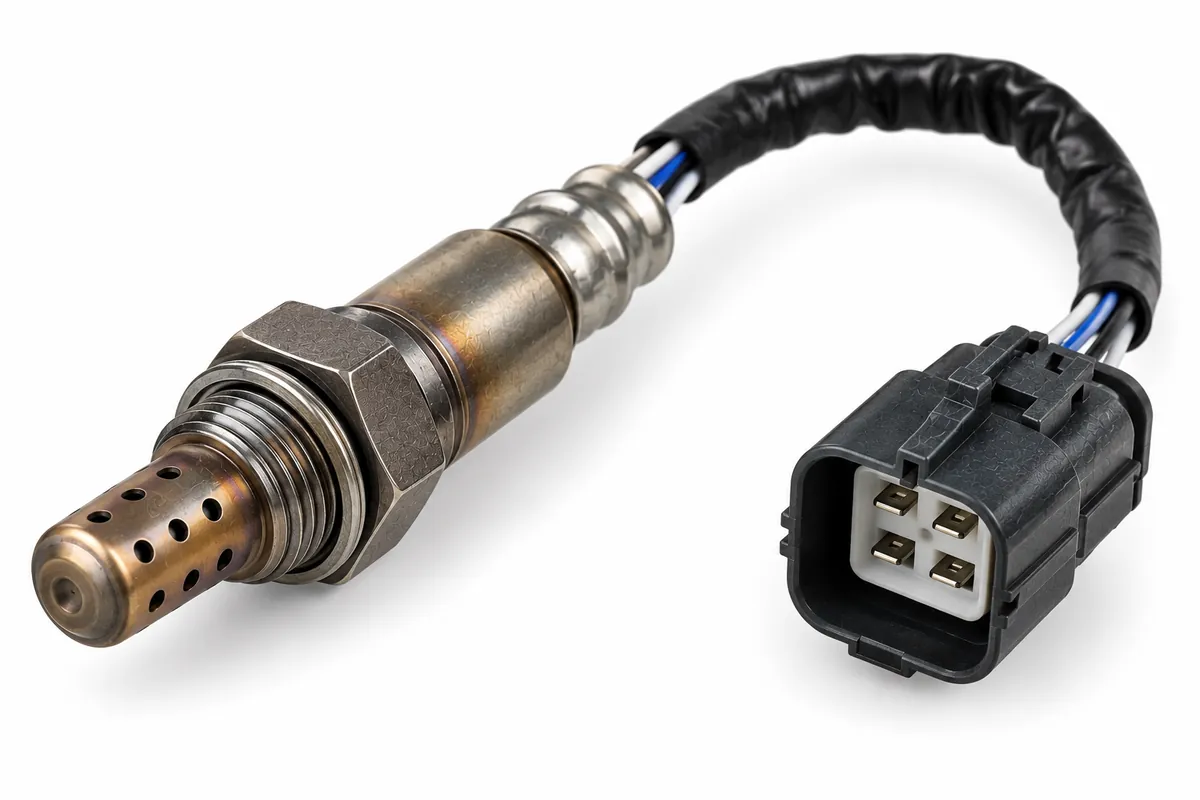
Mobile Oxygen Sensor Diagnostics in Daytona Beach
An oxygen-sensor trouble code does not automatically mean the oxygen sensor itself has failed.
Depending on the vehicle and symptoms, oxygen-sensor diagnosis can include checking:
- Diagnostic trouble codes
- Upstream oxygen-sensor data
- Downstream oxygen-sensor data
- Air-fuel ratio sensor data
- Sensor response
- Sensor switching behavior
- Heater-circuit operation
- Sensor power and ground
- Signal wiring
- Connector condition
- Short-term fuel trim
- Long-term fuel trim
- Exhaust leaks
- Vacuum and intake leaks
- Fuel pressure
- Injector operation
- Mass air flow sensor data
- MAP sensor data
- Coolant temperature data
- Catalytic-converter behavior
The goal is to determine whether the oxygen sensor is actually faulty or whether it is correctly reporting a problem elsewhere in the engine or exhaust system.
What Does an Oxygen Sensor Do?
An oxygen sensor measures oxygen remaining in the exhaust after combustion.
The engine-control module uses that information to help determine whether the engine is operating:
- Rich
- Lean
- Near the desired air-fuel mixture
Depending on its location and design, an oxygen sensor may primarily help with:
- Fuel-control adjustments
- Emissions monitoring
- Catalytic-converter efficiency monitoring
Modern vehicles may use several oxygen-related sensors.
Oxygen Sensor vs. O2 Sensor
“Oxygen sensor” and “O2 sensor” describe the same general type of exhaust sensor.
The term O2 refers to oxygen.
However, not every modern exhaust oxygen sensor operates in exactly the same way.
Common designs include:
- Narrowband oxygen sensors
- Wideband oxygen sensors
- Air-fuel ratio sensors
The correct diagnostic strategy depends on the sensor design.
Oxygen Sensor vs. Air-Fuel Ratio Sensor
An air-fuel ratio sensor is a more advanced form of exhaust oxygen sensing.
Traditional narrowband oxygen sensors primarily indicate whether the exhaust mixture is:
- Richer than stoichiometric
- Leaner than stoichiometric
A wideband or air-fuel ratio sensor can provide much more precise information over a broader mixture range.
These sensors may have:
- Different signal behavior
- Different wiring
- Different test procedures
A wideband sensor should not be diagnosed using narrowband voltage assumptions.
Upstream Oxygen Sensor
The upstream oxygen sensor is located before the catalytic converter.
It may also be described as:
- Sensor 1
- Pre-cat sensor
- Front oxygen sensor
Its primary job is generally to help the engine computer evaluate and adjust the air-fuel mixture.
Upstream sensor performance can have a significant influence on fuel control.
Downstream Oxygen Sensor
The downstream oxygen sensor is located after the catalytic converter.
It may also be described as:
- Sensor 2
- Post-cat sensor
- Rear oxygen sensor
Its primary role is commonly to monitor catalytic-converter performance.
On many vehicles, the downstream sensor has less direct influence on normal short-term fuel control than the upstream sensor.
Oxygen Sensor Before the Catalytic Converter
A sensor before the catalytic converter usually monitors exhaust directly from the engine before the catalyst processes it.
On a conventional narrowband system, its signal may switch repeatedly between lean and rich as the engine computer adjusts fueling.
On a wideband system, the data may appear differently.
The correct interpretation depends on sensor type.
Oxygen Sensor After the Catalytic Converter
A downstream sensor monitors exhaust after it passes through the catalytic converter.
A properly functioning catalyst tends to smooth out the oxygen fluctuations seen upstream.
If the downstream signal closely mirrors the upstream signal under the right test conditions, that can indicate reduced catalytic-converter oxygen-storage ability.
However, sensor faults and exhaust leaks must also be considered.
Bank 1 and Bank 2 Oxygen Sensors
Engines with more than one cylinder bank can use Bank 1 and Bank 2 designations.
Bank 1
The side of the engine containing cylinder number 1.
Bank 2
The opposite cylinder bank.
Bank position is not universally left or right.
It depends on engine design.
Correct bank identification is important before replacing an oxygen sensor.
Sensor 1 and Sensor 2
Oxygen-sensor location is commonly described by sensor number.
Sensor 1
Generally the sensor before the catalytic converter on that bank.
Sensor 2
Generally the sensor after the catalytic converter on that bank.
Some engines use more complex exhaust layouts, so the actual location should be confirmed from vehicle-specific information.
How Many Oxygen Sensors Does a Car Have?
The number of oxygen sensors varies by:
- Engine configuration
- Number of exhaust banks
- Number of catalytic converters
- Emissions system design
A vehicle may have:
- One sensor
- Two sensors
- Four sensors
- More than four sensors
The exact failed sensor should be identified before parts are ordered.
Narrowband Oxygen Sensor
A traditional narrowband zirconia oxygen sensor generally produces a voltage that changes sharply around the stoichiometric air-fuel ratio.
On many systems, the signal may move roughly between:
- Low voltage during lean exhaust
- Higher voltage during rich exhaust
The important diagnostic factors include:
- Response speed
- Switching behavior
- Ability to react to mixture changes
A sensor that is slow or stuck can affect fuel control even if it still produces some voltage.
Wideband Oxygen Sensor
A wideband oxygen sensor provides more precise mixture information over a broader operating range.
These sensors may use:
- Pump cell
- Reference cell
- Dedicated control electronics
They are common on newer vehicles.
Their scan-tool data may be displayed as:
- Lambda
- Air-fuel ratio
- Current
- Manufacturer-specific value
They should not be evaluated using simple narrowband switching rules.
Lambda Sensor
“Lambda sensor” is another name commonly used for an oxygen sensor.
Lambda represents the relationship between the actual air-fuel mixture and the chemically ideal mixture.
A lambda value near 1 generally corresponds to stoichiometric combustion for gasoline.
Wideband systems can report mixture accurately above or below that point.
Signs of a Bad Oxygen Sensor
Possible symptoms can include:
- Check-engine light
- Reduced fuel economy
- Rich fuel mixture
- Lean fuel mixture
- Rough idle
- Hesitation
- Failed emissions monitor
- Oxygen-sensor heater code
- Slow sensor response
- Sensor stuck rich or lean
However, these symptoms can also be caused by other engine problems.
The sensor should be tested before replacement.
Check-Engine Light and Oxygen Sensor
An oxygen-sensor-related trouble code may indicate:
- Sensor performance problem
- Heater circuit problem
- Wiring issue
- Sensor signal stuck high
- Sensor signal stuck low
- Slow response
But some codes indicate that the sensor is reporting an actual engine mixture problem.
The code should be interpreted in context.
Oxygen Sensor Code Does Not Always Mean Bad Sensor
For example, a sensor may correctly report a lean mixture caused by:
- Vacuum leak
- Intake leak
- Low fuel pressure
- Restricted injector
- Exhaust leak ahead of sensor
Replacing the sensor would not correct those conditions.
Diagnosis should determine whether the signal is inaccurate or whether the engine is genuinely running lean or rich.
Oxygen Sensor Stuck Lean
A sensor reading lean can result from:
- Actual lean combustion
- Exhaust leak
- Sensor fault
- Wiring problem
- Low fuel pressure
- Intake leak
- Unmetered air
The reading should be compared with:
- Fuel trims
- Other sensors
- Engine response to controlled mixture changes
A low sensor signal alone is not enough to condemn the sensor.
Oxygen Sensor Stuck Rich
A sensor reading rich can result from:
- Actual rich combustion
- Leaking injector
- Excessive fuel pressure
- Purge-system problem
- Sensor fault
- Wiring short
The engine’s fuel trims and other data should be evaluated before replacement.
Slow Oxygen Sensor Response
An aging oxygen sensor may still switch but respond too slowly.
A slow upstream sensor can affect how quickly the engine-control module corrects the mixture.
Possible effects include:
- Reduced fuel economy
- Emissions problems
- Check-engine light
Response testing can help determine whether the sensor is reacting normally to changes in mixture.
Oxygen Sensor Switching
A conventional upstream narrowband sensor normally changes between rich and lean states repeatedly once the engine is warm and operating in closed loop.
A healthy sensor should react to changes in exhaust oxygen.
A sensor that:
- Stays fixed
- Moves extremely slowly
- Responds only weakly
may require further testing.
Wideband sensors behave differently and should not be expected to switch the same way.
Closed-Loop Fuel Control
Once engine temperature and operating conditions are appropriate, the engine-control module may enter closed-loop operation.
In closed loop, oxygen-sensor feedback helps adjust fuel delivery.
The computer may continuously add or subtract fuel to maintain the desired mixture.
A faulty upstream sensor can interfere with this process.
Open Loop vs. Closed Loop
During open-loop operation, the engine computer does not rely primarily on oxygen-sensor feedback.
This can occur during:
- Cold start
- Certain high-load conditions
- Certain faults
During closed loop, oxygen feedback becomes part of fuel-control strategy.
Understanding which mode the engine is in helps interpret sensor data.
Short-Term Fuel Trim
Short-term fuel trim shows how the engine computer is adjusting fuel in real time.
Positive fuel trim generally means the computer is adding fuel.
Negative fuel trim generally means the computer is subtracting fuel.
Fuel trim provides important context when evaluating oxygen-sensor readings.
Long-Term Fuel Trim
Long-term fuel trim represents learned fuel corrections over time.
Large positive or negative corrections can point toward:
- Air leak
- Fuel-delivery problem
- Injector problem
- Sensor input problem
A sensor code should be interpreted with fuel trims rather than viewed alone.
Oxygen Sensor and Lean Codes
Lean codes such as P0171 or P0174 do not automatically mean the oxygen sensors are bad.
Possible causes include:
- Vacuum leak
- Intake-manifold leak
- Low fuel pressure
- Dirty or inaccurate mass air flow sensor
- Injector restriction
- Exhaust leak
If both banks show similar lean behavior, a common engine problem may be more likely than two simultaneous oxygen-sensor failures.
Oxygen Sensor and Rich Codes
Rich conditions can result from:
- Leaking fuel injector
- Excessive fuel pressure
- Purge valve stuck open
- Incorrect air measurement
- Coolant temperature input problem
An oxygen sensor may simply be reporting the rich exhaust correctly.
Oxygen Sensor and Misfire
A misfiring cylinder can alter oxygen content in the exhaust.
Because the cylinder may pass unburned oxygen into the exhaust, the oxygen sensor can indicate a lean condition even though fuel is present.
This is one reason oxygen-sensor data should not be interpreted without considering engine misfires.
Oxygen Sensor and Exhaust Leak
An exhaust leak ahead of an oxygen sensor can allow outside air into the exhaust stream.
This extra oxygen can cause the sensor to report a lean condition.
Common leak locations include:
- Exhaust manifold
- Manifold gasket
- Flex pipe
- Flange
- Cracked exhaust pipe
The sensor may be functioning correctly even though the reading is misleading because of the leak.
Oxygen Sensor and Vacuum Leak
A vacuum or intake leak can allow unmetered air into the engine.
That can create a genuinely lean mixture.
The upstream oxygen sensor may then correctly report excess oxygen.
Replacing the sensor will not repair the leak.
Oxygen Sensor and Fuel Pressure
Low fuel pressure can cause lean combustion.
Excessive fuel pressure can cause rich combustion.
Either condition can change oxygen-sensor readings.
Fuel-system condition should be considered when mixture data does not make sense.
Oxygen Sensor and Fuel Injectors
Fuel injectors can affect individual cylinder or bank mixture.
A leaking injector may cause rich exhaust.
A restricted or electrically inoperative injector may contribute to lean exhaust or misfire.
The oxygen sensor reports the result of combustion; it does not identify the cause by itself.
Oxygen Sensor and Mass Air Flow Sensor
The mass air flow sensor measures incoming air on many engines.
If it underreports or overreports airflow, fuel delivery may become incorrect.
That can cause oxygen-sensor readings and fuel trims to move abnormally.
An upstream oxygen sensor should not be blamed until other relevant inputs are considered.
Oxygen Sensor and MAP Sensor
Engines using a manifold absolute pressure sensor rely on it to calculate load and airflow.
Incorrect MAP data can affect fueling.
This may cause abnormal oxygen-sensor readings even when the oxygen sensor is functioning normally.
Oxygen Sensor and Coolant Temperature Sensor
The engine computer uses coolant temperature to help determine fuel requirements.
If the sensor falsely reports that the engine is very cold, the computer may command a richer mixture.
The oxygen sensor can then correctly detect rich exhaust.
The cause is the incorrect temperature input, not necessarily the oxygen sensor.
Oxygen Sensor and Catalytic Converter
Upstream and downstream oxygen sensors are used to evaluate catalytic-converter performance.
The upstream sensor monitors engine exhaust before the catalyst.
The downstream sensor monitors exhaust after the catalyst.
Comparing their behavior helps the engine computer determine whether the converter is storing and processing oxygen as expected.
P0420 and Oxygen Sensors
A P0420 code generally indicates catalyst-system efficiency below threshold on Bank 1.
Possible causes can include:
- Worn catalytic converter
- Exhaust leak
- Incorrect engine operation
- Sensor problem
A P0420 does not automatically mean the downstream oxygen sensor is bad.
Replacing a sensor without testing can leave the code unchanged.
P0430 and Oxygen Sensors
A P0430 code generally relates to catalyst efficiency on Bank 2.
As with P0420, the converter, sensor signals, exhaust integrity, and engine operating condition should be evaluated.
The downstream sensor is part of the monitoring system but is not automatically the failed component.
Upstream vs. Downstream Sensor Patterns
On many conventional narrowband systems:
Upstream Sensor
Changes relatively quickly as fuel mixture is corrected.
Downstream Sensor
Typically changes more slowly when the catalytic converter is working effectively.
If both sensors closely mimic each other, converter efficiency may be poor.
However, proper testing must account for engine load, temperature, exhaust leaks, and sensor type.
Oxygen Sensor Heater
Modern oxygen sensors commonly contain an electric heater.
The heater helps the sensor reach operating temperature quickly.
This allows the engine-control system to enter closed loop sooner and reduces cold-start emissions.
A sensor can have a working sensing element but a failed heater circuit.
Oxygen Sensor Heater Circuit
The heater circuit can include:
- Heater element inside sensor
- Power supply
- Fuse
- Ground or computer-controlled ground
- Wiring
- Connector
A heater code should not automatically result in sensor replacement until the circuit is checked.
Oxygen Sensor Heater Fuse
Some vehicles share one fuse among multiple oxygen-sensor heaters.
If the fuse opens, several heater codes may appear at once.
Possible causes can include:
- Shorted heater
- Wiring contacting exhaust
- Damaged harness
The cause should be found before repeatedly replacing the fuse.
Oxygen Sensor Heater Resistance
Resistance testing may be used on certain oxygen-sensor heater circuits.
An open heater can indicate an internally failed heating element.
However, specifications vary.
The correct terminals and expected values should be identified for the specific sensor.
Oxygen Sensor Voltage
Traditional narrowband oxygen sensors generate a signal voltage related to exhaust oxygen content.
The expected voltage range depends on sensor design.
Wideband sensors may use completely different operating principles.
A generic statement such as “all oxygen sensors should read 0.1 to 0.9 volts” is not valid for every modern system.
Oxygen Sensor Signal Wire
The signal circuit carries sensor information to the engine-control module.
Problems can include:
- Open circuit
- Short to ground
- Short to voltage
- Corrosion
- High resistance
A good oxygen sensor cannot provide reliable information if the signal circuit is damaged.
Oxygen Sensor Ground
Some oxygen sensors use a dedicated signal ground.
Others may rely on different grounding arrangements.
Poor ground integrity can distort sensor data.
The circuit should be tested when readings appear abnormal.
Oxygen Sensor Connector
The connector is exposed to:
- Exhaust heat
- Water
- Dirt
- Oil
- Road contamination
Possible faults include:
- Corroded terminals
- Melted plastic
- Broken lock
- Loose pin fit
- Damaged wires
A replacement sensor will not correct a defective harness connector.
Melted Oxygen Sensor Wiring
Oxygen-sensor wiring often runs near extremely hot exhaust components.
If the harness is routed incorrectly, it can contact:
- Exhaust manifold
- Catalytic converter
- Exhaust pipe
Heat can melt insulation and create:
- Shorts
- Open circuits
- Heater faults
- Incorrect signal readings
Wiring damage must be repaired along with any sensor replacement.
Oxygen Sensor Wire Repair
Sensor wiring should be repaired carefully.
Some oxygen sensors depend on specific wire characteristics and atmospheric reference paths.
Improper splicing or sealing can interfere with operation.
Vehicle- and sensor-specific repair guidance should be followed.
Universal Oxygen Sensors
Universal oxygen sensors may require the original connector to be transferred or wiring to be spliced.
They are not appropriate for every application.
A direct-fit sensor generally provides:
- Correct connector
- Correct wire length
- Correct mounting
If a universal sensor is used, the electrical configuration must match exactly.
Direct-Fit Oxygen Sensor
A direct-fit oxygen sensor is designed for a specific application.
It typically includes:
- Correct connector
- Correct wiring
- Correct thread
- Proper sensor type
This reduces the need to modify wiring during installation.
Oxygen Sensor Contamination
An oxygen sensor can become contaminated by substances entering the exhaust.
Possible contaminants include:
- Oil
- Coolant
- Silicone compounds
- Certain fuel additives
Contamination can coat the sensing element and affect response.
If engine oil or coolant consumption caused the contamination, replacing the sensor without fixing the underlying problem may result in another failure.
Oil Contamination of Oxygen Sensor
An engine burning excessive oil can coat the sensor.
Possible causes of oil consumption include:
- Worn piston rings
- Valve-seal problems
- PCV-system issues
The sensor may fail or become slow, but the source of contamination should also be addressed.
Coolant Contamination of Oxygen Sensor
Coolant entering the combustion chamber can contaminate exhaust sensors.
Possible causes include:
- Head-gasket failure
- Cracked cylinder head
- Internal coolant leak
A replacement oxygen sensor can become contaminated again if the underlying coolant leak continues.
Silicone Contamination
Certain silicone compounds can damage or contaminate oxygen sensors.
Improper use of sealants near the intake or exhaust system can sometimes cause problems.
Only sensor-safe products should be used where applicable.
Carbon Deposits on Oxygen Sensor
Heavy carbon deposits can result from prolonged rich operation.
The sensor may become coated, but the underlying reason for the rich mixture should also be diagnosed.
Cleaning is not generally a substitute for correcting an internally degraded oxygen sensor.
Can an Oxygen Sensor Be Cleaned?
Oxygen sensors are generally not considered routine cleaning items.
Chemical cleaning, heating, scraping, or soaking can damage the sensing element.
If a sensor has failed electronically or become contaminated internally, replacement is usually more appropriate than attempting to clean it.
The underlying contamination source should still be corrected.
Bad Oxygen Sensor and Fuel Economy
A faulty upstream sensor can contribute to poor fuel economy if the engine computer receives inaccurate mixture information.
However, poor fuel economy can also result from:
- Tire pressure
- Fuel injector problems
- MAF sensor errors
- Engine temperature issues
- Driving conditions
Sensor replacement should follow diagnosis rather than fuel-economy complaints alone.
Bad Oxygen Sensor and Rough Idle
An upstream oxygen-sensor problem can affect fuel control and contribute to rough operation.
However, rough idle is more commonly associated with many other conditions, including:
- Vacuum leaks
- Misfire
- Dirty throttle body
- Injector problems
- Compression problems
The sensor should be tested rather than replaced simply because the engine idles poorly.
Bad Oxygen Sensor and Hesitation
If the engine-control module receives inaccurate mixture information, fueling corrections may contribute to hesitation.
Still, hesitation can result from:
- Ignition
- Fuel pressure
- Throttle-body problems
- Airflow sensor problems
The overall engine data should be evaluated.
Bad Oxygen Sensor and No-Start
A failed oxygen sensor normally does not cause a typical crank-no-start condition by itself.
During cold starting, the engine may operate in open loop before oxygen-sensor feedback becomes active.
A no-start is more likely related to:
- Fuel delivery
- Ignition
- Crankshaft signal
- Compression
- Security system
An oxygen-sensor code during a no-start should not distract from basic engine diagnosis.
Can You Drive With a Bad Oxygen Sensor?
A vehicle may continue to run with a faulty oxygen sensor, but the consequences depend on the fault.
Possible effects include:
- Poor fuel economy
- Excess emissions
- Rich or lean operation
- Catalytic-converter stress
- Persistent check-engine light
A heater-only fault may affect operation differently from a sensor providing inaccurate mixture information.
The cause should be diagnosed rather than ignored indefinitely.
Oxygen Sensor and Catalytic Converter Damage
A faulty upstream sensor can contribute to incorrect fueling.
If the engine runs excessively rich, unburned fuel can overheat the catalytic converter.
However, many other conditions can create the same risk, including:
- Misfire
- Leaking injectors
- Fuel-pressure problems
The complete cause of rich operation should be identified.
Oxygen Sensor and Emissions Testing
A vehicle may fail an emissions inspection because of:
- Active oxygen-sensor trouble code
- Incomplete readiness monitor
- Catalyst code
- Heater-circuit code
Replacing the sensor does not automatically make the vehicle ready for inspection.
Readiness monitors may need to run successfully after repair.
Oxygen Sensor Readiness Monitor
After codes are cleared or the battery is disconnected, emissions readiness monitors can reset to incomplete.
The vehicle may need to complete specific driving conditions before all monitors run again.
The exact drive-cycle requirements vary by vehicle.
Oxygen Sensor Failure When Hot
Some sensors or circuits can develop temperature-sensitive faults.
Possible symptoms include:
- Normal operation when cold
- Signal dropout when hot
- Heater or wiring fault after warm-up
Heat-related wiring problems should also be considered because the sensor harness operates near the exhaust.
Intermittent Oxygen Sensor Fault
An intermittent sensor or circuit fault can be caused by:
- Internal sensor failure
- Loose connector
- Harness movement
- Heat damage
- Corrosion
Live data and wiring inspection can help identify whether the signal disappears under certain operating conditions.
Oxygen Sensor Response Test
A response test evaluates whether the sensor reacts appropriately when the engine mixture changes.
For a conventional narrowband upstream sensor, a controlled rich or lean condition should produce a corresponding response.
A sensor that reacts very slowly or not at all may be faulty.
The test procedure should be appropriate for the sensor type.
Oxygen Sensor Cross-Counts
On older narrowband systems, technicians may evaluate how often the sensor switches rich-to-lean and lean-to-rich.
A sensor with very slow switching may be aged or contaminated.
However, modern fuel-control systems and wideband sensors require more sophisticated interpretation.
Wideband Air-Fuel Sensor Testing
A wideband sensor may be evaluated using:
- Scan-tool lambda
- Commanded mixture
- Current data
- Manufacturer-specific parameters
- Heater operation
It should not be condemned because its voltage does not resemble a traditional narrowband oxygen sensor.
Oxygen Sensor Scope Testing
An oscilloscope can be used in some cases to inspect sensor response in greater detail.
This can help reveal:
- Slow response
- Signal dropout
- Noise
- Wiring problems
Scan data is often sufficient for many diagnostic situations, but waveform testing can provide additional information.
Oxygen Sensor Trouble Codes
Common categories of oxygen-sensor-related codes include:
- Sensor circuit malfunction
- Heater circuit malfunction
- Slow response
- No activity detected
- Signal stuck lean
- Signal stuck rich
The code description should be used to guide testing rather than to automatically select a replacement part.
P0130 Oxygen Sensor Circuit
A P0130 generally relates to the Bank 1 Sensor 1 oxygen-sensor circuit.
Possible causes can include:
- Sensor
- Wiring
- Connector
- Exhaust leak
- Engine operating condition
The circuit and sensor response should be tested.
P0131 Low Voltage
A P0131 generally indicates low voltage on the Bank 1 Sensor 1 circuit.
Possible causes can include:
- Lean exhaust
- Exhaust leak
- Signal short to ground
- Sensor fault
Low voltage does not automatically prove sensor failure.
P0132 High Voltage
A P0132 generally indicates high oxygen-sensor voltage.
Possible causes can include:
- Rich exhaust
- Signal short to voltage
- Sensor fault
Fuel trims and engine operation should be considered.
P0133 Slow Response
A P0133 generally relates to slow response from Bank 1 Sensor 1.
Possible causes include:
- Aging sensor
- Contamination
- Exhaust leak
- Fuel-control problem
Sensor response should be verified before replacement.
P0134 No Activity Detected
A P0134 generally indicates that the engine computer is not seeing expected activity from Bank 1 Sensor 1.
Possible causes include:
- Failed sensor
- Open circuit
- Connector problem
- Wiring fault
The circuit should be checked.
P0135 Heater Circuit
A P0135 generally relates to the heater circuit for Bank 1 Sensor 1.
Possible causes include:
- Open heater element
- Blown fuse
- Wiring problem
- Connector fault
- Control-circuit issue
Testing should determine whether the sensor heater or the surrounding circuit has failed.
P0141 Heater Circuit
A P0141 commonly relates to the Bank 1 Sensor 2 heater circuit.
Again, the heater element, power supply, ground/control, fuse, and wiring should be checked.
A downstream sensor should not be replaced solely from the code description.
Oxygen Sensor Replacement
Once diagnostics confirm that an oxygen sensor has failed, replacement can generally involve:
- Confirm the exact sensor location. Bank and sensor number are identified before removal.
- Confirm the correct sensor type. Narrowband, wideband, or air-fuel ratio sensor must match the vehicle.
- Inspect the wiring and connector.
- Check for exhaust leaks near the sensor.
- Allow the exhaust to cool when necessary.
- Disconnect the sensor electrical connector.
- Route the wiring free from clips or retainers.
- Remove the oxygen sensor with the proper socket or wrench.
- Inspect the exhaust threads.
- Compare the replacement sensor with the original.
- Verify connector, wire length, and sensor design.
- Apply thread compound only if required and only in the correct location.
- Avoid contaminating the sensing tip.
- Thread the new sensor into the exhaust by hand initially.
- Tighten the sensor to the appropriate specification.
- Route the wiring away from hot and moving components.
- Reconnect the electrical connector.
- Clear applicable trouble codes.
- Start the engine and monitor sensor data.
- Verify that the sensor reaches operating temperature.
- Confirm appropriate response or switching behavior.
- Check that the original fault does not immediately return.
The exact procedure varies by location and exhaust design.
Removing a Stuck Oxygen Sensor
Oxygen sensors operate in extreme heat and can seize in the exhaust threads.
Removal may require:
- Penetrating treatment
- Proper oxygen-sensor socket
- Controlled heat where appropriate
- Careful leverage
Excessive force can damage:
- Exhaust bung
- Manifold
- Catalytic converter
- Threads
A severely seized sensor can make an otherwise simple replacement more involved.
Oxygen Sensor Socket
A slotted oxygen-sensor socket allows the sensor wiring to pass through while the hex portion is turned.
Different vehicles may require:
- Standard oxygen-sensor socket
- Offset socket
- Open-end wrench
- Specialty access tool
Tool choice depends on sensor location.
Oxygen Sensor Thread Damage
If the exhaust bung threads are damaged, the new sensor may not install correctly.
Possible repairs can include:
- Thread cleaning
- Thread chasing
- Bung repair or replacement
Forcing a sensor into damaged threads can damage both the sensor and exhaust component.
Oxygen Sensor Anti-Seize
Some replacement oxygen sensors come with anti-seize compound already applied to the threads.
If additional compound is used, it should:
- Be sensor-safe
- Stay off the sensing element
- Follow manufacturer instructions
Excessive compound can contaminate the sensor.
Oxygen Sensor Wiring Routing
Sensor wiring must be routed correctly after replacement.
It should be kept away from:
- Exhaust pipes
- Driveshafts
- Axles
- Steering components
Incorrect routing can quickly damage a new sensor harness.
Upstream Oxygen Sensor Replacement
An upstream sensor may be threaded into:
- Exhaust manifold
- Front pipe
- Turbo outlet
- Close-coupled catalytic converter
Access can range from very easy to extremely restricted.
After replacement, fuel-control data should be checked to verify proper sensor response.
Downstream Oxygen Sensor Replacement
A downstream sensor is usually located after the catalytic converter.
Replacement may correct:
- Sensor circuit fault
- Heater fault
- Failed sensor response
It will not repair a worn catalytic converter.
If a catalyst-efficiency code is present, the converter should still be properly evaluated.
Wideband Oxygen Sensor Replacement
Wideband sensors are electronically more complex and often more expensive than traditional narrowband sensors.
Correct part selection is especially important.
The replacement must match:
- Sensor calibration
- Connector
- Heater characteristics
- Engine-control strategy
A generic narrowband sensor cannot substitute for a wideband sensor.
OEM vs. Aftermarket Oxygen Sensors
Replacement sensors are available from:
- Original-equipment manufacturers
- Established sensor manufacturers
- Economy aftermarket suppliers
Important considerations include:
- Correct sensing technology
- Heater characteristics
- Connector quality
- Response speed
- Application accuracy
A sensor that physically threads into the exhaust may not necessarily be electrically correct.
Oxygen Sensor Brands
Major oxygen-sensor manufacturers produce sensors for both:
- Original equipment
- Aftermarket replacement
Correct application is more important than choosing a sensor solely by brand reputation.
The connector, calibration, sensor type, and position must match the vehicle.
Universal vs. Direct-Fit Oxygen Sensor
Direct-Fit Sensor
Usually includes the correct connector and wire length.
Universal Sensor
May require wiring adaptation.
A direct-fit sensor generally reduces the chance of wiring mistakes.
Universal sensors should only be used when their electrical design is confirmed compatible with the vehicle.
Replace One Oxygen Sensor or All of Them?
Oxygen sensors generally do not need to be replaced as a complete set simply because one has failed.
If one sensor is confirmed bad and the others are functioning normally, replacing only the failed sensor is usually appropriate.
Multiple sensors should be replaced only when their individual condition supports it.
Should Oxygen Sensors Be Replaced in Pairs?
There is no universal requirement to replace oxygen sensors in pairs.
For example, a failed Bank 1 Sensor 1 does not automatically require replacing Bank 2 Sensor 1.
The opposite sensor can be useful as a comparison during diagnosis.
Condition and test results should guide replacement.
Oxygen Sensor Life Expectancy
There is no exact mileage at which every oxygen sensor fails.
Service life depends on factors such as:
- Engine condition
- Oil consumption
- Coolant contamination
- Exhaust temperature
- Sensor design
- Fuel quality
Some sensors last well beyond 100,000 miles.
Others fail earlier because of contamination or electrical problems.
Replacement should be based on actual condition and diagnostics.
Preventive Oxygen Sensor Replacement
Some older maintenance recommendations suggested oxygen-sensor replacement at specific mileage intervals.
Modern vehicles often monitor sensor performance electronically.
Preventive replacement may be considered in certain circumstances, but a functioning sensor does not automatically require replacement solely because of mileage.
New Oxygen Sensor but Code Comes Back
If a new sensor does not correct the code, possible causes include:
- Wiring fault
- Connector problem
- Exhaust leak
- Vacuum leak
- Rich or lean engine condition
- Heater power problem
- Wrong sensor
- Catalytic-converter fault
The original diagnosis should be reviewed rather than immediately replacing another sensor.
New Oxygen Sensor Still Reads Lean
If a new upstream sensor still reports lean, the engine may actually have a lean condition.
Possible causes include:
- Intake leak
- Exhaust leak
- Low fuel pressure
- Restricted injector
- Incorrect airflow measurement
A second sensor replacement is unlikely to correct an actual mixture problem.
New Oxygen Sensor Still Reads Rich
If the new sensor reports rich exhaust, possible causes include:
- Leaking injector
- Excessive fuel pressure
- Purge valve problem
- Incorrect temperature data
- MAF/MAP error
The sensor may be correctly reporting the engine condition.
New Downstream Oxygen Sensor and P0420 Returns
If a downstream sensor was replaced but P0420 returns, the catalytic converter or another engine/exhaust condition may still be responsible.
Replacing the monitor sensor does not restore oxygen-storage capacity to a worn converter.
Proper catalyst diagnosis is necessary.
Oxygen Sensor Replacement Cost
Oxygen-sensor replacement cost depends on factors such as:
- Vehicle year, make, and model
- Upstream vs. downstream location
- Bank 1 vs. Bank 2
- Narrowband vs. wideband sensor
- Sensor access
- Rust or seized threads
- Exhaust-system condition
- Wiring repair requirements
An easily accessible downstream sensor can be very different from a wideband upstream sensor buried near the engine or turbocharger.
Call Jimmy’s Mobile Care at (386) 308-2509 with your vehicle information and trouble codes or symptoms so we can determine the appropriate oxygen-sensor diagnostic service.
Why Diagnose an Oxygen Sensor Before Replacing It?
Many engine problems change oxygen-sensor readings.
Is the Sensor Actually Responding Incorrectly?
A response or switching test can help establish sensor performance.
Is the Engine Truly Running Lean?
A vacuum leak, fuel-pressure problem, or exhaust leak can create a valid lean reading.
Is the Engine Truly Running Rich?
Injector, pressure, purge, or temperature problems can create a valid rich reading.
Is the Heater Circuit Receiving Power?
A blown fuse or wiring problem can create a heater code.
Is the Connector Damaged?
A new sensor cannot correct a poor electrical connection.
Is There an Exhaust Leak Before the Sensor?
Outside air can distort oxygen readings.
Is the Catalytic Converter the Actual Problem?
A downstream oxygen sensor monitors converter operation but does not repair converter efficiency.
Is the Sensor the Correct Type?
Wideband and narrowband systems require different diagnostic interpretation.
Testing these areas helps prevent unnecessary oxygen-sensor replacement.
Mobile Oxygen Sensor Diagnostics in Daytona Beach
Jimmy’s Mobile Care provides mobile car oxygen sensor diagnostics in Daytona Beach for vehicles experiencing:
- Check-engine light
- Oxygen-sensor codes
- O2 heater codes
- Slow-response codes
- Rich or lean sensor readings
- Poor fuel economy
- Catalyst-monitor concerns
- Upstream sensor faults
- Downstream sensor faults
We evaluate the oxygen sensor together with the fuel trims, wiring, exhaust condition, and engine operating data needed to determine whether the sensor itself has failed.
Mobile Oxygen Sensor Replacement in Daytona Beach
When diagnostics confirm an oxygen-sensor fault and the sensor can be safely accessed on-site, Jimmy’s Mobile Care can replace many upstream and downstream oxygen sensors at your Daytona Beach location.
After replacement, we can verify:
- Correct sensor connection
- Proper harness routing
- Heater operation where applicable
- Sensor response
- Fuel-trim behavior
- Relevant diagnostic codes
Severely seized sensors, damaged exhaust threads, extensive exhaust leaks, or difficult exhaust-system access may require additional repair procedures.
Schedule Car Oxygen Sensor Diagnostics & Replacement in Daytona Beach
An oxygen-sensor trouble code does not automatically mean the sensor has failed.
The sensor may be correctly reporting an exhaust leak, vacuum leak, rich condition, lean condition, fuel-delivery problem, or catalytic-converter problem. A heater code may also come from a fuse, wiring, or connector fault.
Jimmy’s Mobile Care diagnoses the oxygen sensor and the conditions affecting its readings before replacement so the sensor is replaced only when testing supports it.
Call Jimmy’s Mobile Care at (386) 308-2509 to schedule car oxygen sensor diagnostics and replacement in Daytona Beach, FL. Call today and we'll come to your location.