
Car Coil Spring Inspection & Replacement in Daytona Beach, FL
Coil springs support the vehicle’s weight, help establish ride height, and allow the suspension to move over bumps while keeping the tires in contact with the road. Unlike a shock absorber or the hydraulic portion of a strut, the coil spring is the component that carries much of the vehicle’s static load.
When a coil spring breaks, sags, corrodes, shifts out of position, or loses height, the vehicle may sit unevenly, develop suspension noise, bottom out more easily, wear tires abnormally, or handle differently from side to side.
Jimmy’s Mobile Care provides car coil spring inspection and replacement in Daytona Beach, FL. We inspect the spring itself, its seats and isolators, suspension position, ride height, and related components before recommending replacement so a worn strut, shock absorber, damaged control arm, tire problem, or other suspension fault is not mistaken for a failed coil spring.
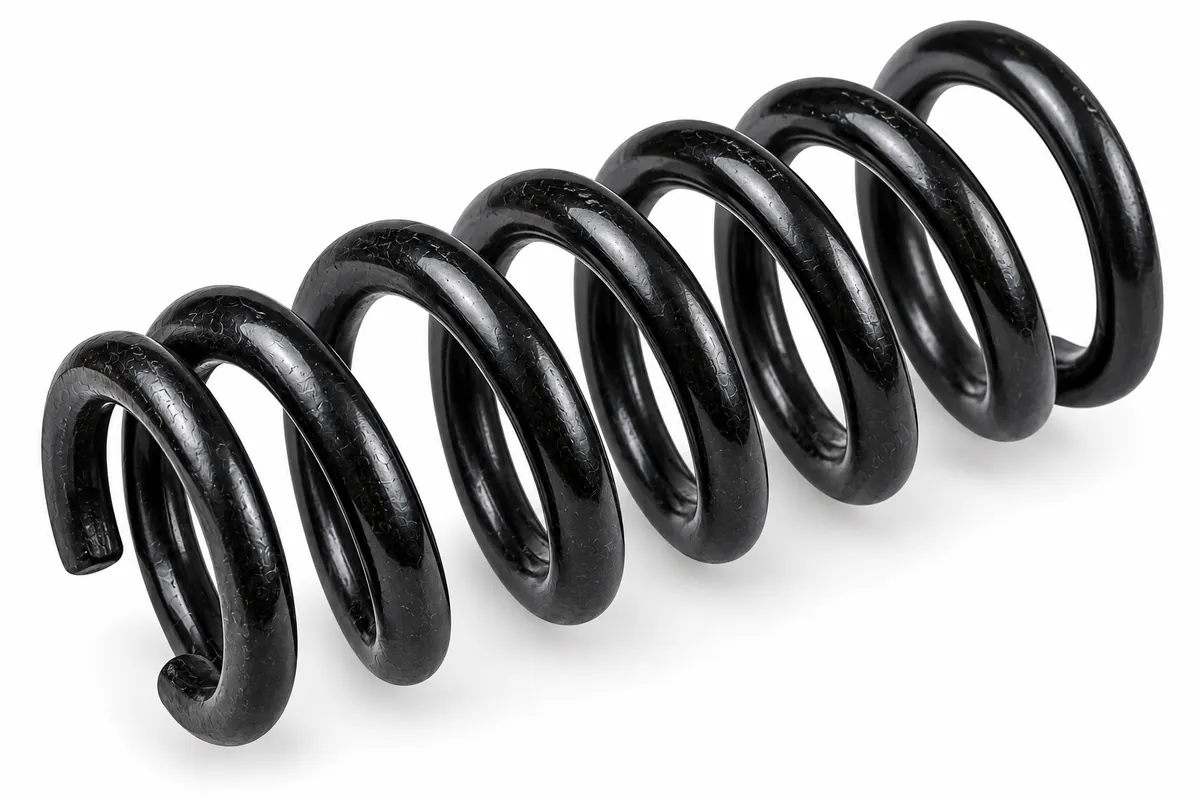
Mobile Coil Spring Inspection in Daytona Beach
A vehicle that sits low or makes suspension noise does not automatically need new springs.
Depending on the vehicle and suspension design, inspection can include checking:
- Front coil springs
- Rear coil springs
- Broken spring coils
- Spring corrosion
- Sagging
- Uneven ride height
- Spring bowing
- Spring position
- Upper spring seat
- Lower spring seat
- Spring isolators
- Rubber pads
- Spring retainers
- Strut-mounted coil springs
- Separate coil springs
- Control-arm spring pockets
- Suspension travel
- Bump stops
- Struts
- Shock absorbers
- Control arms
- Ball joints
- Tires
The objective is to determine whether the spring itself has failed and whether another component contributed to the problem.
What Is a Coil Spring?
A coil spring is a heavy steel spring formed into a helix.
It compresses as the suspension moves upward and expands as the suspension extends.
The spring supports the vehicle while allowing controlled suspension movement.
Common locations include:
- Around a strut
- Between a control arm and body
- Between a rear axle and body
- In an independent rear suspension
What Does a Coil Spring Do?
A coil spring performs several important functions.
It helps:
- Support vehicle weight
- Establish normal ride height
- Absorb road movement
- Maintain suspension travel
- Keep tires in contact with road
- Control body position
The spring works together with the shock absorber or strut, but the components have different jobs.
Coil Spring vs. Shock Absorber
A coil spring and shock absorber are not the same component.
Coil Spring
Supports vehicle weight and stores/release suspension energy.
Shock Absorber
Controls how quickly the suspension moves by damping compression and rebound.
A weak or broken spring can affect ride height.
A worn conventional shock absorber generally does not determine static ride height by itself.
Coil Spring vs. Strut
A strut is a structural suspension assembly that often contains or supports a coil spring.
In a typical MacPherson-strut assembly, the components may include:
- Strut body
- Coil spring
- Upper mount
- Bearing
- Spring seats
- Isolators
The spring supports the vehicle.
The strut damper controls suspension movement.
One component can fail while the other remains serviceable.
Coil Spring vs. Leaf Spring
Both components support vehicle weight, but they use different designs.
Coil Spring
A helical steel spring.
Leaf Spring
Several flat or tapered spring sections arranged longitudinally.
This page focuses specifically on automotive coil springs.
Front Coil Springs
Front coil springs commonly support a large percentage of vehicle weight.
They may be installed:
- Around front struts
- Between lower control arm and frame
- In specialized suspension assemblies
Front spring failure can affect:
- Ride height
- Steering geometry
- Tire clearance
- Suspension travel
Rear Coil Springs
Rear coil springs are used on many:
- Cars
- SUVs
- Crossovers
- Trucks
Depending on the design, the rear spring may be:
- Separate from shock absorber
- Mounted around a rear strut or coilover-style assembly
Rear spring sag can become especially noticeable when carrying passengers or cargo.
Signs of a Bad Coil Spring
Possible symptoms include:
- Vehicle sitting low on one corner
- Uneven ride height
- Broken spring coil
- Clunking
- Metallic popping
- Tire rubbing
- Excessive bottoming
- Reduced suspension travel
- Visible corrosion
- Spring shifted from seat
These symptoms should be inspected before replacement because several suspension problems can create similar complaints.
Broken Coil Spring
A coil spring can fracture through one of its coils.
Breaks commonly occur near:
- Bottom end
- Upper end
- Corroded sections
A small broken end can sometimes be difficult to see while the spring remains installed.
The spring should be inspected through its full visible length.
Why Coil Springs Break
Possible causes include:
- Corrosion
- Metal fatigue
- High mileage
- Repeated road impacts
- Overloading
- Manufacturing defect
- Physical damage
In areas where road salt is common, corrosion can significantly weaken spring steel.
Florida vehicles may see less road-salt exposure, but age, moisture, coastal conditions, and previous service history can still contribute to corrosion.
Broken Bottom Coil
The lowest coil may sit inside a spring seat where a fracture is partially hidden.
Possible signs include:
- Metallic clunk
- Uneven ride height
- Spring end no longer aligned with seat
- Rust debris
- Loose broken section
The lower spring seat should be inspected carefully.
Broken Top Coil
An upper spring fracture can also be hidden by:
- Spring isolator
- Upper mount
- Body structure
The spring position and full circumference should be checked where access allows.
Can a Broken Coil Spring Still Look Normal?
Yes.
A spring can break near an end while the remaining spring continues supporting the vehicle.
The ride-height difference may initially be small.
This is why an apparently normal stance does not completely rule out a fractured coil.
Sagging Coil Spring
A coil spring can lose free height or load-carrying ability over time.
A sagging spring may cause:
- Low ride height
- Reduced suspension travel
- Increased bottoming
- Alignment changes
- Uneven stance
Ride height should be compared appropriately before condemning the spring.
Coil Spring and Ride Height
The coil spring is a major component controlling static ride height.
If one spring becomes shorter or weaker, that corner may sit lower.
However, ride height can also be affected by:
- Broken spring seat
- Air suspension fault
- Incorrect replacement spring
- Structural damage
- Vehicle loading
The complete suspension should be inspected.
One Side of Car Sits Lower
A vehicle sitting lower on one side can be caused by:
- Broken coil spring
- Sagging spring
- Incorrect spring
- Damaged spring seat
- Uneven cargo load
- Suspension damage
Measurements should be taken on a reasonably level surface with normal vehicle loading.
Front of Car Sits Low
Possible causes include:
- Weak front springs
- Broken spring
- Incorrect suspension parts
- Structural damage
A worn front strut damper alone usually does not cause the vehicle to permanently sit substantially lower unless another part of the strut assembly has failed.
Rear of Car Sits Low
A low rear ride height can result from:
- Sagging rear coil springs
- Broken spring
- Excessive cargo
- Incorrect springs
- Air-assist system problem where equipped
Rear ride height should be compared side to side and against expected vehicle stance.
Coil Spring and Vehicle Lean
Vehicle lean can be caused by unequal spring height or rate.
However, before replacing a spring, check for:
- Uneven tire pressure
- Cargo distribution
- Suspension damage
- Broken mounts
- Incorrect previous repairs
The spring should be confirmed as the source.
Coil Spring and Bottoming Out
A weak or broken spring can reduce available suspension travel.
This may cause the suspension to reach the bump stop more frequently.
Symptoms can include:
- Hard impact over bumps
- Harsh ride
- Contact noise
Worn shocks or struts can also contribute to excessive suspension movement, so both spring support and damping should be evaluated.
Coil Spring and Tire Rubbing
If a spring is broken or severely sagged, wheel-to-body clearance may decrease.
Possible rubbing locations include:
- Fender liner
- Inner wheel well
- Suspension components
Tire rubbing should be treated seriously because continued contact can damage the tire.
Coil Spring Clunking
A broken or displaced spring may create a metallic clunk as the suspension moves.
Possible causes include:
- Broken coil contacting seat
- Spring shifting
- Missing isolator
- Damaged spring seat
Clunking can also come from sway-bar links, ball joints, control-arm bushings, or strut mounts.
The sound should be localized.
Coil Spring Popping
A spring can produce a pop if it:
- Shifts in seat
- Binds during steering
- Has damaged isolator
- Is incorrectly positioned
On strut-equipped vehicles, a worn upper strut bearing can also cause spring wind-up and release, creating a popping sound even when the coil spring itself is intact.
Coil Spring Squeaking
Squeaks can result from:
- Dry or damaged isolator
- Spring rubbing metal seat
- Corrosion
- Suspension bushing
The spring should be inspected for direct metal-to-metal contact.
Coil Spring Corrosion
Surface rust does not automatically mean a spring has failed.
Concern increases when corrosion is:
- Deep
- Flaking
- Pitted
- Concentrated near spring ends
Severe corrosion reduces material thickness and can contribute to fracture.
Rusted Coil Spring
A heavily rusted spring should be inspected carefully for:
- Cracks
- Material loss
- Flaking scale
- Reduced wire diameter
A spring with significant structural corrosion may warrant replacement even before complete fracture.
Coil Spring Protective Coating
Many springs have:
- Paint
- Powder coating
- Protective finish
Once the coating is damaged, corrosion can begin underneath.
Areas where the spring contacts the seat can be especially vulnerable.
Coil Spring Isolator
A spring isolator is typically a rubber or synthetic pad positioned between the spring and its seat.
Its purpose can include:
- Reducing noise
- Preventing metal-to-metal contact
- Protecting coating
- Helping position spring
A damaged isolator can create noise even if the spring remains structurally good.
Upper Coil Spring Isolator
An upper isolator cushions the contact point between the spring and upper seat.
Problems can include:
- Cracking
- Compression
- Missing material
- Misalignment
It should be inspected whenever the spring is removed.
Lower Coil Spring Isolator
The lower isolator protects the spring where it rests in the lower seat.
Damage can allow:
- Noise
- Abrasion
- Corrosion
Some vehicles use specifically shaped isolators that must be correctly positioned.
Coil Spring Seat
The spring seat supports and locates the end of the coil spring.
A seat may be part of:
- Strut assembly
- Control arm
- Axle
- Vehicle body
A damaged spring seat can create many of the same symptoms as a spring problem.
Rusted Spring Seat
If the seat is heavily corroded, the spring may no longer be securely supported.
Possible consequences include:
- Spring movement
- Incorrect ride height
- Structural failure
A new coil spring should not be installed into a structurally unsafe seat.
Broken Spring Seat
A fractured or deformed spring seat can allow the coil to:
- Shift
- Tilt
- Contact nearby components
The seat must be repaired or replaced as appropriate.
Coil Spring Position in Seat
Most springs are designed to sit in a specific orientation.
The final coil often aligns with:
- Stop
- Recess
- Mark
Incorrect positioning can affect:
- Ride height
- Noise
- Spring stability
The spring should be installed according to the vehicle design.
Coil Spring Bowing
A coil spring should normally maintain its intended shape through suspension travel.
Excessive sideways bowing can result from:
- Incorrect spring
- Damaged seat
- Misinstallation
- Suspension geometry problem
A bowed spring should be evaluated before continued service.
Coil Spring Binding
Binding occurs when the spring or related components cannot move naturally.
Possible causes include:
- Incorrect installation
- Damaged strut bearing
- Misaligned spring seat
- Wrong spring
Binding can cause:
- Popping
- Steering noise
- Sudden spring movement
Spring Wind-Up on a Strut
On many front strut suspensions, the spring rotates slightly as the steering turns.
An upper strut bearing allows this movement.
If the bearing binds, the spring may twist and then suddenly release.
This can feel or sound like:
- Pop
- Snap
- Spring movement
In that situation, the spring may not be the failed component.
Coil Spring and Strut Mount
A strut-mounted spring commonly seats against the upper strut mount assembly.
Problems with the mount or bearing can cause:
- Noise
- Binding
- Spring movement
Spring replacement should not be used to treat a mount failure unless the spring itself is also defective.
Coil Spring and Shock Absorber
A worn shock absorber may allow excessive bouncing, but it generally does not support static vehicle weight like the spring.
A vehicle that continues bouncing after a bump may have a damping problem.
A vehicle sitting low may have a spring or structural issue.
The two symptoms should not be automatically combined.
Coil Spring and Strut
A strut assembly may contain both:
- Coil spring
- Hydraulic damper
A leaking strut does not automatically mean the spring needs replacement.
A broken spring does not automatically mean the strut damper has failed.
When the assembly is disassembled, however, the condition of all related parts should be inspected.
Coil Spring and Ball Joint
Ball joints allow suspension and steering movement.
A worn ball joint may create:
- Clunk
- Wheel play
- Alignment changes
It does not normally cause a spring to lose static ride height.
Both components can be located near one another and should be inspected separately.
Coil Spring and Control Arm
Some vehicles position the coil spring between the control arm and body.
The control arm then carries significant spring force.
Possible control-arm problems include:
- Bent arm
- Damaged spring pocket
- Worn bushings
The spring should not be replaced without checking its supporting structure.
Coil Spring and Sway Bar
The sway bar reduces body roll by linking suspension movement side to side.
It does not normally support the vehicle’s static weight in the same way a coil spring does.
A broken sway-bar link can cause clunking but usually will not make one corner of the vehicle sit low.
Coil Spring and Bump Stop
The bump stop limits suspension travel near full compression.
If a spring sags significantly, the vehicle may contact the bump stop more often.
A damaged bump stop can also create:
- Harsh impacts
- Noise
The bump stop should be inspected during spring service where accessible.
Measuring Ride Height
Ride height may be evaluated by measuring consistent reference points.
Possible methods include measuring:
- Wheel-center to fender
- Specified chassis point to ground
- Manufacturer-defined suspension points
Comparing random body panels to the ground can be misleading because:
- Tire pressure
- Tire size
- Body shape
can alter the measurement.
Side-to-Side Ride Height Comparison
A side-to-side comparison can help identify an uneven suspension.
For a meaningful comparison:
- Vehicle should be on level ground
- Tires should be properly inflated
- Cargo should be reasonably balanced
A small difference does not automatically indicate a failed spring; vehicle specifications matter.
Coil Spring Rate
Spring rate describes how much force is required to compress the spring a given distance.
A higher spring rate generally resists compression more strongly.
Spring rate is determined by factors such as:
- Wire diameter
- Coil diameter
- Number of active coils
- Material
Replacement springs should match the intended vehicle application.
Progressive-Rate Coil Spring
A progressive spring is designed so its effective rate changes as it compresses.
This may be achieved through:
- Variable coil spacing
- Different geometry
These springs can provide softer initial movement and greater resistance deeper into compression.
They should be installed in the correct orientation.
Linear-Rate Coil Spring
A linear spring is designed to provide a more consistent relationship between force and compression throughout its usable travel.
Whether a vehicle uses linear or progressive springs depends on its suspension design.
Variable-Rate Coil Spring
Variable-rate spring designs can alter stiffness through suspension movement or load.
Replacement parts should match the intended suspension characteristics rather than being selected solely because they physically fit.
Front vs. Rear Spring Rate
Front and rear springs usually have different specifications because they support different:
- Vehicle weight
- Suspension geometry
- Handling requirements
A rear spring should not be substituted for a front spring or vice versa.
Left and Right Coil Springs
Some vehicles use identical springs side to side.
Others may use different:
- Part numbers
- Rates
- Lengths
depending on weight distribution or options.
Correct part identification matters.
Color Codes on Coil Springs
Manufacturers sometimes use painted color marks to identify spring:
- Rate
- Length
- Vehicle application
Two springs that look nearly identical can have different specifications.
Color codes should not be assumed universal across manufacturers.
Coil Spring Free Length
Free length is the spring’s length when it is not carrying load.
It can be used as one comparison during diagnosis or part verification.
However, spring rate also matters.
Two springs with similar free length can behave differently under vehicle weight.
Coil Spring Compression
A coil spring stores substantial mechanical energy when compressed.
Spring force can be extremely dangerous if released uncontrollably.
This is why spring removal must use the correct:
- Support method
- Compressor
- Procedure
for the suspension design.
Coil Spring Compressor
A spring compressor is used to safely compress certain coil springs during removal or installation.
Different suspension systems may require:
- External spring compressor
- Internal spring compressor
- Strut spring compressor
- Specialty vehicle-specific compressor
The correct tool must match the spring arrangement.
Strut Coil Spring Compressor
When replacing the spring on a strut assembly, the spring typically must be compressed before removing the upper retaining nut.
The compressor must:
- Grip securely
- Be positioned evenly
- Remain centered
The top mount should not be removed until spring tension has been safely relieved from it.
Internal Coil Spring Compressor
Some suspensions with the spring between the control arm and frame use an internal compressor that passes through or inside the spring.
This is different from a typical external strut compressor.
The correct tool depends on vehicle design.
External Coil Spring Compressor
External compressors attach to the outside of the spring.
They are commonly used for certain strut assemblies.
The compressor should engage the coils securely and be tightened evenly.
Improper positioning can allow it to slip.
Heavy-Duty Coil Spring Compressor
Truck and SUV springs can require greater compression force than small passenger-car springs.
A compressor must be rated and designed for the spring being serviced.
Using undersized or inappropriate equipment can be dangerous.
Why Coil Spring Compression Is Dangerous
A compressed spring stores a large amount of energy.
If a compressor slips, breaks, or is positioned incorrectly, the spring can release violently.
Potential consequences include:
- Severe injury
- Vehicle damage
- Tool damage
Spring compression should never be improvised with:
- Ratchet straps
- Wire
- Unrated clamps
Proper equipment is essential.
Can a Coil Spring Be Removed Without a Compressor?
Some separate rear springs can be removed by safely lowering a control arm or axle after the suspension is properly supported.
Other springs remain heavily loaded and absolutely require specialized compression equipment.
The correct procedure depends entirely on suspension design.
A spring should never be assumed unloaded simply because the vehicle is raised.
Coil Spring Replacement
Once inspection confirms a broken, sagging, structurally corroded, or otherwise damaged spring, replacement generally involves:
- Identify the failed spring. Confirm front or rear and left or right position.
- Measure or compare ride height where appropriate.
- Inspect the opposite-side spring.
- Inspect spring seats and isolators.
- Inspect the strut or shock absorber where applicable.
- Identify the suspension design and spring-load path.
- Select the correct replacement spring.
- Raise and safely support the vehicle.
- Remove the wheel where necessary.
- Support the control arm, axle, or strut assembly appropriately.
- Disconnect only the suspension components necessary for access.
- Relieve spring tension using the correct procedure.
- Use a proper spring compressor if required.
- Remove the old coil spring.
- Inspect the spring seats for corrosion or damage.
- Inspect upper and lower isolators.
- Compare the new spring with the original.
- Verify correct part number, diameter, height, and configuration.
- Position the new spring correctly in its seats.
- Install or reuse serviceable isolators as appropriate.
- Slowly restore suspension load or release the compressor.
- Confirm both spring ends remain correctly seated.
- Reconnect suspension components.
- Torque fasteners according to vehicle-specific procedure.
- Reinstall the wheel.
- Lower the vehicle.
- Allow the suspension to settle.
- Check ride height and spring position.
- Road-test the vehicle when appropriate.
- Check wheel alignment when the suspension design or existing wear indicates it is necessary.
The actual procedure varies greatly between a strut-mounted spring and a separate coil spring.
Front Coil Spring Replacement
Front spring replacement may involve:
- Removing complete strut assembly
- Compressing spring
- Removing upper strut mount
or, on a control-arm suspension:
- Supporting control arm
- Unloading spring
- Separating suspension components
Front springs can carry substantial load and require careful control during removal.
Rear Coil Spring Replacement
Rear coil springs are often separate from the shock absorber.
Depending on design, removal may involve:
- Supporting rear suspension
- Disconnecting shock
- Lowering control arm or axle enough to unload spring
Other rear suspensions use a strut or coilover-style assembly requiring spring compression.
Strut-Mounted Coil Spring Replacement
A strut-mounted spring typically requires the complete strut assembly to be removed.
General procedure can include:
- Remove strut assembly.
- Install spring compressor.
- Compress spring until upper mount is unloaded.
- Remove upper retaining hardware.
- Remove mount and spring.
- Inspect bearing, seats, isolators, boot, and bump stop.
- Install new spring.
- Align spring ends with seats.
- Reinstall mount.
- Torque retaining hardware.
- Slowly release compressor.
- Reinstall complete strut assembly.
The spring should remain securely captured throughout the procedure.
Separate Coil Spring Replacement
A separate spring may sit between:
- Control arm and frame
- Rear axle and body
Replacement may not require dismantling a strut.
However, the spring can still be under significant force.
Suspension load must be controlled before the spring is removed.
Coil Spring Replacement and Struts
Replacing a coil spring does not automatically mean the strut should also be replaced.
The strut should be inspected for:
- Leakage
- Damaged rod
- Poor damping
- Mount condition
- Bearing problems
If it remains serviceable, spring replacement can sometimes be performed without replacing the damper.
Coil Spring Replacement and Shock Absorbers
Rear shocks do not automatically require replacement when rear coil springs are changed.
The shocks should be evaluated separately for:
- Leakage
- Damage
- Damping performance
- Bushings
The age of the parts alone is not proof of failure.
Coil Spring Replacement and Strut Mount
If a strut assembly must be disassembled, the upper mount becomes accessible.
It should be inspected for:
- Rubber separation
- Cracks
- Bearing roughness
- Excessive play
A worn mount can be replaced during spring service when appropriate.
Coil Spring Replacement and Spring Isolators
Old isolators should be checked carefully.
Replacement may be worthwhile if they are:
- Torn
- Hardened
- Collapsed
- Missing
Reusing a damaged isolator can lead to noise after a new spring is installed.
Coil Spring Replacement and Bump Stops
A damaged or deteriorated bump stop may be accessible during spring or strut service.
If it is no longer functional, replacement can help restore proper suspension travel protection.
This is a separate decision from spring replacement itself.
Coil Spring Replacement and Alignment
Whether an alignment is necessary depends on the suspension design.
Alignment is more likely to be appropriate if:
- Strut-to-knuckle bolts were disturbed
- Ride height changed significantly
- Tire wear already exists
- Other suspension parts were replaced
A rear separate spring replacement may have less direct alignment impact, but vehicle-specific geometry still matters.
Should Coil Springs Be Replaced in Pairs?
For normal wear or sagging, replacing springs in axle pairs is often preferred because the opposite spring has experienced similar:
- Mileage
- Heat cycles
- Load
Pair replacement can help maintain similar:
- Ride height
- Spring rate
- Handling
However, the appropriate repair still depends on the reason for failure and the condition of the opposite side.
Can One Coil Spring Be Replaced?
In some situations, a single spring may be replaced if:
- Opposite spring is relatively new
- Failure resulted from isolated damage
- Matching spring is available
For older matched springs, replacing both on the same axle may provide more consistent ride height and handling.
Do All Four Coil Springs Need Replacement?
No.
A failed front spring does not automatically mean both rear springs require replacement.
Springs should generally be evaluated by axle and actual condition.
There is no universal reason to replace all four simply because one has failed.
New Coil Spring Makes Car Sit Higher
A new spring may restore height that was lost because the old spring had:
- Sagged
- Broken
- Weakened
If only one side is replaced while the opposite spring is aged, a temporary or persistent height difference may become noticeable.
Incorrect replacement spring can also create excessive height.
New Coil Spring Makes Car Sit Too High
Possible causes include:
- Incorrect spring
- Spring not fully seated
- Vehicle not yet settled
- Wrong spring rate
- Old opposite spring sagging significantly
The installation and part number should be verified.
New Coil Spring Still Sits Low
If the vehicle remains low after replacement, inspect for:
- Incorrect part
- Damaged spring seat
- Structural damage
- Incorrect installation
- Excess vehicle load
Replacing the spring cannot correct a broken mounting structure.
New Coil Spring Clunks
A clunk after spring replacement can result from:
- Spring end not seated
- Missing isolator
- Loose suspension hardware
- Strut mount problem
- Sway-bar link or other nearby component
The installation should be rechecked.
New Coil Spring Pops While Steering
On a strut suspension, popping after spring service may result from:
- Spring misalignment
- Upper bearing binding
- Incorrect isolator placement
- Spring not seated
The spring should rotate and articulate as intended by the suspension design.
Coil Spring Replacement Cost
Coil spring replacement cost depends on factors such as:
- Vehicle year, make, and model
- Front vs. rear spring
- Separate spring vs. strut-mounted spring
- One spring vs. pair
- Spring-compressor requirements
- Rust or corrosion
- Strut-mount condition
- Spring-seat condition
- Additional suspension disassembly
A separate rear coil spring can be very different from a front strut spring requiring full strut disassembly.
Call Jimmy’s Mobile Care at (386) 308-2509 with your vehicle information and suspension symptoms so we can determine the appropriate inspection and replacement service.
Standard vs. Heavy-Duty Coil Springs
Heavy-duty springs may be designed for vehicles that routinely carry increased loads.
They can have different:
- Spring rate
- Wire diameter
- Ride height characteristics
Heavy-duty springs should not automatically be installed as an upgrade on a stock vehicle.
Changing spring rate can alter ride and handling.
Coil Springs for Towing
Some owners consider heavier springs or spring-assist products because the rear of the vehicle sags while towing.
Before modifying the suspension, it is important to understand:
- Vehicle payload rating
- Trailer tongue weight
- Gross axle weight rating
Stronger springs do not increase the manufacturer’s legal or structural payload and towing ratings.
A vehicle overloaded beyond its rating should not be corrected simply by installing stiffer springs.
Coil Spring Helpers
Spring helpers or supplemental supports may reduce suspension sag under load on some applications.
They do not repair:
- Broken spring
- Structurally damaged suspension
- Overloaded vehicle
They should not be used to hide an underlying spring failure.
Performance Coil Springs
Performance springs may be designed to:
- Lower ride height
- Increase spring rate
- Reduce body roll
These changes affect suspension geometry and ride quality.
A performance spring should be selected as part of a complete suspension setup rather than merely as a replacement for a failed stock spring.
Lowering Springs
Lowering springs intentionally reduce ride height.
Potential effects include:
- Reduced suspension travel
- Increased spring rate
- Alignment changes
- Different strut/shock requirements
Installing lowering springs is different from restoring a factory suspension with standard replacement coil springs.
Lift Springs
Lift springs increase ride height on certain trucks and SUVs.
They may change:
- CV-joint angles
- Control-arm geometry
- Alignment
- Shock travel
They should be selected as part of a properly engineered suspension system.
Coilover Springs
A coilover combines a coil spring with a shock or strut in one assembly.
Some factory struts resemble coilovers in basic layout, while aftermarket adjustable coilovers may offer:
- Ride-height adjustment
- Spring-rate choices
- Damping adjustment
This page focuses primarily on factory-style replacement coil springs rather than performance coilover tuning.
Adjustable Coil Spring Perches
Some performance suspension systems use adjustable spring seats or perches.
Changing perch position can alter:
- Ride height
- Corner weighting
- Spring preload depending on design
These adjustments require correct setup and should not be confused with replacing a worn factory spring.
OEM vs. Aftermarket Coil Springs
Replacement springs may be available as:
- Original-equipment
- Standard aftermarket
- Heavy-duty aftermarket
- Performance springs
Important factors include:
- Correct rate
- Correct free length
- Correct diameter
- Correct end shape
- Correct vehicle application
A spring that physically fits is not necessarily correct for the vehicle.
Used Coil Springs
Used springs may be inexpensive, but their history can be uncertain.
Possible unknowns include:
- Mileage
- Previous overloading
- Corrosion
- Sagging
- Accident damage
A replacement spring should provide predictable support and height.
Why Inspect a Coil Spring Before Replacing It?
Several suspension problems can imitate spring failure.
Is the Spring Actually Broken?
The fracture may be hidden near a spring seat.
Is the Vehicle Truly Sitting Low?
Ride height should be measured on a level surface with appropriate loading.
Is the Spring Sagging?
A spring may lose height without visibly breaking.
Is the Spring Seat Damaged?
A structurally damaged seat can make the spring sit incorrectly.
Is the Isolator Missing or Collapsed?
That can create noise without spring failure.
Is the Strut Bearing Binding?
A binding upper bearing can make the spring pop while steering.
Is the Shock or Strut the Actual Problem?
Poor damping causes bouncing but not usually a major static ride-height loss by itself.
Is the Vehicle Overloaded?
A healthy spring can compress excessively when the vehicle exceeds its intended load.
Inspecting these conditions helps make sure the spring is replaced for an actual spring-related problem.
Mobile Coil Spring Inspection in Daytona Beach
Jimmy’s Mobile Care provides mobile car coil spring inspection in Daytona Beach for vehicles experiencing:
- Uneven ride height
- Vehicle leaning
- Broken coil spring
- Sagging front or rear suspension
- Suspension clunk
- Spring popping
- Visible spring corrosion
- Tire rubbing
- Excessive bottoming
- Damaged spring isolator
- Suspected spring-seat problem
We inspect the spring and the suspension components needed to determine whether the spring itself is responsible.
Mobile Coil Spring Replacement in Daytona Beach
When inspection confirms a broken, sagging, or otherwise damaged coil spring and the repair is appropriate for mobile service, Jimmy’s Mobile Care can replace many front and rear coil springs at your Daytona Beach location.
Depending on suspension design, replacement may involve:
- Separate rear coil spring
- Control-arm-mounted spring
- Strut-mounted coil spring
- Complete spring-and-strut service
After installation, we can verify:
- Correct spring position
- Upper and lower seat engagement
- Isolator condition
- Ride height
- Suspension clearance
- No obvious spring movement or binding
Repairs involving extremely high spring loads, severe structural corrosion, damaged spring seats, specialized suspension systems, or equipment beyond safe mobile service may require additional procedures or shop-based equipment.
Schedule Car Coil Spring Inspection & Replacement in Daytona Beach
A vehicle that sits low, leans, clunks, or bottoms out does not automatically need a coil spring.
The problem may involve a damaged spring seat, isolator, strut mount, shock absorber, strut, control arm, or another suspension component. At the same time, a spring can be broken near its end and remain difficult to see without a proper inspection.
Jimmy’s Mobile Care inspects the spring, its seating points, ride height, and related suspension components before replacement so the repair addresses the actual problem.
Call Jimmy’s Mobile Care at (386) 308-2509 to schedule car coil spring inspection and replacement in Daytona Beach, FL. Call today and we'll come to your location.