
Car Fuel Injector Diagnostics & Replacement in Daytona Beach, FL
Fuel injectors meter fuel into the engine in precise amounts so each cylinder can run correctly. When an injector becomes clogged, electrically faulty, restricted, leaking, or stuck open or closed, the engine may misfire, run rough, lose power, use excessive fuel, become difficult to start, or trigger a check-engine light.
Jimmy’s Mobile Care provides car fuel injector diagnostics and replacement in Daytona Beach, FL. We diagnose injector operation before replacing parts so an ignition problem, wiring fault, low fuel pressure, vacuum leak, compression problem, or another engine fault is not mistaken for a bad injector.
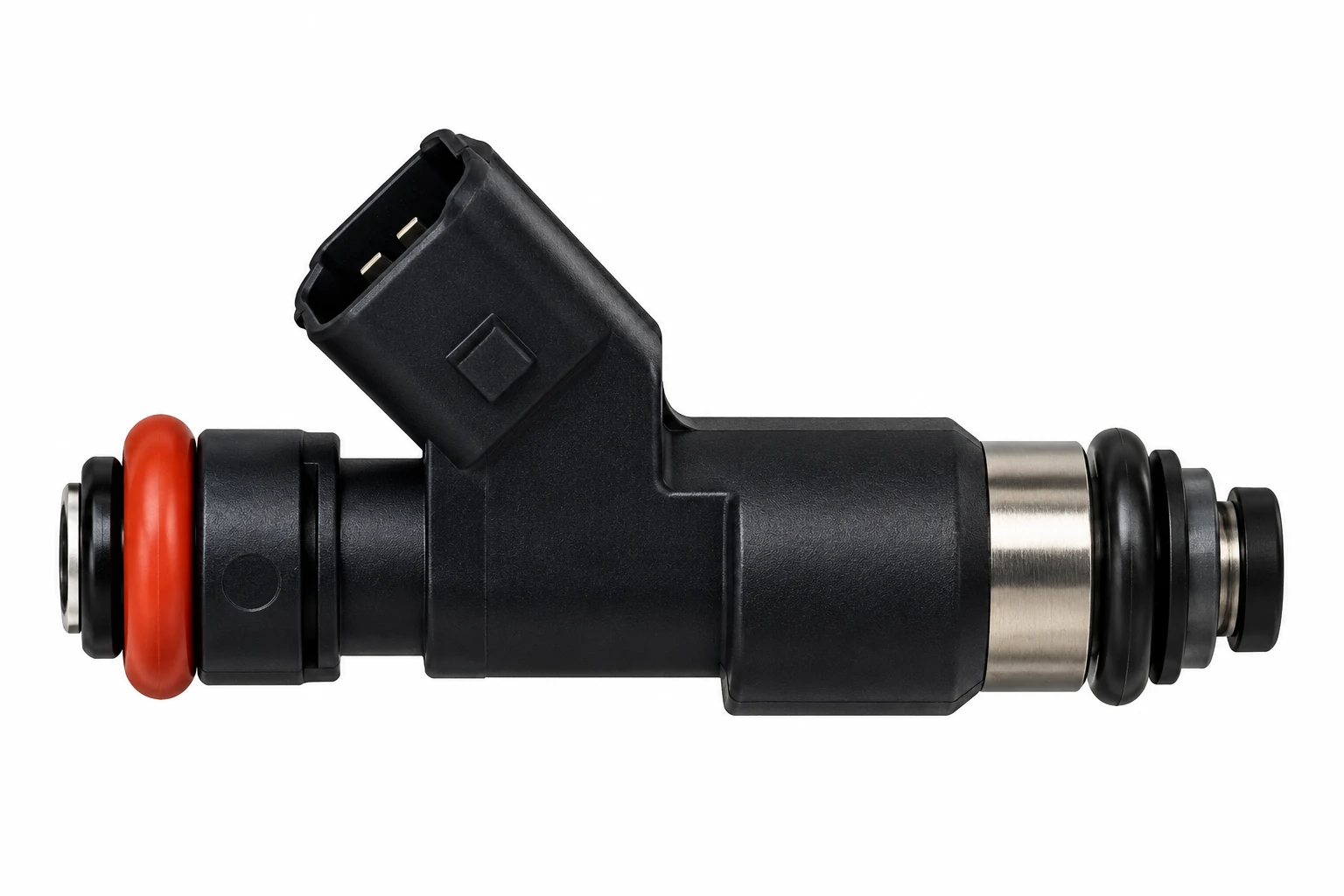
Mobile Fuel Injector Diagnostics in Daytona Beach
Fuel injector diagnosis involves more than listening for a clicking injector or replacing the injector associated with a misfire code.
Depending on the vehicle and symptoms, testing can include checking:
- Diagnostic trouble codes
- Misfire data
- Fuel trims
- Injector electrical supply
- Injector command signal
- Injector pulse
- Injector resistance
- Injector current behavior where appropriate
- Injector balance
- Fuel pressure
- Fuel-pressure retention
- Injector leakage
- Fuel-delivery pattern
- Wiring and connectors
- Engine compression where necessary
- Ignition-system operation
- Vacuum and intake leaks
The objective is to determine whether the injector itself is defective and whether the failure is electrical, mechanical, or fuel-delivery related.
What Does a Fuel Injector Do?
A fuel injector is an electronically controlled valve that delivers fuel into the engine.
The engine control module determines when and how long each injector opens according to operating conditions such as:
- Engine speed
- Engine load
- Airflow
- Throttle position
- Coolant temperature
- Oxygen-sensor feedback
Depending on the fuel system, the injector may spray fuel into:
- Intake port
- Combustion chamber
- Throttle-body area on older designs
Correct injector operation is critical because each cylinder needs the proper amount of fuel at the correct time.
Port Fuel Injection
Port fuel injection places the injector in the intake port near the intake valve.
Fuel is sprayed into the intake airflow before entering the combustion chamber.
A port injector can develop:
- Electrical failure
- Internal restriction
- Leakage
- Poor spray pattern
- Mechanical sticking
These systems generally operate at much lower fuel pressure than gasoline direct-injection systems.
Gasoline Direct Injection
Gasoline direct injection, often called GDI, places the injector directly in the combustion chamber.
These systems operate at substantially higher fuel pressure and may use:
- Low-pressure supply pump
- High-pressure fuel pump
- High-pressure rail
- Direct injectors
Diagnosis and replacement procedures differ from conventional port injection.
Direct-injection fuel systems can retain extremely high pressure and require vehicle-specific depressurization and safety procedures.
Port Injection vs. Direct Injection
Some modern engines use both port and direct injectors.
These dual-injection systems may use one injector set under some operating conditions and another under others.
When diagnosing a cylinder problem, it is important to identify:
- Which injector system is involved
- Which injector is being commanded
- Whether the problem occurs under specific load or operating conditions
A vehicle with two injector systems should not be diagnosed as though it uses only one conventional injector per cylinder.
Signs of a Bad Fuel Injector
Possible symptoms include:
- Check-engine light
- Engine misfire
- Rough idle
- Hard starting
- Extended cranking
- Poor acceleration
- Loss of power
- Increased fuel consumption
- Fuel smell
- Engine running rich
- Engine running lean
- Cylinder-specific misfire
- Black exhaust smoke
- Injector-related fault code
- Uneven engine operation
These symptoms can also result from other faults, so testing should establish whether the injector is actually responsible.
Bad Fuel Injector and Engine Misfire
A failed injector can cause a cylinder to misfire if it delivers:
- Too little fuel
- No fuel
- Too much fuel
However, a cylinder misfire can also result from:
- Spark plug
- Ignition coil
- Compression problem
- Vacuum leak
- Valve problem
- Wiring fault
- Fuel-pressure problem
A misfire code identifies the affected cylinder, not necessarily the failed component.
Cylinder-Specific Fuel Injector Problems
If the engine consistently misfires on one cylinder, diagnosis may involve comparing that cylinder with the others.
For example, a cylinder-specific problem may require checking:
- Injector command
- Injector electrical behavior
- Spark
- Compression
- Fuel delivery
The injector should not be replaced merely because its cylinder appears in a trouble code.
Clogged Fuel Injector
Deposits can interfere with injector fuel delivery.
A restricted injector may deliver less fuel than the other cylinders.
Possible symptoms include:
- Lean misfire
- Rough idle
- Hesitation
- Poor acceleration
- Uneven cylinder contribution
- Lean fuel-trim correction
The degree and type of restriction should determine whether cleaning or replacement is appropriate.
Dirty Fuel Injector
The term “dirty injector” can describe several different conditions, including:
- Deposit on injector tip
- Restricted internal passage
- Altered spray pattern
Not every rough-running engine needs injector cleaning.
The symptoms should first be connected to an actual fuel-delivery problem.
Stuck-Closed Fuel Injector
An injector that remains closed cannot provide the required fuel to its cylinder.
Possible results include:
- Dead cylinder
- Severe misfire
- Lean condition on that cylinder
- Rough running
The cause may be:
- Mechanical injector failure
- Missing electrical command
- Wiring problem
- Control-module issue
Testing should distinguish a physically stuck injector from an injector that is simply not being commanded.
Stuck-Open Fuel Injector
An injector that remains open can deliver excessive fuel.
Possible symptoms include:
- Rich running
- Hard starting
- Fuel smell
- Black smoke
- Fouled spark plug
- Poor fuel economy
- Cylinder flooding
A severely leaking or stuck-open injector can also allow raw fuel to enter the cylinder after the engine is shut off.
Leaking Fuel Injector
A fuel injector may leak internally even when it is not supposed to be delivering fuel.
Possible symptoms include:
- Long crank after sitting
- Hard hot restart
- Fuel smell
- Rich startup
- Black exhaust
- Fuel-pressure loss after shutdown
A leak should be distinguished from pressure loss caused elsewhere in the fuel system.
Fuel Pressure Drops After Shutdown
Fuel pressure that falls quickly after the engine is turned off can result from:
- Leaking injector
- Fuel pump check-valve problem
- Pressure-regulator problem
- Other internal fuel-system leak
Pressure decay alone does not prove which injector is leaking.
Further isolation may be required.
Fuel Injector Electrical Failure
An injector contains an electrical actuator that opens the fuel valve when commanded.
Electrical failure may involve:
- Open injector coil
- Shorted injector coil
- Internal electrical fault
An electrically failed injector can stop operating even when fuel pressure is normal.
Fuel Injector Resistance Testing
On injector designs where resistance testing is appropriate, resistance can be compared with specification or with other similar injectors.
An injector may test:
- Open circuit
- Shorted
- Outside normal resistance range
However, resistance alone does not prove that the injector flows fuel correctly.
An injector can pass a basic resistance test and still be mechanically restricted or leaking.
Fuel Injector Pulse
The engine control module operates the injector with a timed electrical pulse.
Testing the injector circuit can help determine whether the injector is receiving a control command.
If an injector is not pulsing, possible causes include:
- Wiring fault
- Connector problem
- Control-module driver issue
- Missing power supply
- Engine-control strategy
A replacement injector cannot correct a circuit that is not commanding it.
Noid-Light Injector Testing
On certain port-injected systems, a noid light can be used to verify that an injector connector is receiving a switching signal.
This can help establish that the control circuit is attempting to operate the injector.
However, it does not prove:
- Correct injector current
- Correct fuel flow
- Correct spray pattern
- Mechanical injector condition
It is one test within a larger diagnostic process.
Injector Current Testing
More detailed electrical diagnosis can evaluate how the injector current changes as the injector operates.
Current-ramp testing can sometimes reveal:
- Electrical coil behavior
- Opening characteristics
- Circuit problems
This type of testing can provide information that a simple resistance test cannot.
The correct method depends on injector design.
Fuel Injector Power Supply
Many fuel-injection systems provide battery voltage to the injectors and control them by switching the other side of the circuit through the engine-control module.
A missing common power supply can disable:
- One injector
- Several injectors
- Entire injector bank
A blown fuse or wiring problem can therefore create symptoms that resemble multiple failed injectors.
Fuel Injector Connector Problems
Injector connectors operate in a hot, vibrating engine compartment.
Problems can include:
- Broken locking tab
- Loose terminal
- Corrosion
- Heat damage
- Oil contamination
- Backed-out terminal
- Damaged wiring near connector
A connector problem can create intermittent injector operation.
Replacing the injector without repairing the connection will not solve the fault.
Fuel Injector Wiring Problems
Injector wiring can be damaged by:
- Heat
- Vibration
- Abrasion
- Previous repair
- Rodents
- Oil contamination
A broken or shorted wire can prevent a good injector from operating normally.
Circuit integrity should be confirmed when the electrical signal is missing or inconsistent.
Fuel Injector Balance Test
A fuel injector balance test compares the pressure drop created when individual injectors are commanded.
If one injector produces a significantly different pressure change from the others, it can indicate uneven fuel delivery.
This can help identify:
- Restricted injector
- Poor-flow injector
- Injector with abnormal delivery
The test method depends on vehicle design and may not be applicable to every system.
Injector Contribution Testing
Injector contribution can also be evaluated by observing how the engine responds when an injector is disabled or commanded.
A cylinder that reacts differently from others may require additional investigation.
Contribution testing should be interpreted alongside:
- Ignition
- Compression
- Fuel delivery
because all three influence cylinder output.
Fuel Injector Spray Pattern
A correctly operating injector should atomize fuel according to its intended design.
Problems can include:
- Poor atomization
- Uneven spray
- Dribbling
- Partial blockage
Spray-pattern testing generally requires specialized equipment and removal of the injector.
It is not normally judged accurately by simply looking into an assembled engine.
Fuel Injector Flow Testing
Flow testing compares how much fuel an injector delivers under controlled conditions.
Professional bench testing can help identify:
- Restricted flow
- Uneven injector delivery
- Leakage
- Abnormal spray behavior
This can be useful when injectors are being evaluated for cleaning or rebuilding.
Fuel Injector Cleaning
Injector cleaning may be appropriate when an injector is restricted by deposits but is otherwise mechanically and electrically sound.
Possible cleaning approaches include:
- Fuel-system cleaning service
- Specialized injector cleaning
- Off-car ultrasonic cleaning
The appropriate method depends on:
- Injector design
- Severity of restriction
- Vehicle symptoms
- Injector condition
Cleaning cannot repair an injector with a failed electrical coil, cracked housing, severe internal wear, or mechanical damage.
On-Car Fuel Injector Cleaning
Some fuel-system cleaning procedures introduce cleaning solution through the fuel system while the injectors remain installed.
These services are intended primarily to address certain types of deposits.
They should not be confused with diagnosing or repairing an electrically failed injector.
Ultrasonic Fuel Injector Cleaning
Removed injectors can sometimes be cleaned using specialized ultrasonic equipment.
A professional injector service may also perform:
- Flow testing
- Leak testing
- Spray-pattern evaluation
This can be useful on serviceable port injectors when cleaning is economically reasonable.
Not every modern injector is a practical candidate for this type of service.
Fuel Injector Cleaning vs. Replacement
Cleaning may make sense when the problem is confirmed deposit-related restriction.
Replacement is more appropriate when the injector has:
- Electrical failure
- Internal mechanical failure
- Persistent leakage
- Severe flow imbalance
- Physical damage
The diagnosis should determine which approach is reasonable.
Fuel Injector Cleaner in the Fuel Tank
Retail fuel injector cleaners are added to the fuel tank.
They may help control certain deposits when used appropriately, but they are not a repair for:
- Electrically dead injector
- Broken injector
- Wiring fault
- Severely stuck injector
- Mechanical leak
Adding cleaner should not replace diagnosis when a vehicle has a persistent misfire or injector-related fault.
Fuel Injection Service vs. Injector Replacement
A general fuel injection service is not the same thing as replacing a failed injector.
A fuel-system service may involve:
- Cleaning
- Deposit control
- Throttle or intake service depending on service offered
Injector replacement involves removing an injector that has been proven defective and installing the correct replacement component.
These should not be sold as interchangeable repairs.
Fuel Injector and Fuel Pressure
Injectors cannot deliver the correct amount of fuel if supply pressure is incorrect.
Low fuel pressure can cause:
- Lean running
- Hard starting
- Misfires
- Loss of power
Possible causes include:
- Weak fuel pump
- Restricted filter
- Pressure-regulator problem
- Electrical supply problem
Replacing injectors will not correct inadequate fuel supply.
Fuel Injector vs. Fuel Pump
The fuel pump supplies fuel to the injector system.
The injector meters fuel into the engine.
A weak pump can affect multiple cylinders at once, while a single defective injector often affects one cylinder more noticeably.
Fuel pressure should be considered when symptoms suggest a systemwide fuel-delivery problem.
Fuel Injector vs. Ignition Coil
A failed ignition coil and a failed injector can both cause a cylinder misfire.
To distinguish them, diagnosis may involve checking:
- Spark
- Coil operation
- Injector operation
- Trouble-code data
Replacing the injector because a cylinder is misfiring can be expensive if the actual fault is ignition-related.
Fuel Injector vs. Spark Plug
A worn or fouled spark plug can produce symptoms similar to a fuel-delivery problem.
Spark plugs should be evaluated when diagnosing:
- Misfire
- Rough idle
- Hard starting
A rich or leaking injector can also foul a spark plug, so one problem may create evidence in another component.
Fuel Injector vs. Compression Problem
A cylinder with low compression can misfire even if the injector and ignition system are working correctly.
Possible mechanical causes include:
- Valve problem
- Piston or ring problem
- Head-gasket issue
- Camshaft or valvetrain problem
Compression or mechanical testing may be necessary before condemning the injector.
Fuel Injector vs. Vacuum Leak
A vacuum or intake leak can make a cylinder or entire bank run lean.
An intake leak near one cylinder can sometimes imitate a restricted injector.
Fuel trim and additional testing can help distinguish between:
- Too little fuel
- Too much unmetered air
Fuel Injector and Fuel Trim
Fuel trim shows how the engine-control module is adjusting fuel delivery based on feedback from oxygen sensors.
Positive fuel trim means the system is adding fuel.
Negative fuel trim means it is reducing fuel.
Fuel-trim patterns can provide clues about:
- Lean condition
- Rich condition
- Bank-specific problem
- Systemwide fuel-delivery problem
However, fuel trim does not directly identify a defective injector by itself.
Lean Fuel Injector Condition
A restricted or underperforming injector can cause its cylinder to receive too little fuel.
Possible effects include:
- Lean misfire
- Roughness
- Elevated combustion temperature
- Positive fuel correction
But a vacuum leak or low fuel pressure can produce similar lean symptoms.
Rich Fuel Injector Condition
A leaking or stuck-open injector can supply excessive fuel.
Possible effects include:
- Fuel smell
- Black smoke
- Negative fuel trim
- Fouled spark plug
- Poor fuel economy
- Hard starting
A rich condition should be traced to its cause rather than automatically blamed on the injector.
Black Smoke From Exhaust
Black exhaust smoke generally indicates excessive fuel or insufficient air.
Possible causes include:
- Leaking injector
- Excessive fuel pressure
- Airflow measurement problem
- Sensor fault
- Engine-control issue
If only one injector is leaking, one spark plug may show much stronger evidence of richness than the others.
Fuel Smell From Exhaust
A strong fuel odor can occur when fuel enters the engine but does not burn completely.
Possible causes include:
- Misfire
- Leaking injector
- Ignition failure
- Overly rich mixture
Fuel smell alone cannot identify the failed part.
Fuel Injector and Hard Starting
Injector problems can cause starting issues in several ways.
A leaking injector can flood a cylinder after shutdown.
A restricted or dead injector can cause poor fuel delivery during startup.
Possible symptoms include:
- Long crank
- Rough start
- Rich startup
- Misfire immediately after starting
The timing of the symptom can help narrow the cause.
Hard Starting After the Car Sits
If the engine is hardest to start after sitting for several hours, possible fuel-system causes include:
- Injector leaking into cylinder
- Fuel-pressure loss
- Fuel pump check-valve problem
Testing residual fuel pressure and cylinder condition can help distinguish among them.
Hard Hot Restart
A leaking injector may create excessive fuel in one or more cylinders after the hot engine is shut down.
This can cause:
- Extended cranking
- Rough restart
- Fuel odor
However, other fuel-pressure and sensor problems can create similar hot-start symptoms.
Fuel Injector Tick or Clicking Noise
Fuel injectors commonly make a light clicking sound as they open and close.
Some clicking is normal.
A noticeably different sound from one injector may provide a clue, but sound alone cannot confirm:
- Correct fuel flow
- Correct electrical current
- Proper sealing
A clicking injector can still be clogged or leaking.
Noisy Fuel Injector
Some injectors are naturally louder than others.
Noise level can vary with:
- Injector design
- Direct vs. port injection
- Engine cover
- Fuel pressure
Direct injectors in particular can be quite audible during normal operation.
A ticking sound should not automatically be treated as injector failure.
Fuel Injector O-Rings
Port fuel injectors commonly use O-rings or seals at their fuel-rail and intake connections.
A damaged injector O-ring can cause:
- External fuel leak
- Fuel odor
- Vacuum leak in some locations
Injector seals should generally be replaced as required when the injector is removed.
Fuel Injector External Leak
An external fuel leak is different from an injector leaking fuel internally into the engine.
External leakage may occur around:
- Injector body
- O-ring
- Fuel-rail connection
- High-pressure seal on direct injection
Any fuel leak requires immediate attention because gasoline is highly flammable.
Fuel Injector Seal Replacement
Injector seals must match the injector and fuel-system design.
Direct-injection systems may use specialized:
- Teflon seals
- Combustion seals
- Support rings
- Decoupling elements
Some seals require dedicated sizing or installation tools.
Reusing seals that are intended for one-time installation can cause leakage.
Direct Injector Seal Installation
Gasoline direct injectors often require special handling during replacement.
Depending on design, procedures can include:
- New high-pressure seal
- Seal-sizing tool
- New retaining hardware
- Correct injector orientation
- Specified torque procedure
Improper seal installation can cause:
- Compression leakage
- Fuel leakage
- Injector damage
Fuel Rail Removal
Injector replacement may require removal of the fuel rail.
This can involve:
- Relieving fuel pressure
- Disconnecting electrical connectors
- Removing fuel-line connections
- Removing rail fasteners
- Carefully releasing injectors and seals
On direct-injection systems, high-pressure lines may have vehicle-specific replacement or torque requirements.
High-Pressure Fuel Injection Safety
Direct-injection fuel systems can operate at extremely high pressure.
Fuel under this pressure can penetrate skin and cause serious injury.
The system must be depressurized according to the correct service procedure before high-pressure components are disconnected.
This is not a system that should be opened casually.
Fuel Injector Replacement
Once diagnostics confirm injector failure, replacement can generally involve:
- Confirm the injector fault. We verify that the injector itself is responsible rather than the ignition system, wiring, compression, or fuel supply.
- Identify the fuel-injection system. Port, direct, or dual injection requires different procedures.
- Relieve fuel pressure according to vehicle procedure.
- Disconnect battery power where appropriate.
- Gain access to the injector or fuel rail.
- Disconnect injector electrical connectors.
- Disconnect applicable fuel lines.
- Remove the fuel rail where required.
- Remove the failed injector.
- Inspect the injector bore, connector, rail, and surrounding components.
- Install the correct new seals and O-rings.
- Install the replacement injector.
- Reinstall the rail and fuel connections.
- Reconnect electrical wiring.
- Restore fuel pressure.
- Inspect carefully for fuel leaks.
- Start the engine and verify cylinder operation.
- Check misfire data and fuel trims where appropriate.
- Clear applicable fault codes after repair.
- Verify proper engine operation during warm-up and road-load conditions where practical.
Direct-injection systems may require additional seal, coding, or calibration procedures.
Does a New Fuel Injector Need Programming?
Many conventional port injectors do not require programming.
However, some direct-injection systems use injector-specific calibration values or correction codes.
Depending on the vehicle, a replacement injector may require:
- Coding
- Calibration entry
- Adaptation
- Reset procedure
The specific vehicle determines whether this is necessary.
Injector Coding
Some injectors are individually measured during manufacturing and assigned a calibration code.
The engine-control module may use this value to compensate for small production differences.
Installing a replacement injector without entering the required code can affect engine operation on vehicles designed to use injector coding.
Not every vehicle uses this system.
Replacing One Fuel Injector vs. All Injectors
It is not automatically necessary to replace every injector when one fails.
If one injector has a confirmed individual failure and the others test correctly, replacing the failed injector may be appropriate.
Multiple injectors may deserve consideration when:
- Several have similar flow problems
- Contamination affected entire fuel system
- Vehicle-specific technical guidance calls for matched sets
- Multiple injectors fail testing
Replacement should be based on actual condition rather than a blanket rule.
Should Injectors Be Replaced in Pairs?
Generally, injectors do not need to be replaced in pairs simply because one failed.
The decision should depend on:
- Test results
- Injector design
- Vehicle requirements
- Overall injector condition
This differs from some components where paired replacement is mechanically beneficial.
New vs. Remanufactured Fuel Injectors
Replacement injectors may be available as:
- New
- Remanufactured
- Professionally rebuilt
Suitability depends on:
- Injector design
- Application
- Supplier quality
- Calibration requirements
Correct flow and electrical characteristics are more important than appearance.
Rebuilt Fuel Injectors
A properly rebuilt or serviced injector may be:
- Cleaned
- Flow tested
- Leak tested
- Fitted with new external seals
However, not every type of injector is practical to rebuild.
Modern direct injectors can be particularly application-specific.
Aftermarket Fuel Injectors
Aftermarket injectors must match the engine's intended:
- Flow rate
- Electrical characteristics
- Physical dimensions
- Spray pattern
- Fuel compatibility
Installing larger or incorrectly calibrated injectors on a stock vehicle can cause poor engine operation unless the engine-management system is specifically calibrated for them.
High-Flow Fuel Injectors
High-flow injectors are generally intended for engines with increased fuel demand from modifications such as:
- Forced induction
- Increased engine output
- Alternative fuels
A stock engine does not benefit from oversized injectors simply because they can flow more fuel.
Proper engine tuning and fuel-system compatibility are essential.
EV1 and EV6 Injector Connectors
Terms such as EV1 and EV6 may describe injector connector or body styles used on certain fuel injectors.
Connector appearance alone does not determine whether an injector is correct.
Injector selection also depends on:
- Flow rate
- Impedance
- Length
- Fuel-rail fit
- O-ring size
- Spray characteristics
Universal-looking injectors should not be substituted based only on connector shape.
Fuel Injector Impedance
Injectors can use different electrical characteristics, sometimes described as:
- High impedance
- Low impedance
The engine-control electronics are designed for a specific injector type.
Installing injectors with incorrect electrical characteristics can result in:
- Poor operation
- Control-driver damage
- Incorrect fueling
The replacement injector must match the vehicle's system requirements.
Injector Flow Rate
Injector flow rate describes how much fuel an injector can deliver under defined conditions.
Replacement injectors should match the vehicle's intended calibration.
Installing a significantly different flow rate without appropriate engine-management calibration can cause the engine to run:
- Too rich
- Too lean
Correct application matters more than choosing the largest available injector.
Fuel Injector Replacement After Contaminated Fuel
Contaminated fuel can affect more than one injector.
Possible contaminants include:
- Water
- Dirt
- Rust
- Incorrect fuel
If contamination caused injector failure, the fuel supply should be evaluated before replacement injectors are installed.
Otherwise, the new injectors may be exposed to the same problem.
Fuel Injector Replacement After Fuel Pump Failure
A failed fuel pump does not normally mean the injectors must automatically be replaced.
However, if the pump failure released contamination into the fuel system, further inspection may be necessary.
The actual condition of the injectors should determine whether they need service.
Fuel Injector and Ethanol Fuel
Injectors used with higher ethanol concentrations must be compatible with the intended fuel and flow requirements.
A performance vehicle converted for E85 may require different injector capacity and engine calibration.
This is different from replacing a failed factory injector on an otherwise stock vehicle.
Fuel Injector Cleaning Cost
Injector-cleaning cost depends on the type of service.
There is a substantial difference between:
- In-tank cleaner
- On-car cleaning service
- Removed injector ultrasonic cleaning and flow testing
Cleaning should only be recommended when it addresses the actual problem.
Fuel Injector Replacement Cost
Fuel injector replacement cost depends on factors including:
- Vehicle year, make, and model
- Port vs. direct injection
- Injector location
- Number of injectors being replaced
- Intake-manifold removal
- Fuel-rail access
- Seal requirements
- High-pressure fuel-line procedures
- Injector coding or calibration
- Additional wiring or connector repair
Replacing one easily accessible port injector can be very different from replacing a direct injector located beneath substantial engine components.
Call Jimmy’s Mobile Care at (386) 308-2509 with your vehicle information and engine symptoms so we can determine the appropriate diagnostic service.
Why Diagnose a Fuel Injector Before Replacing It?
Injector symptoms overlap with many other engine problems.
Does the Injector Have Electrical Power?
A missing power supply can stop a good injector from operating.
Is the Injector Being Commanded?
A wiring or control problem can prevent injector pulse.
Is the Injector Actually Flowing Fuel?
An electrically active injector can still be clogged.
Is the Injector Leaking?
A leaking injector can cause rich startup and pressure loss.
Is Fuel Pressure Correct?
A weak fuel pump can make all injectors appear to underperform.
Does the Cylinder Have Spark?
An ignition failure can create the same misfire as a dead injector.
Does the Cylinder Have Compression?
Mechanical engine problems can cause persistent misfires even with perfect fuel and spark.
Is There an Intake or Vacuum Leak?
Too much unmetered air can imitate insufficient fuel delivery.
Testing these areas first helps prevent replacing a good injector.
Mobile Fuel Injector Diagnostics in Daytona Beach
Jimmy’s Mobile Care provides mobile car fuel injector diagnostics in Daytona Beach for vehicles experiencing:
- Engine misfire
- Rough idle
- Hard starting
- Poor acceleration
- Injector-related fault codes
- Rich or lean running
- Fuel smell
- Suspected clogged injector
- Suspected leaking injector
- Cylinder-specific fuel-delivery problems
We evaluate injector operation together with the electrical, ignition, fuel-pressure, and mechanical conditions necessary to identify the actual failure.
Mobile Fuel Injector Replacement in Daytona Beach
When diagnostics confirm injector failure and the repair is appropriate for mobile service, Jimmy’s Mobile Care can replace many fuel injectors at your Daytona Beach location.
After replacement, we can verify:
- Proper injector operation
- Fuel-leak-free connections
- Injector electrical connection
- Engine idle quality
- Misfire behavior
- Fuel trims where appropriate
- Relevant diagnostic trouble codes
Certain direct-injection systems can require specialized high-pressure procedures, injector coding, seal tools, extensive intake disassembly, or other application-specific equipment.
We can determine what the vehicle requires after diagnosis.
Schedule Car Fuel Injector Diagnostics & Replacement in Daytona Beach
A cylinder misfire does not automatically mean the fuel injector is bad.
The actual cause may be an ignition coil, spark plug, wiring fault, vacuum leak, low fuel pressure, compression problem, or injector-control issue.
Jimmy’s Mobile Care diagnoses the fuel-delivery and cylinder problem before replacement so the injector is replaced only when the evidence supports it.
Call Jimmy’s Mobile Care at (386) 308-2509 to schedule car fuel injector diagnostics and replacement in Daytona Beach, FL. Call today and we'll come to your location.