
Car Power Steering Pump Diagnostics & Replacement in Daytona Beach, FL
A hydraulic power steering pump supplies the pressure and fluid flow that help reduce steering effort. When the pump begins to fail, you may notice whining, groaning, hard steering, intermittent assist, fluid leakage, or steering that becomes especially difficult at low speeds.
Jimmy’s Mobile Care provides car power steering pump diagnostics and replacement in Daytona Beach, FL. Before replacing the pump, we check the hydraulic system, fluid condition, belt drive, reservoir, hoses, steering rack or gearbox, electrical controls where applicable, and pump operation so another steering-system problem is not mistaken for pump failure.
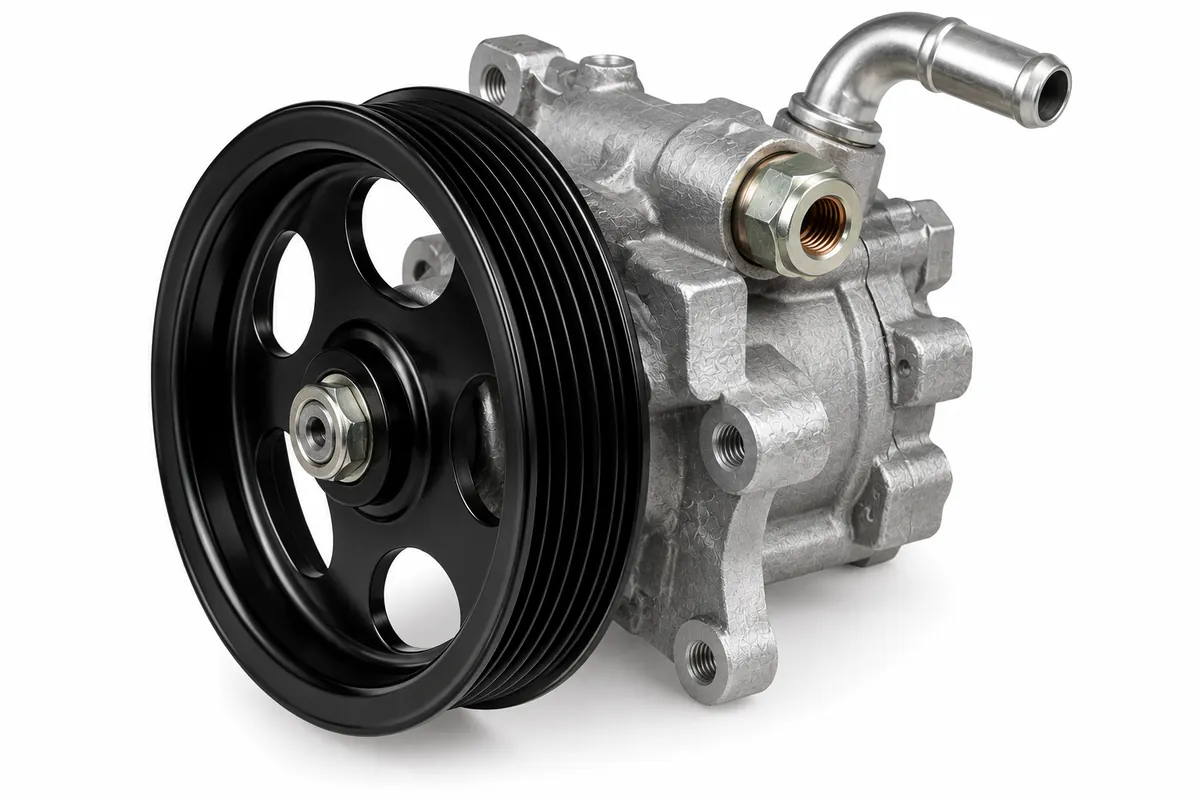
Mobile Power Steering Pump Diagnostics in Daytona Beach
A noisy or difficult steering system does not automatically need a new power steering pump.
Depending on the vehicle and symptoms, diagnosis can include checking:
- Power steering fluid level
- Fluid condition
- Reservoir condition
- Pump leakage
- Pump pulley
- Drive belt
- Belt tension
- Pressure hose
- Return hose
- Hose restrictions
- Air entering the hydraulic system
- Pump noise
- Steering effort
- Pump pressure and flow where appropriate
- Steering rack or gearbox
- Power steering cooler
- Electrical connections on electro-hydraulic systems
The goal is to determine whether the pump itself has failed or whether another problem is preventing the steering system from receiving proper hydraulic assist.
What Does a Power Steering Pump Do?
A hydraulic power steering pump circulates pressurized fluid through the steering system.
When the engine is running, the pump typically draws fluid from the reservoir and sends it through the pressure circuit toward the steering rack or steering gearbox.
The hydraulic pressure assists the driver when turning the steering wheel.
A typical system includes:
- Power steering pump
- Fluid reservoir
- Pressure hose
- Return hose
- Steering rack or steering gearbox
- Drive belt or integrated electric drive
- Fluid cooler on some vehicles
If pressure or fluid flow is inadequate, steering effort can increase substantially.
Hydraulic vs. Electric Power Steering
Not every vehicle has a conventional engine-driven power steering pump.
Modern vehicles can use:
Hydraulic Power Steering
An engine-driven pump produces hydraulic pressure.
Electro-Hydraulic Power Steering
An electric motor drives a hydraulic pump instead of the engine belt.
Electric Power Steering
An electric motor provides steering assist directly without hydraulic fluid or a conventional power steering pump.
Before diagnosing a “power steering pump,” the actual steering system installed on the vehicle must be identified.
Does My Car Have a Power Steering Pump?
If your vehicle uses full electric power steering, it may not have:
- Hydraulic pump
- Power steering fluid
- Pressure hose
- Hydraulic steering rack
Some vehicles that appear to have electric steering actually use an electro-hydraulic pump, which still circulates fluid but is driven electrically.
The repair procedure is very different depending on system design.
Signs of a Bad Power Steering Pump
Possible symptoms include:
- Whining while turning
- Groaning noise
- Hard steering
- Steering difficult at low speed
- Intermittent steering assist
- Steering becomes heavier when parking
- Power steering fluid leak
- Pump pulley wobble
- Pump bearing noise
- Foamy fluid
- Steering assist that fades as the system warms up
These symptoms can point toward pump trouble, but several other steering-system faults can produce similar complaints.
Power Steering Pump Whining Noise
Whining is one of the most commonly associated power steering complaints.
Possible causes include:
- Low fluid
- Air in the system
- Restricted fluid supply
- Worn pump
- Incorrect fluid
- Cavitation
- Reservoir restriction
A whining pump should not automatically be replaced before the fluid level and possibility of air entering the system are checked.
Power Steering Pump Groaning
A groaning sound during steering can occur when the pump is under increased hydraulic load.
Possible causes include:
- Low fluid
- Air contamination
- Weak pump
- Restricted hose
- Steering rack problem
- Incorrect fluid
The sound may become especially noticeable when turning the steering wheel at low speed.
Power Steering Noise When Turning
Noise while turning can come from more than the pump.
Other possible sources include:
- Strut mounts
- Suspension joints
- Tie rods
- Steering shaft
- Steering rack
- Belt
- Idler or tensioner pulley
If the sound changes directly with hydraulic steering load, the power steering system deserves closer evaluation, but diagnosis should confirm the source.
Hard Steering
Loss of hydraulic assist can make the steering wheel noticeably harder to turn.
Possible causes include:
- Failed pump
- Low power steering fluid
- Broken drive belt
- Slipping belt
- Restricted pressure hose
- Restricted return hose
- Steering rack problem
- Air in the hydraulic system
- Damaged pulley
- Control fault on electro-hydraulic systems
Steering effort alone does not identify which component has failed.
Hard Steering at Low Speed
Power steering assist is particularly noticeable during:
- Parking
- Tight turns
- Low-speed maneuvering
A weak hydraulic system may therefore first become obvious when parking.
If steering becomes heavy at low speed but feels more manageable once the vehicle is moving, hydraulic assist should be evaluated.
Power Steering Works Sometimes
Intermittent assist can occur from:
- Pump wear
- Air entering the system
- Low fluid level
- Belt slipping
- Hose restriction
- Electrical fault on electro-hydraulic systems
- Steering rack fault
The conditions under which assistance disappears can provide valuable diagnostic information.
Power Steering Gets Hard When Hot
Some worn pumps perform better when the fluid is cold and lose efficiency as the hydraulic fluid warms.
Possible causes can include:
- Internal pump wear
- Pressure loss
- Fluid breakdown
- Internal leakage in steering rack or gearbox
Testing the system under the conditions that produce the symptom can help identify the cause.
Power Steering Fluid Leak
A power steering pump can leak, but not every power steering leak comes from the pump.
Common leak sources include:
- Pump shaft seal
- Pump body seal
- Reservoir connection
- Pressure hose
- Return hose
- Steering rack
- Steering gearbox
- Cooler
- Hose fittings
Fluid can run along components and make the pump appear to be leaking when the source is actually above or beside it.
Power Steering Pump Shaft Seal Leak
The pump shaft extends through the front of many traditional pumps where the pulley is mounted.
A worn shaft seal can allow fluid to leak behind the pulley.
Evidence may include:
- Wet pump front
- Fluid thrown around pulley area
- Low fluid level
- Belt contamination
Fluid in this location can eventually affect belt performance as well.
Power Steering Pump Body Leak
Some pumps can leak from:
- Housing seams
- Seals
- O-rings
- Rear cover
- Reservoir mounting point
The exact leak source should be identified before deciding whether the pump assembly itself requires replacement.
Power Steering Reservoir Leak
Some pumps use an integrated reservoir, while others use a remote reservoir connected by hoses.
Possible reservoir leaks include:
- Cracked plastic
- Damaged cap
- Hose connection
- Seal between reservoir and pump
- Overfilled fluid escaping during operation
A leaking reservoir does not always require replacing the pump.
Low Power Steering Fluid
Low fluid can cause:
- Whining
- Groaning
- Foamy fluid
- Reduced steering assist
- Pump damage
Hydraulic power steering fluid is not normally consumed during operation.
If the level repeatedly drops, there is usually a leak that should be located.
Can Low Power Steering Fluid Damage the Pump?
Yes.
A hydraulic pump depends on proper fluid supply for:
- Hydraulic operation
- Lubrication
- Cooling
Running the pump with very low fluid can cause:
- Cavitation
- Excessive noise
- Internal wear
- Heat buildup
- Complete pump failure
Correcting the leak before the pump runs dry can sometimes prevent more expensive damage.
Foamy Power Steering Fluid
Foam or bubbles in the reservoir usually indicate that air is entering or remaining in the hydraulic system.
Possible causes include:
- Low fluid
- Loose suction-side hose
- Damaged O-ring
- Reservoir connection leak
- Improper bleeding
- Excessive aeration
Air can make a good pump sound bad.
The source of the aeration should be corrected before condemning the pump.
Power Steering Fluid Bubbles
Bubbles circulating through the reservoir can indicate:
- Air ingestion
- Incomplete bleeding
- Suction-side leak
- Low fluid
Unlike an external pressure-side leak, a suction-side connection may draw air into the system without leaving a large puddle.
This can create persistent whining and inconsistent steering assist.
Power Steering Pump Cavitation
Cavitation occurs when the pump does not receive a solid supply of hydraulic fluid.
Possible causes include:
- Low fluid level
- Restricted reservoir
- Restricted inlet hose
- Air entering suction side
- Incorrect fluid behavior
Cavitation can produce:
- Whining
- Foaming
- Vibration
- Reduced pump life
Replacing the pump without correcting the supply problem can damage the replacement pump.
Power Steering Fluid Condition
Power steering fluid can deteriorate over time.
We may check for:
- Dark color
- Burnt odor
- Metallic contamination
- Foaming
- Incorrect fluid
- Debris
Contaminated fluid can indicate wear elsewhere in the system and should be considered before installing a replacement pump.
Correct Power Steering Fluid
Vehicles can require different hydraulic fluids.
Depending on the application, the system may specify:
- Dedicated power steering fluid
- Automatic transmission fluid of a particular specification
- Mineral hydraulic fluid
- Manufacturer-specific fluid
Fluid should be selected by vehicle specification rather than color alone.
Using the wrong fluid can affect:
- Seal life
- Pump operation
- Steering feel
- Noise
Power Steering Pump and Serpentine Belt
Many hydraulic power steering pumps are driven by the engine's serpentine belt.
A belt problem can prevent the pump from operating normally.
Possible problems include:
- Loose belt
- Worn belt
- Contaminated belt
- Damaged tensioner
- Incorrect routing
- Broken belt
A good power steering pump cannot produce normal hydraulic pressure if it is not being driven correctly.
Slipping Belt and Power Steering
A slipping belt can cause:
- Intermittent steering assist
- Squealing
- Reduced pump speed
- Heavy steering
This can be especially noticeable during tight turns when hydraulic load increases.
The belt, tensioner, and pulley system should be checked before replacing the pump.
Power Steering Pump Pulley
The pump pulley transfers belt rotation into the pump shaft.
Possible pulley problems include:
- Cracks
- Bent pulley
- Wobble
- Misalignment
- Damaged grooves
- Incorrect installation depth
A damaged or misaligned pulley can affect belt tracking and pump operation.
Power Steering Pump Pulley Wobble
Visible pulley wobble may indicate:
- Bent pulley
- Worn pump shaft or bearing
- Improper pulley installation
- Mounting issue
The source should be identified before installing another belt or pump.
Power Steering Pump Bearing Noise
A failing pump bearing can cause mechanical noise even before hydraulic pressure is completely lost.
Possible symptoms include:
- Growling
- Grinding
- Pulley wobble
- Noise that changes with engine speed
The pump should be distinguished from nearby components such as:
- Alternator
- Idler pulley
- Belt tensioner
- AC compressor
A belt-driven accessory noise can travel and be difficult to identify by sound alone.
Power Steering Pump vs. Belt Tensioner
A bad belt tensioner can reduce belt grip on the pump pulley.
This can cause:
- Squealing
- Intermittent steering assist
- Belt vibration
The pump may be working normally but simply not being driven at the proper speed.
Tensioner condition should be checked when belt slip is suspected.
Power Steering Pressure Hose
The high-pressure hose carries pressurized hydraulic fluid from the pump toward the steering gear.
Problems can include:
- Fluid leakage
- Damaged fitting
- Hose deterioration
- Internal restriction
A restricted pressure hose can create unusual steering behavior and may increase pump load.
Power Steering Return Hose
The return hose carries lower-pressure fluid back toward the reservoir or pump.
Even though it operates at lower pressure, it can still develop:
- Cracks
- Leaks
- Loose clamps
- Internal deterioration
- Restrictions
A restricted return circuit can affect overall hydraulic operation.
Power Steering Pump vs. Hose Leak
Fluid covering the pump does not automatically mean the pump is leaking.
A hose fitting located above the pump can leak fluid downward.
The leak should be cleaned and traced to its actual source.
Replacing a good pump will not correct a damaged pressure hose or return hose.
Power Steering Pump vs. Steering Rack
A steering rack can also cause hydraulic steering problems.
Possible rack-related problems include:
- External seal leakage
- Internal hydraulic leakage
- Binding
- Uneven assist
- Fluid contamination
A weak-feeling system can be caused by either insufficient pump output or internal leakage within the rack.
The two should be distinguished before replacement.
Power Steering Pump vs. Steering Gearbox
Vehicles using a recirculating-ball steering gearbox can also develop:
- Internal leakage
- External leaks
- Binding
- Reduced hydraulic assist
A pump should not be replaced simply because steering assist is poor.
The steering gear itself may be the source.
How a Weak Power Steering Pump Is Diagnosed
A weak pump may still:
- Turn
- Circulate fluid
- Make little noise
but fail to produce sufficient pressure or flow under load.
Diagnosis can involve evaluating:
- Steering effort
- Pump noise
- Fluid condition
- Pump drive
- Hose condition
- Pressure and flow where appropriate
This is different from diagnosing a pump that has completely seized.
Power Steering Pump Pressure Test
On suitable hydraulic systems, a pressure test can help determine whether the pump can develop the specified hydraulic pressure.
Testing may involve connecting appropriate equipment to the pressure circuit and observing system performance under controlled conditions.
Results can help distinguish between:
- Weak pump
- Restriction
- Steering-gear problem
Pressure testing must be performed according to the vehicle's specifications because power steering systems operate at high hydraulic pressure.
Power Steering Pump Flow
A pump must provide both appropriate pressure and fluid flow.
A pump may produce some pressure but still perform poorly because of:
- Internal wear
- Inadequate flow
- Restricted inlet
- Aerated fluid
Hydraulic diagnosis should consider overall pump performance rather than judging the system only by noise.
Steering Hard Only in One Direction
If steering assist is poor primarily when turning one direction, the pump is not necessarily the most likely cause.
The pump supplies the system regardless of steering direction.
One-direction assist problems can point toward:
- Steering rack
- Steering gearbox
- Internal control valve
- Mechanical binding
Directional symptoms should be considered before replacing the pump.
Power Steering Pump Whines but Steering Feels Normal
A pump can make noise before assist noticeably deteriorates.
However, whining with otherwise normal steering can also result from:
- Air in fluid
- Incorrect fluid
- Low fluid
- Inlet restriction
Noise alone does not prove internal pump failure.
Power Steering Pump Stops Working at Idle
If assist is weak at idle but improves when engine speed increases, possible causes include:
- Weak pump
- Low fluid
- Slipping belt
- Internal hydraulic leakage
- Restricted supply
A worn pump may produce enough output at higher RPM but inadequate assist at idle.
The system should still be tested before replacement.
Power Steering Gets Easier When Revving Engine
Improved steering assist as engine speed increases can suggest insufficient pump output at lower speeds.
Possible causes include:
- Worn pump
- Belt slip
- Low fluid
- Hydraulic restriction
This symptom is useful but should be evaluated with the rest of the hydraulic system.
Steering Wheel Jerks or Pulses
Jerking or pulsing assistance can sometimes occur because of:
- Air in the system
- Low fluid
- Belt slip
- Pump irregularity
- Steering rack problems
The steering system should be checked before assuming the pump itself is defective.
Power Steering Pump Seized
A severely failed pump can seize mechanically.
Possible consequences include:
- Belt squeal
- Belt smoke
- Broken serpentine belt
- Pulley stops turning
- Sudden loss of steering assist
Because the serpentine belt may also drive other accessories, a seized pump can potentially affect:
- Alternator
- Water pump on some engines
- AC compressor drive
The vehicle should not continue running with a severely seized belt-driven accessory.
Can a Bad Power Steering Pump Break the Serpentine Belt?
Yes, in severe cases.
A seized pump or damaged pulley can create enough resistance to:
- Overheat belt
- Throw belt
- Shred belt
- Break belt
If a belt failed near the power steering pump, the accessories and pulleys should be checked before simply installing a new belt.
Power Steering Pump and Engine RPM
Traditional hydraulic pump speed follows engine speed because the pump is belt-driven.
That means pump output changes as engine RPM changes.
Symptoms that improve or worsen with RPM can therefore provide useful clues.
Electro-hydraulic systems operate differently because their pumps are driven by an electric motor.
Electro-Hydraulic Power Steering Pump
Some vehicles use a hydraulic steering system with an electrically driven pump.
These systems may contain:
- Electric motor
- Hydraulic pump
- Integrated electronics
- Fluid reservoir
- High-current wiring
Diagnosis can require checking:
- Battery voltage
- Power supply
- Ground
- Fuse
- Electrical connectors
- Communication faults
- Pump motor operation
- Hydraulic fluid
A problem with an electro-hydraulic pump may be electrical rather than purely mechanical.
12-Volt Electric Power Steering Pumps
Electric hydraulic pumps are sometimes described as 12-volt power steering pumps.
On factory applications, these systems are engineered to work with the vehicle's:
- Electrical system
- Steering controls
- Hydraulic pressure requirements
They should not be treated like a simple universal accessory motor.
Correct control and hydraulic compatibility matter.
Can an Electric Power Steering Pump Be Replaced?
Yes, where the vehicle uses an electro-hydraulic system.
However, replacement may involve more than disconnecting hydraulic hoses.
Depending on vehicle design, service can involve:
- High-current electrical connections
- Control wiring
- Hydraulic lines
- System bleeding
- Fault-code clearing
- Initialization or programming
The procedure depends on the specific vehicle.
Traditional Pump vs. Electro-Hydraulic Pump
A conventional pump is generally driven by an engine belt.
An electro-hydraulic pump is driven by an electric motor.
The symptoms can overlap, but the diagnostic approach differs significantly.
A conventional pump problem may involve:
- Belt
- Pulley
- Mechanical pump wear
An electro-hydraulic problem may involve:
- Electrical supply
- Motor
- Control electronics
- Communication
Identifying the system first prevents incorrect diagnosis.
Power Steering Pump Replacement
Once testing confirms that the pump has failed, replacement can generally involve:
- Confirm the pump fault. We verify that steering symptoms are being caused by the pump and not the belt, hoses, rack, gearbox, fluid level, or another component.
- Inspect the fluid. Contaminated or incorrect fluid may indicate additional service needs.
- Inspect for leaks. Pump, reservoir, hoses, and steering gear are checked.
- Allow components to cool as necessary.
- Remove access components. Covers, intake parts, or brackets may need to be moved.
- Relieve belt tension where applicable.
- Remove the drive belt from the pump pulley.
- Disconnect hydraulic lines. Open lines are protected from contamination.
- Disconnect reservoir connections where applicable.
- Disconnect electrical connections on electro-hydraulic systems.
- Remove the pump mounting hardware.
- Remove the pump assembly.
- Inspect the mounting area and related hoses.
- Transfer the pulley or reservoir if the replacement design requires it.
- Install the replacement pump.
- Reconnect hydraulic fittings with the proper seals.
- Install and align the pulley where applicable.
- Reinstall the drive belt and verify routing.
- Fill the system with the specified fluid.
- Bleed air from the steering system.
- Inspect for leaks.
- Verify steering assist and pump noise.
- Recheck fluid level after circulation.
Replacement is not complete until the hydraulic system has been properly filled, bled, and checked for normal operation.
Power Steering Pump Pulley Removal
Many power steering pump pulleys are pressed onto the pump shaft.
They may require a dedicated puller and installer.
Improper removal methods can damage:
- Pulley
- Pump shaft
- Replacement pump
The pulley should not be hammered off or forced into position.
Installing a Power Steering Pump Pulley
Correct pulley depth and alignment are important.
If installed too far in or out, the pulley can cause:
- Belt misalignment
- Belt noise
- Premature belt wear
- Pulley wobble
The pulley should align correctly with the other belt-driven accessories.
Power Steering Pump Bleeding
Air must be removed from the hydraulic system after:
- Pump replacement
- Hose replacement
- Major fluid loss
- Opening hydraulic lines
Depending on vehicle procedure, bleeding may involve:
- Filling reservoir
- Turning steering through its range
- Cycling the pump
- Monitoring bubbles
- Rechecking fluid level
Some systems have specific procedures that should be followed.
Why Bleeding Matters
Air in the system can cause:
- Whining
- Groaning
- Foamy fluid
- Erratic steering assist
- Pump damage
A newly installed pump that whines immediately may not necessarily be defective.
The system may still contain trapped air.
Steering Wheel Lock-to-Lock During Bleeding
Some systems are bled by moving the steering wheel from side to side according to the specified procedure.
However, holding the steering firmly against the mechanical stop for extended periods can create very high hydraulic pressure and heat.
Bleeding should follow the correct vehicle procedure rather than repeatedly forcing the steering against its stops.
Power Steering System Flush
If the old pump failed internally or the fluid is badly contaminated, simply installing a replacement pump into dirty fluid may shorten its life.
A flush may be appropriate when there is:
- Heavy contamination
- Metallic debris
- Incorrect fluid
- Severely degraded fluid
- Internal pump failure
The appropriate procedure depends on the condition of the system.
Metal in Power Steering Fluid
Metallic contamination can indicate internal component wear.
If a failed pump releases debris into the hydraulic system, contamination can circulate through:
- Hoses
- Steering rack
- Reservoir
- Cooler
This should be considered before installing a replacement pump.
Power Steering Reservoir Filter
Some power steering reservoirs contain an internal filter or screen.
If it becomes restricted, the pump may be starved for fluid.
Possible symptoms include:
- Whining
- Foaming
- Reduced assist
- Cavitation
The reservoir can therefore be relevant to diagnosing a noisy pump.
Power Steering Cooler
Some vehicles route hydraulic fluid through a cooler.
A cooler or cooler line problem can cause:
- Leaks
- Restrictions
- Fluid overheating
A damaged or restricted cooler should not be ignored when replacing a pump.
Should Power Steering Hoses Be Replaced With the Pump?
Not automatically.
Hoses should be inspected for:
- Leaks
- Cracking
- Swelling
- Damaged fittings
- Restriction
A good hose does not need replacement simply because the pump is being changed.
However, a leaking or internally damaged hose should be corrected at the same time.
Should the Serpentine Belt Be Replaced With the Pump?
Not automatically.
The belt should be inspected for:
- Cracks
- Fraying
- Glazing
- Fluid contamination
- Rib damage
If leaking power steering fluid has soaked the belt, replacement may be appropriate.
A sound belt can remain in service if its condition is acceptable.
Should the Reservoir Be Replaced With the Pump?
That depends on design and condition.
Replacement may be appropriate if the reservoir is:
- Cracked
- Contaminated
- Internally restricted
- Integrated with the failed pump
If the reservoir is separate and in good condition, it may not need replacement.
New vs. Remanufactured Power Steering Pump
Replacement pumps may be available as:
- New
- Remanufactured
Availability depends on the vehicle.
The important factors include:
- Correct application
- Build quality
- Warranty
- Pulley configuration
- Reservoir configuration
- Hydraulic fitting compatibility
A pump that looks similar is not necessarily correct for the vehicle.
Why a New Power Steering Pump Can Still Whine
A replacement pump may still make noise if the underlying problem remains.
Possible causes include:
- Air in system
- Low fluid
- Wrong fluid
- Restricted reservoir
- Suction-side air leak
- Restricted hose
- Contaminated system
- Incorrect pulley alignment
Replacing the pump without correcting these conditions can result in another noisy or damaged pump.
Why a New Power Steering Pump Can Still Feel Weak
If steering assist remains poor after pump replacement, possible causes include:
- Air in hydraulic system
- Steering rack failure
- Steering gearbox problem
- Hose restriction
- Belt slip
- Incorrect pump
- Electrical control issue on electro-hydraulic systems
The entire system should be considered if symptoms remain.
Can a Power Steering Pump Be Rebuilt?
Some hydraulic pumps can be professionally rebuilt.
Rebuilding may involve replacement of:
- Seals
- Bearings
- Internal wear components
Whether rebuilding is practical depends on:
- Pump design
- Internal damage
- Parts availability
- Cost compared with replacement
For many everyday vehicles, installing a quality replacement pump is the more practical repair.
Power Steering Pump Replacement Cost
Power steering pump replacement cost depends on the vehicle and steering-system design.
Factors can include:
- Vehicle year, make, and model
- Hydraulic vs. electro-hydraulic pump
- Pump location
- Access
- Pulley transfer
- Reservoir configuration
- Fluid specification
- Hose condition
- Belt condition
- Hydraulic contamination
- Required programming or initialization
A simple belt-driven pump can be very different from an electronically controlled electro-hydraulic assembly.
Call Jimmy’s Mobile Care at (386) 308-2509 with your vehicle information and steering symptoms so we can determine the appropriate diagnostic service.
Why Diagnose the Power Steering Pump Before Replacing It?
Several different problems can produce heavy or noisy steering.
Is the Fluid Low?
A leak elsewhere can make a good pump noisy.
Is Air Entering the System?
Air can cause foaming and whining that resembles pump failure.
Is the Drive Belt Slipping?
The pump cannot work properly if it is not being driven correctly.
Is the Pump Receiving Fluid Properly?
A restricted reservoir or inlet hose can starve the pump.
Is the Pressure Hose Restricted?
Hydraulic flow problems can create symptoms similar to a weak pump.
Is the Steering Rack or Gearbox Failing?
Internal leakage or binding can reduce assist even with a good pump.
Is the Vehicle Actually Equipped With Electric Steering?
Some vehicles do not have a hydraulic pump at all.
Is It an Electro-Hydraulic System?
An electrical supply or control fault can disable the pump even if the hydraulic portion is functional.
Testing the system before replacement helps make sure the failed component is actually being repaired.
Mobile Power Steering Pump Diagnostics in Daytona Beach
Jimmy’s Mobile Care provides mobile car power steering pump diagnostics in Daytona Beach for vehicles experiencing:
- Hard steering
- Whining while turning
- Groaning
- Low steering assist
- Intermittent assist
- Power steering fluid leaks
- Foamy fluid
- Pump pulley noise
- Steering that becomes harder at low speeds
We evaluate the pump along with the fluid supply, belt drive, hoses, steering gear, and applicable electrical controls.
Mobile Power Steering Pump Replacement in Daytona Beach
When diagnostics confirm pump failure and the repair is appropriate for mobile service, Jimmy’s Mobile Care can replace many power steering pumps at your Daytona Beach location.
After replacement, we can verify:
- Proper fluid level
- Leak-free connections
- Correct belt and pulley operation
- Removal of trapped air
- Pump noise
- Steering assist
Certain electro-hydraulic systems, heavily contaminated systems, or vehicles requiring specialized programming or extensive disassembly may require additional procedures depending on the application.
Schedule Car Power Steering Pump Diagnostics & Replacement in Daytona Beach
A whining or hard-to-turn steering system does not automatically mean the power steering pump has failed.
The cause may be low fluid, a leak, trapped air, a slipping belt, hose restriction, steering rack problem, or an electrical fault on an electro-hydraulic system.
Jimmy’s Mobile Care diagnoses the steering system before replacement so the actual failure can be identified.
Call Jimmy’s Mobile Care at (386) 308-2509 to schedule car power steering pump diagnostics and replacement in Daytona Beach, FL. Call today and we'll come to your location.