
Car Camshaft Position Sensor Diagnostics & Replacement in Daytona Beach, FL
The camshaft position sensor helps the engine computer determine the position and rotational timing of one or more camshafts. That information is used for functions such as sequential fuel injection, ignition timing, cylinder identification, variable valve timing control, and comparison of camshaft position with crankshaft position.
When a camshaft position sensor fails, produces an intermittent signal, loses power or ground, or reports a signal that no longer agrees with actual engine timing, the vehicle may develop hard starting, extended cranking, stalling, poor performance, reduced fuel economy, a check-engine light, or camshaft-related trouble codes.
Jimmy’s Mobile Care provides car camshaft position sensor diagnostics and replacement in Daytona Beach, FL. We test the cam sensor, its electrical circuit, cam/crank relationship, and related engine data before recommending replacement so a timing-chain problem, variable valve timing fault, crankshaft position sensor, wiring issue, low oil condition, damaged reluctor or trigger wheel, or engine mechanical problem is not mistaken for a bad camshaft position sensor.
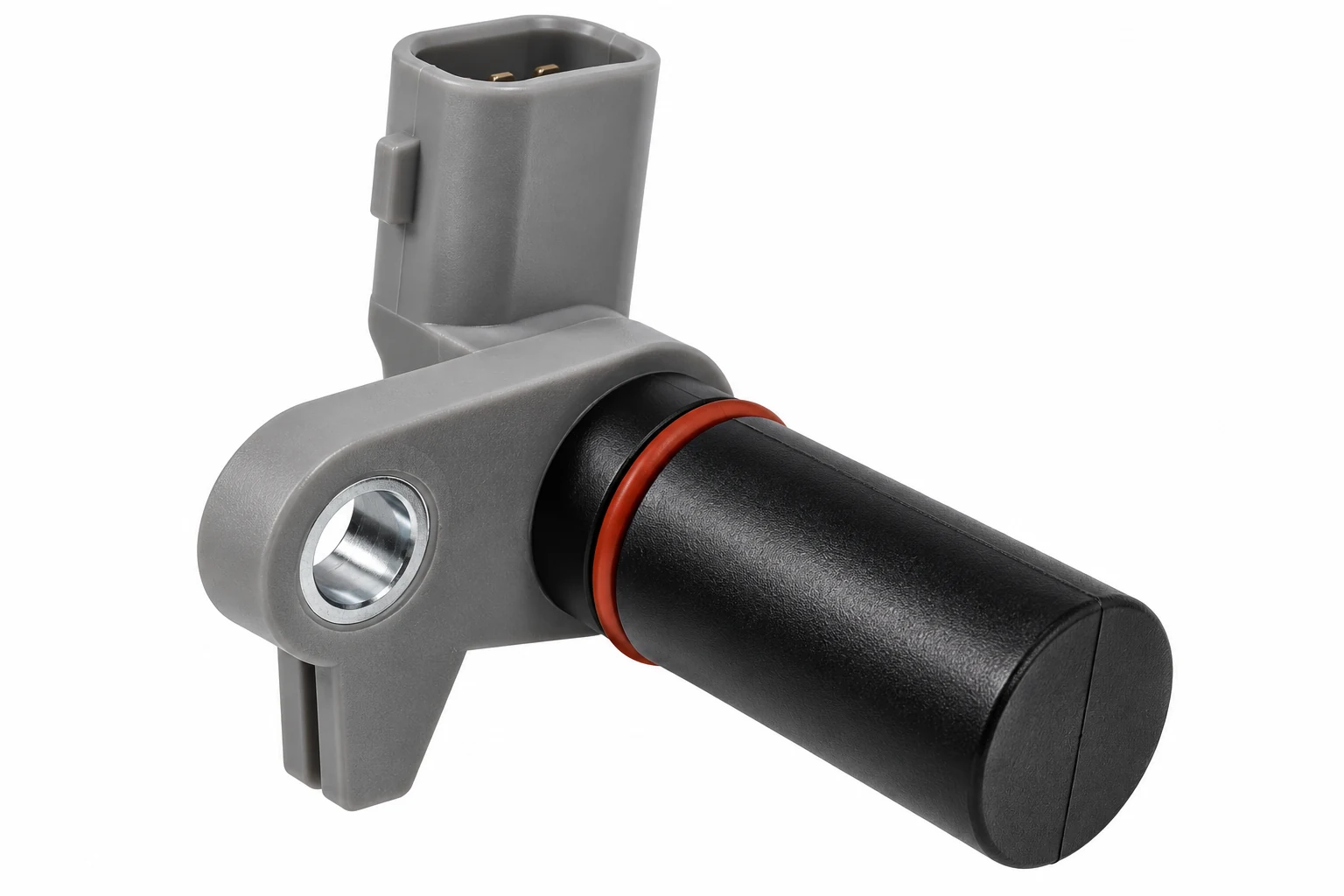
Mobile Camshaft Position Sensor Diagnostics in Daytona Beach
A camshaft-sensor trouble code does not automatically mean the sensor itself needs replacement.
Depending on the vehicle and symptoms, diagnosis can include checking:
- Camshaft position sensor signal
- Sensor power supply
- Sensor ground
- Signal circuit
- Connector terminals
- Wiring harness
- Sensor mounting
- Camshaft position data
- Crankshaft position data
- Cam/crank synchronization
- Intake camshaft position
- Exhaust camshaft position
- Variable valve timing commands
- Actual vs. commanded cam timing
- Engine oil level and condition
- Related trouble codes
- Freeze-frame data
- Engine RPM during cranking
- Timing-chain or timing-belt condition where indicated
- Reluctor, tone wheel, or trigger target where accessible
The goal is to determine whether the sensor is truly faulty or whether it is accurately reporting a mechanical or control problem elsewhere in the engine.
What Is a Camshaft Position Sensor?
A camshaft position sensor monitors the rotational position of a camshaft.
The engine computer uses this information to determine where the valve train is in the engine cycle.
Depending on the engine, there may be:
- One camshaft position sensor
- Two camshaft position sensors
- Four or more camshaft sensors
Engines with separate intake and exhaust camshafts may monitor each shaft independently.
What Does a Camshaft Position Sensor Do?
The camshaft sensor can help the engine computer determine:
- Which cylinder is on its compression stroke
- When to sequence fuel injection
- When to command ignition events
- Whether cam timing matches crank timing
- How variable valve timing is responding
- Whether a camshaft has moved to its commanded position
The exact strategy varies by vehicle.
Camshaft Position Sensor vs. Crankshaft Position Sensor
These sensors perform related but different functions.
Crankshaft Position Sensor
Tracks crankshaft position and engine speed.
Camshaft Position Sensor
Tracks camshaft position and helps identify engine phase.
The engine computer may compare the two signals to determine whether mechanical timing is correct.
A camshaft-related code can therefore result from either an electrical sensor problem or a genuine cam/crank timing problem.
Why Cam and Crank Signals Are Compared
The crankshaft and camshaft are mechanically connected through the engine’s:
- Timing chain
- Timing belt
- Timing gears
Their positions must remain synchronized.
If the computer sees the camshaft in an unexpected position relative to the crankshaft, it may set:
- Correlation codes
- Timing-performance codes
- Camshaft-position codes
This does not automatically mean the cam sensor is defective.
Hall-Effect Camshaft Position Sensor
Many modern camshaft position sensors use Hall-effect technology.
These typically require:
- Power
- Ground
- Signal circuit
As a trigger target passes the sensor, the output switches between electrical states.
The engine computer interprets these transitions as camshaft position information.
Magnetic Camshaft Position Sensor
Some camshaft sensors are variable-reluctance or magnetic sensors.
These generate an AC waveform as a metal target passes the sensor.
Signal characteristics can depend on:
- Engine speed
- Sensor air gap
- Trigger-wheel condition
Testing a magnetic sensor is different from testing a Hall-effect sensor.
Digital Camshaft Position Sensor
Many modern sensors provide a digital square-wave signal.
The important diagnostic features include:
- Correct voltage levels
- Clean transitions
- Consistent frequency
- Proper relationship to crank signal
A sensor can have power and ground yet still produce a distorted or intermittent waveform.
Camshaft Sensor Signal
A good camshaft sensor signal should remain consistent as the engine:
- Cranks
- Idles
- Accelerates
Possible problems include:
- Missing pulses
- Dropouts
- Signal stuck high
- Signal stuck low
- Irregular waveform
- Incorrect timing relationship
The cause may be electrical or mechanical.
Camshaft Sensor Power Supply
Hall-effect cam sensors usually need a voltage supply from the vehicle’s electrical system.
Depending on design, this may be:
- 5 volts
- Battery voltage
- Another regulated supply
If the required power is missing, the sensor cannot function correctly.
Replacing the sensor would not repair an open fuse, broken wire, or failed reference circuit.
Camshaft Sensor Ground
A poor ground can distort or eliminate the sensor signal.
Possible causes include:
- Corroded terminal
- Broken wire
- Loose ground
- High resistance
Ground integrity should be verified rather than assumed.
Camshaft Sensor Signal Wire
The signal circuit carries camshaft-position information to the engine-control module.
Faults can include:
- Open circuit
- Short to ground
- Short to voltage
- High resistance
- Intermittent terminal contact
The sensor should not be condemned until the circuit is checked.
Camshaft Sensor Connector
The connector should be inspected for:
- Bent terminals
- Corrosion
- Oil contamination
- Loose pins
- Broken locking tab
- Harness damage
- Heat deterioration
A new sensor cannot correct a poor electrical connection.
Oil in Camshaft Sensor Connector
Some camshaft sensors are mounted in areas where engine oil can reach the connector if:
- Sensor seal leaks
- Oil travels through the sensor body
- Nearby gasket leaks
Oil intrusion can affect terminal contact.
The source should be corrected along with any damaged electrical connection.
Signs of a Bad Camshaft Position Sensor
Possible symptoms include:
- Check-engine light
- Extended cranking
- Hard starting
- Intermittent no-start
- Stalling
- Rough idle
- Hesitation
- Poor acceleration
- Reduced fuel economy
- Loss of power
- Limp or reduced-power mode
- Engine starts after several attempts
- Camshaft-related diagnostic codes
These symptoms overlap with many other engine faults.
Diagnosis should come before replacement.
Camshaft Sensor and Hard Starting
The engine may use the cam signal to identify cylinder phase during startup.
If the signal is missing or unreliable, some vehicles may:
- Crank longer than normal
- Require several revolutions before starting
- Enter a fallback strategy
Other vehicles may refuse to start under certain failures.
Hard starting alone does not prove the cam sensor is bad.
Extended Cranking
Extended cranking can occur if the computer has difficulty determining which cylinder is ready for:
- Fuel injection
- Ignition
However, extended cranking can also result from:
- Fuel-pressure loss
- Weak battery
- Crankshaft sensor problem
- Engine compression issue
The complete starting system should be considered.
Can a Bad Camshaft Sensor Cause a No-Start?
Yes, on some vehicles.
However, whether a failed cam sensor causes a complete no-start depends on the engine-control strategy.
Some engines can run using:
- Crankshaft signal
- Substitute logic
Others depend much more heavily on camshaft position information.
A no-start should still be diagnosed rather than attributed to the sensor by symptom alone.
Camshaft Sensor and Stalling
An intermittent cam signal may contribute to stalling on some vehicles.
However, stalling can also come from:
- Crankshaft sensor
- Fuel pump
- Ignition power
- Charging-system failure
- Throttle-control fault
Monitoring the cam signal during the failure can help identify whether it is involved.
Camshaft Sensor and Rough Idle
A bad cam signal can interfere with:
- Injection sequencing
- Ignition strategy
- Variable valve timing control
But rough idle is also commonly caused by:
- Vacuum leak
- Misfire
- Fuel injector
- Ignition coil
- Compression problem
The presence of rough idle alone does not establish a cam sensor fault.
Camshaft Sensor and Poor Acceleration
Incorrect camshaft-position information can affect engine-control strategy and variable valve timing.
Possible results include:
- Sluggish acceleration
- Reduced power
- Hesitation
Mechanical timing problems can create the same symptoms and are particularly important when cam correlation codes are present.
Camshaft Sensor and Fuel Economy
A cam signal problem may cause the engine-control module to use less efficient fallback strategies.
Fuel economy can decline.
However, fuel economy is affected by many other conditions, so poor mileage alone should not be used to diagnose a cam sensor.
Camshaft Sensor and Engine Misfire
A camshaft-sensor fault can sometimes contribute to ignition or fuel sequencing problems.
However, cylinder misfires are much more commonly associated with:
- Spark plugs
- Ignition coils
- Fuel injectors
- Compression
- Vacuum leaks
A P030x misfire code does not automatically identify the camshaft sensor.
Check-Engine Light and Camshaft Sensor
Camshaft-position problems can set several types of diagnostic trouble codes.
Common families include:
- P0340
- P0341
- P0342
- P0343
- P0344
- P0345
- P0346
- P0347
- P0348
- P0365
- P0366
- P0367
- P0368
Correlation and timing faults may also include codes such as:
- P0016
- P0017
- P0018
- P0019
The exact meaning depends on the engine configuration.
P0340 Camshaft Position Sensor Circuit
P0340 generally indicates a problem involving a camshaft-position sensor circuit.
Possible causes include:
- Failed sensor
- Wiring fault
- Connector problem
- Missing power or ground
- Mechanical timing issue on some applications
Testing is required before replacement.
P0341 Camshaft Position Sensor Range/Performance
P0341 often means the camshaft signal is present but does not behave as expected.
Possible causes include:
- Weak or distorted sensor signal
- Incorrect air gap
- Damaged trigger target
- Timing-chain stretch
- Incorrect mechanical timing
- Variable valve timing problem
A range/performance code is especially important because the sensor may be accurately reporting a mechanical problem.
P0342 Camshaft Sensor Circuit Low
A low-signal code can result from:
- Sensor failure
- Signal short to ground
- Missing power
- Poor ground
- Wiring problem
The electrical circuit should be verified.
P0343 Camshaft Sensor Circuit High
A high-input fault may be caused by:
- Signal short to voltage
- Sensor fault
- Connector issue
- Wiring damage
The sensor should not automatically be replaced solely because the code contains its name.
P0344 Intermittent Camshaft Sensor Circuit
P0344 indicates an intermittent camshaft-position signal on many vehicles.
Possible causes include:
- Loose connector
- Broken wire
- Heat-sensitive sensor
- Vibration-related dropout
- Damaged trigger wheel
Intermittent problems are often easiest to find by monitoring the signal while manipulating the harness or reproducing operating conditions.
P0345 and Bank 2 Camshaft Sensor Codes
On engines with multiple cylinder banks, P0345 commonly refers to a camshaft-position sensor circuit on Bank 2.
Bank identification must be determined from engine design.
Bank 1 is the bank containing cylinder number 1.
It should not be assumed that Bank 1 is always the driver or passenger side.
P0365 Camshaft Sensor Code
P0365 commonly refers to another camshaft-position sensor circuit, often identified by a different sensor designation.
The exact sensor location depends on:
- Engine
- Bank
- Intake vs. exhaust camshaft
Correct identification is essential before replacement.
P0366 Camshaft Sensor Range/Performance
P0366 commonly indicates a range or performance issue for a particular camshaft sensor.
Possible causes include:
- Sensor signal problem
- VVT fault
- Mechanical timing
- Trigger-wheel problem
The sensor itself is only one possibility.
Intake vs. Exhaust Camshaft Position Sensor
Dual-overhead-cam engines may have separate sensors for:
- Intake camshaft
- Exhaust camshaft
The two sensors may look similar or even use the same part number on some vehicles.
They should not be confused diagnostically.
The code and live data should identify which camshaft is involved.
Bank 1 Camshaft Position Sensor
Bank 1 is the side of the engine containing cylinder number 1.
On an inline engine, there is usually only one bank.
On a V-engine, Bank 1 location varies by manufacturer.
Vehicle-specific information should be used.
Bank 2 Camshaft Position Sensor
Bank 2 is the opposite cylinder bank from Bank 1 on engines that use two banks.
It can contain:
- Intake cam sensor
- Exhaust cam sensor
depending on the engine.
Correct bank and sensor identification prevents replacing the wrong component.
Sensor A and Sensor B
Trouble codes may identify cam sensors as:
- Sensor A
- Sensor B
On many applications, A and B correspond to:
- Intake
- Exhaust
But this convention is not universal enough to guess blindly.
Vehicle-specific service information should be checked.
Camshaft Sensor Location
Camshaft position sensors are usually located near:
- Cylinder head
- Timing cover
- Camshaft sprocket area
Depending on engine design, they may be mounted:
- At front of head
- At rear of head
- In valve cover area
- Through timing cover
Access can range from very easy to significantly restricted.
Multiple Camshaft Sensors
Modern V6, V8, and DOHC engines can have several camshaft sensors.
For example, an engine may monitor:
- Bank 1 intake
- Bank 1 exhaust
- Bank 2 intake
- Bank 2 exhaust
A trouble code must be matched to the correct sensor before replacement.
Camshaft Position Sensor and Variable Valve Timing
Variable valve timing systems intentionally change camshaft position while the engine runs.
The cam sensor tells the engine computer what the camshaft actually did after a command was issued.
If actual position does not match commanded position, the cause may involve:
- Cam sensor
- VVT solenoid
- Oil-control valve
- Low oil pressure
- Dirty engine oil
- Cam phaser
- Timing chain
This makes diagnosis especially important.
Camshaft Sensor vs. VVT Solenoid
The camshaft sensor measures position.
The VVT solenoid controls oil flow used to change camshaft timing on many engines.
A VVT solenoid can fail while the camshaft sensor remains completely accurate.
If the camshaft does not move to the commanded position, the sensor may simply be reporting the problem correctly.
Camshaft Sensor vs. Cam Phaser
A cam phaser mechanically changes camshaft timing relative to the sprocket.
A failed or sticking phaser can produce:
- Cam correlation faults
- Timing-performance codes
- Rattle
- Poor performance
Replacing the sensor will not repair a mechanically failed phaser.
Camshaft Sensor and Engine Oil
Many VVT systems depend on clean engine oil at the correct level and pressure.
Low or dirty oil can interfere with:
- VVT solenoid operation
- Cam-phaser movement
This can produce camshaft-position-related codes even though the sensor itself is good.
Oil condition should therefore be checked during relevant camshaft diagnostics.
Low Oil and Camshaft Codes
Low engine oil may reduce the ability of a VVT system to control cam timing properly.
Possible results include:
- Slow cam response
- Incorrect cam angle
- VVT-related codes
- Correlation faults
Adding oil may correct the operating condition if low level was the cause, but the reason for low oil should still be addressed.
Dirty Oil and VVT Problems
Sludge or contaminated oil can restrict small oil passages and control screens in a VVT system.
This can affect:
- Solenoid operation
- Cam-phaser response
A cam sensor should not be replaced until these possibilities are considered when the code involves cam timing performance.
Camshaft Sensor and Timing Chain
A stretched timing chain can change the physical relationship between the camshaft and crankshaft.
The sensors may accurately report that relationship as incorrect.
Possible symptoms include:
- P0016-P0019 correlation codes
- Rattle
- Extended cranking
- Reduced power
Replacing cam or crank sensors will not restore mechanical timing.
Camshaft Sensor and Timing Belt
If a timing belt has:
- Jumped teeth
- Been installed incorrectly
- Stretched beyond intended condition
- Experienced tensioner failure
cam timing can become incorrect.
The sensor may detect the resulting correlation problem.
Mechanical timing should be checked when the evidence points in that direction.
Camshaft Sensor and Timing-Chain Stretch
Chain wear can produce gradual timing deviation.
Depending on the vehicle, scan data may reveal:
- Cam adaptation values
- Actual cam angle
- Correlation deviation
A sensor-related code combined with mechanical noise or timing data outside specification deserves deeper investigation.
Cam/Crank Correlation
Cam/crank correlation compares the timing of the camshaft signal against the crankshaft signal.
Correct correlation depends on:
- Proper mechanical timing
- Good sensors
- Intact trigger wheels
- Correct VVT position
A correlation code cannot be accurately diagnosed by replacing whichever sensor name appears first.
P0016 Cam/Crank Correlation
P0016 generally indicates a correlation problem between a camshaft and crankshaft.
Possible causes include:
- Stretched timing chain
- Jumped timing
- Cam phaser fault
- VVT control problem
- Sensor signal problem
- Reluctor problem
Mechanical timing is often an important consideration.
P0017 Cam/Crank Correlation
P0017 indicates another cam/crank relationship fault, commonly involving a different camshaft.
Again, the sensor may be good while reporting actual timing deviation.
Proper diagnosis should include both:
- Electrical signal quality
- Mechanical timing relationship
P0018 and P0019
These codes commonly refer to cam/crank correlation on the other cylinder bank of a V-type engine.
The same diagnostic principle applies:
Do not replace a cam sensor until the actual reason for the correlation error is identified.
Camshaft Sensor and Reluctor Wheel
The sensor needs a target to read.
Depending on design, this may be:
- Reluctor wheel
- Tone wheel
- Trigger disc
- Camshaft target
If that target is:
- Damaged
- Loose
- Bent
- Mispositioned
the sensor can produce an abnormal signal even though its electronics are functioning correctly.
Damaged Camshaft Trigger Wheel
A damaged trigger wheel can cause:
- Missing pulses
- Incorrect timing relationship
- Intermittent codes
A replacement sensor cannot correct a damaged physical target.
Camshaft Sensor Air Gap
Some sensors require a specific distance between the sensing element and trigger target.
An excessive or incorrect air gap can weaken the signal.
Possible causes include:
- Incorrect sensor installation
- Debris under sensor mounting surface
- Wrong replacement sensor
- Damaged target
The mounting surface should be clean and intact.
Metal Debris on Magnetic Sensor
Magnetic sensors can attract ferrous debris.
Excessive metal particles may affect:
- Signal strength
- Sensor air gap
If debris is present, it may also indicate internal mechanical wear that should be investigated.
Camshaft Sensor Oscilloscope Testing
An oscilloscope is one of the most useful tools for advanced camshaft-sensor diagnosis.
It can show:
- Signal shape
- Missing pulses
- Voltage levels
- Dropouts
- Noise
- Relationship to crankshaft waveform
This allows electrical and mechanical timing problems to be separated more accurately.
Cam and Crank Waveform Comparison
Viewing the camshaft and crankshaft waveforms at the same time can reveal whether their relationship matches known-good timing.
A shifted waveform can indicate:
- Mechanical timing error
- Trigger-wheel movement
- VVT issue
even when both sensors individually produce clean signals.
Multimeter Cam Sensor Testing
A multimeter can be useful for checking:
- Power supply
- Ground
- Some signal behavior
- Resistance on appropriate magnetic sensors
However, a digital meter may average a rapidly changing signal and miss brief dropouts.
Oscilloscope testing can provide more detail when necessary.
Resistance Testing Camshaft Sensors
Resistance checks may apply to some magnetic sensor designs.
They are not universally meaningful for Hall-effect sensors containing electronics.
Testing procedure should match the sensor technology.
A generic resistance specification should not be applied to every camshaft sensor.
Testing Sensor During Cranking
If the vehicle will not start, checking camshaft signal during cranking can determine whether the computer is receiving a usable signal.
At the same time, crankshaft signal should often be considered because both may be needed for synchronization.
Camshaft Sensor RPM Data
The camshaft sensor itself does not normally provide the primary engine RPM reading shown on a scan tool.
That usually comes from the crankshaft sensor.
If scan data shows zero RPM during cranking, a crankshaft-signal problem may deserve attention before the cam sensor.
Camshaft Sensor and Tachometer
A dead tachometer during cranking or running does not automatically identify the cam sensor.
Tachometer data is generally derived from:
- Crankshaft signal
- Engine-control data
The exact source varies by vehicle.
Camshaft Sensor and Fuel Injection
Camshaft position allows many engine-control systems to determine which cylinder is on its compression stroke.
This helps with sequential fuel injection.
If the signal is lost, some systems may temporarily operate using:
- Batch injection
- Estimated cylinder phase
This can affect starting and efficiency.
Camshaft Sensor and Ignition Timing
Crankshaft position is the primary reference for ignition timing on most modern engines, while camshaft position helps establish cylinder phase and timing relationships.
A cam-sensor fault can affect ignition strategy, but it should not be confused with an ignition-coil failure.
Camshaft Sensor and Spark
A missing cam signal does not universally mean there will be no spark.
Whether spark is disabled depends on vehicle strategy.
When diagnosing no spark, consider:
- Crankshaft signal
- Camshaft signal
- Coil power
- PCM control
- Security authorization
Camshaft Sensor and Fuel Pump
The camshaft sensor does not directly power the fuel pump.
The engine-control system decides whether to operate the pump based on several conditions.
A fuel-pump fault should be diagnosed independently unless scan data shows loss of engine-position information affecting control.
Camshaft Sensor and Transmission Problems
Some vehicles use engine load and speed information for transmission strategy, but a camshaft sensor is primarily an engine-position sensor.
A severe engine-management fault can indirectly affect shift behavior.
Transmission symptoms alone should not be used to diagnose the cam sensor.
Camshaft Sensor and Reduced-Power Mode
When the engine computer cannot trust camshaft-position information, it may limit performance.
Possible responses can include:
- Reduced RPM
- Disabled variable valve timing
- Conservative ignition strategy
This varies by manufacturer.
Camshaft Sensor and Limp Mode
Some vehicles may enter a fallback or limp strategy after detecting a significant cam-position fault.
The vehicle may still run but with:
- Reduced power
- Poor acceleration
- Check-engine light
The underlying fault should still be diagnosed rather than simply clearing the code.
Intermittent Camshaft Sensor Failure
Some sensors fail only under certain conditions such as:
- Engine heat
- Vibration
- Extended driving
The engine may start normally cold but stall or refuse to restart hot.
This pattern can increase suspicion of an electronic sensor failure, but wiring and other heat-sensitive components must also be considered.
Camshaft Sensor Fails When Hot
Heat can affect internal electronics or magnetic characteristics.
A sensor may produce:
- Normal cold signal
- Weak or missing hot signal
If the problem can be reproduced, comparing cold and hot waveforms can be very useful.
Car Starts Cold but Not Hot
A heat-sensitive camshaft sensor is one possibility.
Other common possibilities include:
- Crankshaft sensor
- Starter performance
- Fuel-pressure issue
- Injector leakage
The signal should be monitored during the hot no-start.
Wiring Harness Near Camshaft Sensor
Camshaft sensor wiring may run near:
- Exhaust components
- Cylinder head
- Ignition coils
- Oil leaks
Heat and contamination can damage insulation or connectors.
Harness inspection is important before replacing the sensor.
Wiring Rub-Through
A harness can rub against:
- Bracket
- Engine cover
- Cylinder head
until insulation wears through.
This can create intermittent:
- Short circuits
- Signal loss
A replacement sensor will not solve damaged wiring.
Camshaft Sensor Replacement
Once diagnostics confirm that the camshaft position sensor itself is faulty, replacement generally involves:
- Verify the complaint and related trouble codes.
- Identify the correct camshaft sensor.
- Determine the correct bank and intake/exhaust designation where applicable.
- Review live camshaft data.
- Check related crankshaft and correlation information.
- Verify sensor power, ground, and signal where appropriate.
- Inspect wiring and connector condition.
- Consider timing-chain, timing-belt, and VVT faults when indicated.
- Turn ignition off.
- Allow the engine to cool if necessary.
- Remove covers or intake components required for access.
- Disconnect the sensor electrical connector.
- Remove the sensor retaining bolt or fastener.
- Carefully remove the sensor from the cylinder head or timing cover.
- Inspect the old sensor and its tip.
- Check for excessive oil contamination or metal debris.
- Inspect the mounting bore and sealing surface.
- Compare the replacement sensor with the original.
- Install a new O-ring or seal where supplied.
- Lubricate the O-ring appropriately if specified.
- Install the sensor squarely into its bore.
- Tighten the retaining bolt to the appropriate specification.
- Reconnect the electrical connector.
- Reinstall removed components.
- Start the engine.
- Verify camshaft-position data.
- Check for normal starting and idle operation.
- Clear applicable diagnostic codes when appropriate.
- Road-test the vehicle if needed.
- Confirm the original fault does not return.
The specific procedure varies substantially by vehicle.
Camshaft Sensor O-Ring
Many camshaft sensors use an O-ring to seal engine oil inside the cylinder head or timing cover.
A hardened or damaged O-ring can cause:
- Oil leakage around sensor
The seal should be replaced when appropriate during sensor service.
Oil Leak From Camshaft Sensor
Oil around the sensor does not necessarily mean the sensor electronics are defective.
The problem may simply be:
- O-ring
- Seal
However, oil entering the electrical connector can create a separate electrical problem.
Both issues should be evaluated.
Camshaft Sensor Retaining Bolt
Many sensors are retained by a single small bolt.
These bolts are often threaded into:
- Aluminum cylinder head
- Aluminum timing cover
Overtightening can damage the threads or sensor housing.
Correct torque is important.
Sensor Stuck in Cylinder Head
A sensor O-ring can harden and make removal difficult.
The sensor should be worked out carefully rather than pried aggressively against fragile:
- Plastic housing
- Aluminum sealing surface
Breaking the sensor during removal can make the repair more complicated.
Camshaft Sensor Replacement and Relearn
Some vehicles may require a relearn or adaptation after certain engine-position sensor repairs.
Possible procedures include:
- Cam/crank variation relearn
- Idle adaptation
- Manufacturer-specific reset
A simple sensor replacement does not require programming on every vehicle.
Does a Camshaft Sensor Need Programming?
Usually, a basic camshaft position sensor itself does not require programming.
However, the vehicle may require a relearn procedure in certain applications.
Programming should not be confused with adaptation or relearning.
Cam/Crank Relearn
Some engine-control systems store learned relationships between camshaft and crankshaft signals.
After certain repairs, a relearn may be required.
The procedure varies and can depend on:
- Scan-tool capability
- Engine temperature
- Vehicle speed
- Specific operating conditions
New Camshaft Sensor but Code Comes Back
If the code returns after replacement, possible causes include:
- Wiring problem
- Incorrect sensor
- Poor-quality replacement sensor
- Timing-chain stretch
- VVT problem
- Damaged trigger wheel
- Connector fault
Another sensor should not automatically be installed.
New Camshaft Sensor but Hard Start Remains
Possible causes include:
- Crankshaft sensor
- Fuel-pressure loss
- Incorrect mechanical timing
- Battery or starter speed
- Compression problem
The starting condition should be diagnosed again rather than assuming the new sensor is defective.
New Camshaft Sensor but P0016 Returns
A recurring P0016 after cam-sensor replacement should increase suspicion of:
- Mechanical timing
- Cam phaser
- VVT control
- Crankshaft signal
- Trigger-wheel relationship
A correlation code is not usually solved by repeatedly replacing sensors.
New Camshaft Sensor but Engine Still Stalls
Possible causes include:
- Crankshaft sensor
- Fuel delivery
- Power-supply interruption
- Wiring
- Engine-control relay
The actual loss during the stall should be monitored.
Aftermarket Camshaft Position Sensors
Sensor signal quality and calibration matter.
A low-quality replacement can create:
- Incorrect waveform
- Intermittent code
- Hard starting
- Correlation problems
Using a high-quality sensor that matches the original application can reduce repeat problems.
OEM Camshaft Position Sensors
An original-equipment or OE-supplier sensor can be particularly important on applications sensitive to:
- Signal amplitude
- Waveform shape
- Trigger threshold
The correct part should match:
- Engine
- Bank
- Sensor position
Used Camshaft Sensors
A used sensor may operate correctly, but its:
- Age
- Heat exposure
- Mileage
are unknown.
For an electronic component subject to heat cycling, a quality new sensor is generally a more predictable repair.
Camshaft Sensor Replacement Cost
Camshaft position sensor replacement cost depends on factors such as:
- Vehicle year, make, and model
- Number of cam sensors
- Sensor location
- Intake vs. exhaust position
- Bank 1 vs. Bank 2
- Access difficulty
- Additional disassembly
- Diagnostic time
- Wiring or connector repair
One sensor may be accessible in minutes while another can be buried under intake components or engine covers.
Call Jimmy’s Mobile Care at (386) 308-2509 with your vehicle information and symptoms so we can determine the appropriate camshaft-sensor diagnostic service.
Why Diagnose a Camshaft Sensor Before Replacing It?
Camshaft-position codes frequently overlap with other engine-control and mechanical problems.
Does the Sensor Have Proper Power and Ground?
A sensor cannot operate correctly without its electrical supply.
Does the Sensor Produce a Clean Signal?
A missing or distorted waveform may point toward the sensor or wiring.
Does the Signal Drop Out When Hot?
A heat-sensitive electronic fault may only appear after the engine warms up.
Does Cam Position Agree With Crank Position?
Incorrect correlation can indicate mechanical timing rather than a failed sensor.
Is the Timing Chain Stretched?
A stretched chain can shift actual cam timing while both sensors remain functional.
Has the Timing Belt Jumped?
Mechanical timing error can create sensor-related codes.
Is the VVT System Moving the Cam Correctly?
Low oil, a sticking solenoid, or failed phaser can make actual cam position differ from commanded position.
Is the Trigger Wheel Damaged?
A damaged reluctor or target can distort the signal.
Is the Connector or Harness Intermittent?
Loose terminals and heat-damaged wiring can produce the same symptoms as a failing sensor.
Is the Correct Sensor Being Diagnosed?
Engines with multiple banks and camshafts may have several nearly identical sensors.
Testing these areas helps avoid replacing a good sensor while the real problem remains.
Mobile Camshaft Position Sensor Diagnostics in Daytona Beach
Jimmy’s Mobile Care provides mobile car camshaft position sensor diagnostics in Daytona Beach for vehicles experiencing:
- P0340
- P0341
- P0342
- P0343
- P0344
- P0345
- P0365
- P0366
- P0016
- P0017
- Hard starting
- Extended cranking
- Intermittent no-start
- Stalling
- Reduced power
- Cam/crank correlation faults
- Suspected camshaft-sensor wiring problems
We evaluate the sensor signal, electrical circuit, cam/crank relationship, and related engine information before determining whether the sensor itself requires replacement.
Mobile Camshaft Position Sensor Replacement in Daytona Beach
When diagnostics confirm a defective camshaft position sensor and the repair is appropriate for on-site service, Jimmy’s Mobile Care can replace many camshaft sensors at your Daytona Beach location.
After replacement, we can verify:
- Correct sensor location
- Proper connector engagement
- Sensor sealing
- Camshaft-position data
- Normal starting behavior
- Cam/crank synchronization where applicable
- No immediate return of the original fault
If the code is actually caused by timing-chain wear, a jumped timing belt, damaged trigger wheel, cam phaser, VVT solenoid, oil-pressure problem, or wiring fault, those issues must be repaired instead of unnecessarily replacing the sensor.
Schedule Car Camshaft Position Sensor Diagnostics & Replacement in Daytona Beach
A camshaft-position code, extended crank, intermittent no-start, stall, or reduced-power complaint does not automatically mean the cam sensor has failed.
The sensor may be accurately reporting a timing-chain problem, variable valve timing fault, damaged trigger target, or incorrect cam/crank relationship. Electrical problems in the connector or harness can also produce the same codes as a failed sensor.
Jimmy’s Mobile Care tests the camshaft position sensor and the related electrical and timing information before replacement so the part is replaced only when the diagnosis supports it.
Call Jimmy’s Mobile Care at (386) 308-2509 to schedule car camshaft position sensor diagnostics and replacement in Daytona Beach, FL. Call today and we'll come to your location.