
Car Battery Terminal Inspection & Replacement in Daytona Beach, FL
Battery terminals form the electrical connection between the battery posts and the vehicle’s battery cables. If a terminal becomes loose, corroded, cracked, stretched, overheated, or damaged, it can restrict current even when the battery and cables themselves are still good.
Jimmy’s Mobile Care provides car battery terminal inspection and replacement in Daytona Beach, FL. We inspect the battery posts, positive and negative terminal connections, cable attachment, corrosion, and terminal fit before recommending replacement so a weak battery, internally damaged cable, poor ground, or charging-system problem is not mistaken for a bad terminal.
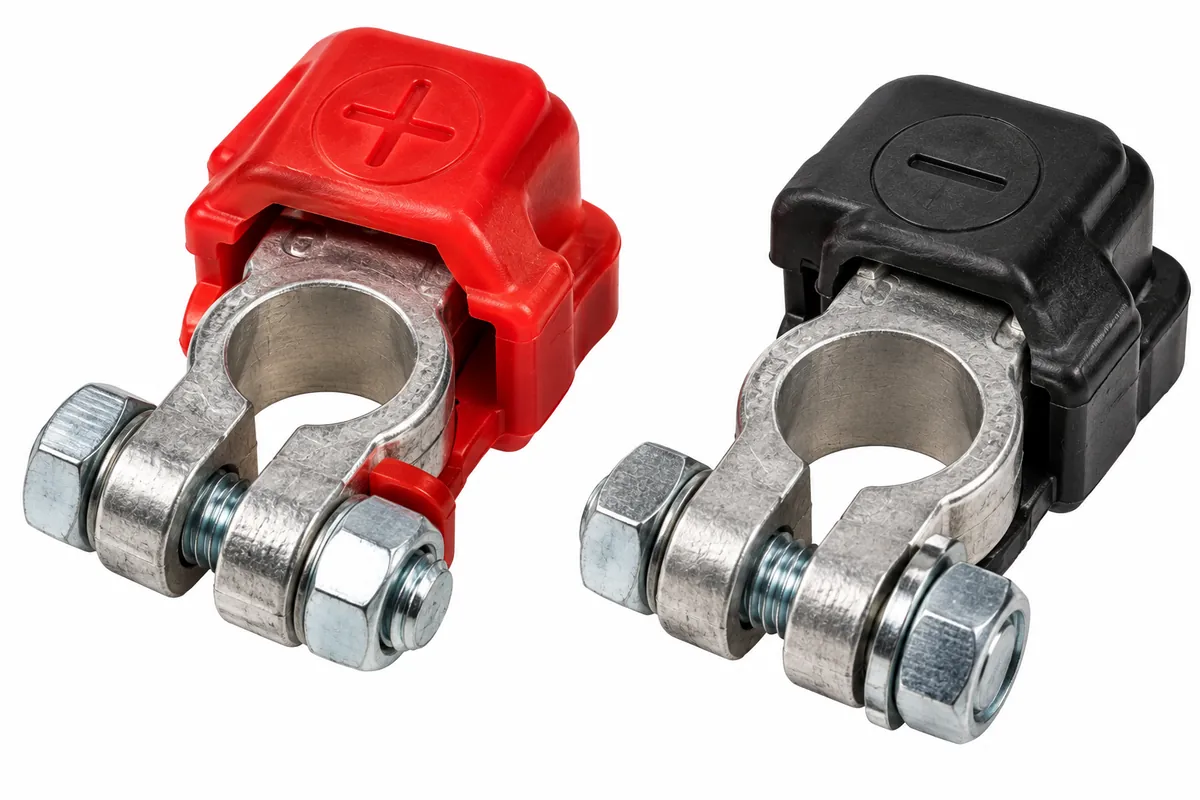
Mobile Battery Terminal Inspection in Daytona Beach
A battery terminal should make a tight, low-resistance connection between the battery post and cable.
Depending on the vehicle and symptoms, inspection can include checking:
- Positive battery terminal
- Negative battery terminal
- Battery posts
- Terminal clamps
- Terminal tightness
- Corrosion
- Cracks
- Distortion
- Stretched terminal clamps
- Damaged terminal bolts
- Cable-to-terminal connection
- Heat damage
- Melted plastic
- Battery post damage
- Voltage drop across the connection
- Integrated fuses or distribution blocks
- Battery-monitoring sensors where equipped
The goal is to determine whether the problem is actually at the terminal connection rather than elsewhere in the battery, cable, starter, or charging circuit.
What Is a Car Battery Terminal?
The battery terminal is the metal connection that attaches the vehicle’s electrical cables to the battery.
A typical automotive battery has:
- Positive terminal
- Negative terminal
The terminal may be a simple clamp, or it may be part of a much larger electrical assembly containing:
- Multiple cable branches
- High-amperage fuses
- Current sensors
- Power-distribution connections
- Safety disconnect devices
Battery terminal design varies considerably by vehicle.
Positive Battery Terminal
The positive battery terminal connects the battery’s positive post to the vehicle’s power-distribution system.
Depending on the vehicle, the positive terminal may feed:
- Starter
- Alternator circuit
- Fuse box
- Power-distribution block
- Vehicle electrical system
Some modern positive terminal assemblies contain several separate connections instead of a single cable.
Damage to this connection can affect more than just starting.
Negative Battery Terminal
The negative battery terminal connects the battery to the vehicle’s ground system.
Current commonly returns to the battery through:
- Engine block
- Chassis
- Ground cables
- Ground straps
A loose or corroded negative terminal can cause symptoms very similar to a bad positive terminal.
Battery Terminal vs. Battery Cable
The battery terminal and battery cable are closely related but they are not always the same part.
Battery Terminal
The connection that physically attaches to the battery post.
Battery Cable
The heavy electrical conductor carrying current between the terminal and other parts of the vehicle.
A terminal can be damaged while the rest of the cable remains usable.
Likewise, a terminal can look clean while the battery cable has internal corrosion farther down the conductor.
That distinction is important when deciding whether only the terminal needs replacement or the complete cable assembly should be replaced.
Signs of a Bad Battery Terminal
Possible symptoms include:
- Slow cranking
- Clicking when trying to start
- Intermittent no-start
- Complete loss of electrical power
- Vehicle starts after terminal is moved
- Flickering lights
- Electrical resets
- Charging problems
- Battery terminal feels loose
- Visible corrosion
- Cracked terminal clamp
- Burned or melted terminal
- Terminal becomes hot while cranking
These symptoms can also result from a weak battery or damaged battery cable, so inspection should establish where the fault actually exists.
Loose Battery Terminal
A battery terminal must clamp securely around the battery post.
A loose terminal can create:
- Intermittent electrical connection
- Voltage drop
- Slow cranking
- Clicking
- Loss of vehicle power
- Charging problems
If moving the terminal causes electrical power to come and go, the connection requires attention.
Simply tightening it may or may not solve the problem.
Why Won’t a Battery Terminal Tighten?
A terminal can remain loose even after the fastener has been tightened.
Possible reasons include:
- Terminal clamp stretched
- Terminal cracked
- Clamp distorted
- Incorrect battery post size
- Incorrect replacement terminal
- Bolt or nut damaged
- Terminal already bottomed out
Overtightening a damaged terminal is not a proper repair and can make the problem worse.
Stretched Battery Terminal Clamp
Repeated removal, overtightening, or improper installation can deform a terminal clamp.
A stretched terminal may bottom out before it grips the battery post firmly.
Possible symptoms include:
- Terminal can be twisted by hand
- Intermittent starting
- Electrical power loss
- Repeated corrosion
If the clamp can no longer secure itself properly, replacement may be needed.
Cracked Battery Terminal
Battery terminals can crack because of:
- Overtightening
- Corrosion
- Age
- Improper removal
- Physical stress
A cracked terminal may appear tight but lose clamping force when current demand increases.
Cracks are especially important around:
- Clamp ears
- Bolt areas
- Cable attachment points
A structurally damaged terminal should generally be replaced.
Battery Terminal Corrosion
Battery terminal corrosion commonly appears as:
- White deposits
- Blue-green deposits
- Powdery buildup
- Crust around the battery post
Corrosion can increase resistance between the terminal and battery post.
If severe enough, it can interfere with:
- Starting
- Charging
- Vehicle electrical operation
The connection should be cleaned and inspected to determine whether the terminal itself remains structurally sound.
What Causes Battery Terminal Corrosion?
Terminal corrosion can develop because of factors such as:
- Battery vapors
- Moisture
- Acid residue
- Loose connections
- Age
- Damaged battery seal
- Charging conditions
Some corrosion is external and can be cleaned.
Other corrosion may travel into the terminal or cable conductor and require component replacement.
Positive Battery Terminal Corrosion
Corrosion frequently develops around the positive terminal.
Possible effects include:
- Starting voltage loss
- Charging problems
- High resistance
- Heat at the connection
The corrosion should be removed sufficiently to inspect the actual metal beneath it.
A terminal that is badly eaten away should not simply be cleaned and reused.
Negative Battery Terminal Corrosion
The negative terminal can corrode as well.
A poor negative connection affects the vehicle’s ground path and can cause:
- Slow starter operation
- Intermittent no-start
- Electrical instability
- Charging issues
Both battery terminals should be inspected rather than focusing only on the visibly worse side.
Can Corroded Battery Terminals Cause a Car Not to Start?
Yes.
If corrosion creates enough electrical resistance, the starter may not receive the current it needs.
The result can be:
- Clicking
- Slow cranking
- No cranking
However, similar symptoms can be caused by:
- Weak battery
- Bad cable
- Starter problem
- Poor engine ground
The terminal connection should be tested rather than assumed to be the cause.
Can Corroded Battery Terminals Drain a Battery?
Corroded terminals more commonly interfere with charging and current flow than directly create a traditional parasitic battery drain.
A poor terminal connection can prevent the battery from being fully recharged, making it seem as though the battery continually goes dead.
If a fully charged battery discharges while the vehicle is parked, an electrical draw or another fault may need to be investigated separately.
Can a Loose Battery Terminal Drain the Battery?
A loose terminal can interfere with normal charging, which may leave the battery undercharged.
It does not automatically mean that the terminal itself is drawing current while the vehicle sits.
If the battery goes dead repeatedly, both the connection and the charging or key-off electrical system should be evaluated.
Battery Terminal Voltage Drop
A terminal can look reasonably clean yet still have too much electrical resistance.
Voltage-drop testing can be performed across the terminal connection while current is flowing.
This can help identify a poor connection between:
- Battery post
- Terminal clamp
A measurable loss across what should be a clean, tight connection can indicate a terminal problem.
Voltage Drop Across the Battery Terminal
During a high-current event such as engine cranking, there should be very little voltage lost directly across a properly connected battery post and terminal.
Excessive drop can point toward:
- Corrosion between mating surfaces
- Loose clamp
- Damaged terminal
- Poor contact
This allows the connection to be evaluated electrically rather than relying only on appearance.
Battery Terminal Gets Hot
A battery terminal that becomes unusually hot can indicate excessive electrical resistance.
Heat may develop because of:
- Loose terminal
- Corroded contact surface
- Damaged cable-to-terminal connection
- Cracked terminal
- High-current starter problem
The cause should be identified before the connection becomes severely damaged.
Melted Battery Terminal
A terminal or surrounding plastic can melt if a poor connection creates substantial heat.
Possible causes include:
- Loose terminal
- High resistance
- Damaged crimp
- Excessive starter current
- Short circuit
Melted components should not simply be tightened and put back into service.
The terminal, cable, and cause of overheating should be inspected.
Burned Battery Terminal
Burning or arcing at a loose connection can leave:
- Pitting
- Black discoloration
- Melted metal
- Heat damage
Once the contact surfaces have been badly damaged, cleaning alone may not restore a reliable high-current connection.
Replacement may be necessary.
Sparking at the Battery Terminal
A small spark can sometimes occur when reconnecting a battery because vehicle electronics draw current.
However, repeated arcing at a terminal that is already supposed to be connected can indicate:
- Loose connection
- Poor terminal contact
- High electrical load
- Connection being moved while current is flowing
The terminal should remain mechanically secure during normal operation.
Battery Terminal Clamp
A top-post battery terminal commonly uses a clamp that tightens around the tapered battery post.
The clamp must:
- Sit fully on the post
- Tighten evenly
- Remain secure
- Maintain broad metal-to-metal contact
A clamp that is only touching part of the battery post can create unnecessary resistance.
Battery Post Terminal
The battery post and terminal form one electrical joint.
Problems can exist on either side of that joint.
The post should be checked for:
- Corrosion
- Physical damage
- Looseness
- Cracking around battery case
The terminal should be checked for:
- Proper fit
- Corrosion
- Cracks
- Distortion
Both surfaces matter.
Positive Battery Post
The positive battery post should be free of damage and secure in the battery case.
A loose or damaged post can create the appearance of a terminal problem even when the clamp itself is good.
If the post is physically damaged, battery replacement may be necessary.
Negative Battery Post
The negative post should also be:
- Structurally secure
- Clean
- Correctly sized for the terminal
A terminal repair cannot correct a battery post that is loose internally or damaged at the battery case.
Top-Post Battery Terminals
Top-post batteries use tapered posts extending upward from the battery.
The terminals clamp around those posts.
Replacement terminal options may include:
- Factory-style cable terminal
- Crimp-on terminal
- Complete battery cable assembly
The correct repair depends on how the original cable is constructed.
Side-Post Battery Terminals
Some vehicles use side-post batteries with threaded connections.
Side-post terminal problems can include:
- Stripped threads
- Damaged terminal bolt
- Corrosion
- Loose connection
- Incorrect bolt length
The proper hardware is important because a bolt that is too long can damage the battery internally.
Side-Post Battery Terminal Connector
A side-post connector must make firm contact against the battery terminal surface.
Problems can develop from:
- Incorrect hardware
- Rust
- Corrosion
- Damaged cable end
- Loose bolt
The connection should be inspected after removal rather than merely tightened from the outside.
Battery Terminal Connectors
Battery terminal connectors are available in many configurations.
They may be designed for:
- Top-post batteries
- Side-post batteries
- Stud-style batteries
- Multiple accessory connections
- Factory-specific cable assemblies
A replacement connector must be appropriate for the battery and cable design.
Car Battery Terminal Connectors
Automotive battery terminal connectors need to handle high starting current.
A connector suitable for a small accessory circuit is not necessarily suitable for a battery starter connection.
Important factors include:
- Material
- Contact area
- Cable attachment
- Mechanical strength
- Current-carrying capability
Replacement Battery Terminals
A battery terminal can sometimes be replaced separately when:
- Cable conductor remains healthy
- Corrosion has not traveled deeply into cable
- Proper replacement terminal is available
- Cable length remains adequate
- Repair can be made with a secure low-resistance connection
If the cable itself is deteriorated, replacing only the terminal may not be sufficient.
Universal Battery Terminal Replacement
Universal terminals can be useful on certain simple battery-cable designs.
However, they are not ideal for every vehicle.
Many modern terminal assemblies incorporate:
- Multiple wires
- Current sensors
- Fuse blocks
- Safety disconnects
- Molded cable connections
These applications may require a vehicle-specific terminal or complete cable assembly.
Clamp-On Replacement Battery Terminal
Bolt-on or clamp-on replacement terminals are commonly available.
They can work in some applications when installed correctly, but poor installation can create:
- Loose wire strands
- Corrosion
- High resistance
- Exposed conductor
A high-current starting connection needs more than a terminal that merely appears mechanically attached.
Crimp-On Battery Terminal
A properly installed crimp-style terminal can provide a strong electrical and mechanical connection.
Correct installation requires:
- Proper terminal size
- Correct cable gauge
- Appropriate crimping tool
- Clean conductor
- Proper insulation and protection
An inadequate crimp can overheat under starter current.
Factory Battery Terminal Assembly
Many newer vehicles use a complete molded battery terminal assembly.
This can include:
- Main cable
- Secondary cables
- High-current fuse
- Battery sensor
- Power-distribution connections
When the terminal is integral to the cable assembly, replacement of the entire assembly may be the correct repair.
Battery Terminal Fuse Block
Some positive battery terminals contain a fuse block directly on or near the battery.
This can protect major circuits such as:
- Starter or power distribution
- Alternator charging circuit
- Vehicle electronics
A broken or overheated fuse block should be evaluated separately from ordinary terminal corrosion.
Battery Post Fuse
High-amperage fuses mounted at the battery can open because of:
- Short circuit
- Electrical component failure
- Incorrect jump starting
- Wiring damage
Replacing the terminal or fuse without finding the reason for failure can result in another problem.
Positive Battery Terminal Fuse
Some vehicles integrate large strip fuses or fusible links into the positive terminal assembly.
If one portion fails, symptoms can vary depending on which circuit lost power.
Examples can include:
- No charging
- No crank
- Loss of certain electrical systems
The exact circuit should be tested before replacing the assembly.
Battery Safety Terminal
Certain vehicles use a pyrotechnic battery safety terminal designed to disconnect high-current circuits during a collision.
This device is different from a conventional battery clamp.
A deployed safety terminal may interrupt:
- Starter circuit
- High-current power distribution
It should be replaced according to vehicle-specific procedures.
Battery Monitoring Sensor at Negative Terminal
Many modern vehicles have an electronic battery sensor integrated into or attached to the negative terminal.
It may monitor:
- Battery current
- Battery voltage
- Temperature
- State of charge
The sensor may be known by names such as:
- Battery current sensor
- Intelligent battery sensor
- IBS
Care must be taken not to bypass or damage it during terminal service.
Intelligent Battery Sensor
An intelligent battery sensor may communicate with the vehicle’s charging-management system.
If it is damaged or improperly connected, the vehicle may develop:
- Charging-system faults
- Battery-management errors
- Start-stop problems
The sensor should not be removed simply to install a generic negative battery terminal.
Battery Terminal and Start-Stop Systems
Vehicles with automatic start-stop systems can rely heavily on accurate battery monitoring.
The negative terminal may be connected through a dedicated battery-current sensor.
Any replacement should preserve the intended current path so the monitoring system can measure battery flow correctly.
Battery Terminal and Battery Registration
Replacing only a damaged battery terminal generally does not mean the battery itself has been replaced.
Battery registration is normally associated with installing a new battery on vehicles that use battery-management systems.
However, if terminal work is performed together with battery replacement, any required battery registration should be handled according to the vehicle’s requirements.
Cleaning Battery Terminals
If the terminal is structurally sound and the problem is only surface corrosion, cleaning may restore the connection.
A proper cleaning process can include:
- Disconnecting the battery safely.
- Removing the affected terminal.
- Cleaning corrosion from the battery post.
- Cleaning the inside contact surface of the terminal.
- Inspecting the terminal for cracks or metal loss.
- Inspecting the cable connection.
- Reinstalling the terminal securely.
- Verifying electrical performance.
Cleaning does not repair a terminal that is cracked, stretched, severely pitted, or internally damaged.
Battery Terminal Cleaning vs. Replacement
Cleaning may be enough when:
- Corrosion is minor
- Terminal remains structurally solid
- Clamp still tightens properly
- Cable is healthy
Replacement may be more appropriate when:
- Terminal is cracked
- Clamp is stretched
- Metal has been severely eaten away
- Connection overheats
- Terminal cannot tighten properly
- Cable-to-terminal joint is damaged
The decision should be based on condition after the corrosion is removed.
Baking Soda and Battery Terminal Corrosion
A mild baking-soda solution is commonly used to neutralize acidic residue around conventional lead-acid battery terminals.
Care is still needed to prevent cleaning material from entering battery vents or spreading residue into electrical components.
After cleaning, the actual contact surfaces need to be inspected rather than assuming the corrosion was the only issue.
WD-40 on Battery Terminals
A lubricant or water-displacing spray should not be used as a substitute for repairing a loose or corroded electrical connection.
The important steps are:
- Remove corrosion
- Restore clean metal contact
- Tighten the connection correctly
- Repair or replace damaged parts
An appropriate terminal protectant can be applied after the electrical connection itself is clean and secure.
Battery Terminal Grease
Terminal protectant or dielectric-type products can help limit future exposure to moisture and corrosive vapors when used appropriately.
They should not be relied upon to compensate for:
- Dirty contact surfaces
- Loose clamp
- Damaged terminal
The electrical joint must be sound first.
Battery Terminal Protector Washers
Anti-corrosion washers are sometimes placed beneath top-post battery terminals.
They may help reduce corrosion in certain applications.
They do not repair:
- A damaged battery seal
- Loose terminal
- Internal cable corrosion
- Cracked clamp
They are a corrosion-prevention aid, not a structural repair.
Can You Replace Only the Battery Terminal?
Sometimes.
Replacing only the terminal can be appropriate if:
- Cable conductor is healthy
- Enough clean cable remains
- Correct terminal is available
- Cable is not internally corroded
- Vehicle does not require an integrated terminal assembly
If corrosion extends into the cable or the terminal is factory-molded into a complex cable assembly, complete cable replacement may be more appropriate.
When Does the Complete Battery Cable Need Replacement?
The cable may need replacement instead of only the terminal when there is:
- Internal cable corrosion
- Damaged conductor strands
- Melted cable
- Failed factory crimp
- Insufficient cable length
- Integrated terminal assembly
- Multiple damaged electrical branches
Installing a new terminal on a deteriorated cable will not restore the circuit properly.
Battery Terminal Replacement
Once inspection confirms that the terminal itself is damaged and separately serviceable, replacement can generally involve:
- Confirm the terminal fault. We determine whether the problem is corrosion, looseness, structural damage, or excessive resistance.
- Inspect the battery. The battery post and case must be suitable for reuse.
- Inspect the cable. Internal corrosion or conductor damage can change the repair from terminal replacement to cable replacement.
- Identify the correct terminal type.
- Disconnect the battery safely.
- Remove the damaged terminal.
- Prepare healthy cable conductor when a serviceable terminal is being installed.
- Install the correct replacement terminal using the proper attachment method.
- Protect exposed conductor appropriately.
- Reconnect the terminal to the battery post.
- Verify that the terminal clamps securely.
- Check cable routing and strain.
- Start the vehicle.
- Verify cranking performance.
- Check charging voltage where appropriate.
- Perform voltage-drop testing if needed.
The finished connection should be mechanically secure and electrically capable of carrying high current without excessive voltage loss or heat.
Positive Battery Terminal Replacement
Positive terminal replacement requires care because an energized positive connection can short directly to grounded metal.
Depending on vehicle design, the positive terminal may include:
- Main starter cable
- Alternator cable
- Fuse block
- Multiple vehicle feeds
A simple replacement terminal should not be substituted for an integrated factory assembly unless the electrical design can be preserved correctly.
Negative Battery Terminal Replacement
A negative terminal may appear simpler, but modern vehicles frequently integrate a battery-current sensor into this connection.
Replacement should preserve:
- Sensor position
- Cable routing
- Ground path
- Connector wiring
Bypassing the sensor can interfere with charging-system operation.
Side-Post Battery Terminal Replacement
Side-post terminal repair can require:
- Correct terminal bolt
- Correct thread
- Clean mating surface
- Proper bolt length
If the battery’s threaded insert is damaged, replacing the cable connector alone may not correct the problem.
Battery Terminal Replacement After Corrosion
After severe corrosion, the terminal should be removed so the cable underneath can be inspected.
If clean conductor is present and the terminal is independently serviceable, replacement may be possible.
If corrosion has traveled into the cable strands, the correct repair may be a complete cable assembly.
Battery Terminal Replacement After Overheating
An overheated terminal needs more than cosmetic repair.
Inspection should determine:
- Why resistance developed
- Whether cable insulation melted
- Whether battery post was damaged
- Whether starter current is excessive
- Whether adjoining fuse or distribution components were affected
The cause of the heat must be corrected along with the terminal.
New Battery Terminal but Car Still Won’t Start
Replacing a damaged terminal restores only that connection.
If the vehicle still does not crank, possible causes include:
- Weak or discharged battery
- Damaged battery cable
- Poor engine ground
- Starter failure
- Starter solenoid
- Neutral safety switch
- Starter relay
- Other control-circuit problem
Starting diagnosis should continue rather than replacing more parts at random.
New Battery but Loose Terminal
Installing a new battery does not correct a terminal that has become stretched or damaged.
If the cable terminal cannot grip the new battery post securely, the terminal itself may need replacement.
Battery posts should also be checked to confirm the correct battery size and terminal configuration were installed.
Battery Terminal Replacement Cost
Battery terminal replacement cost depends on factors such as:
- Positive vs. negative terminal
- Top-post vs. side-post design
- Simple terminal vs. integrated assembly
- Cable condition
- Corrosion severity
- Battery sensor
- Fuse or power-distribution block
- Required cable replacement
- Vehicle year, make, and model
A simple serviceable terminal is very different from a modern positive distribution assembly or intelligent negative battery sensor.
Call Jimmy’s Mobile Care at (386) 308-2509 with your vehicle information and starting or battery-connection symptoms so we can determine the appropriate service.
Why Inspect the Battery Terminal Before Replacing It?
A battery connection problem can involve several components located within a few inches of each other.
Is the Terminal Actually Loose?
The clamp may simply need proper seating and tightening.
Is Corrosion Only on the Surface?
A structurally good terminal may only need cleaning.
Is the Terminal Cracked or Stretched?
Cleaning cannot restore a damaged clamp.
Is the Battery Post Damaged?
A new terminal cannot fix a loose or broken battery post.
Has Corrosion Entered the Battery Cable?
Replacing only the terminal will not correct an internally corroded cable.
Is There Excessive Voltage Drop?
Electrical testing can show whether the terminal connection is actually restricting current.
Does the Vehicle Have an Integrated Fuse or Battery Sensor?
A generic terminal may not be appropriate.
Inspecting the entire connection helps determine what actually needs repair.
Mobile Battery Terminal Inspection in Daytona Beach
Jimmy’s Mobile Care provides mobile car battery terminal inspection in Daytona Beach for vehicles experiencing:
- Loose battery connections
- Corroded terminals
- Slow cranking
- Clicking
- Intermittent no-start
- Electrical power cutting out
- Hot battery terminals
- Damaged terminal clamps
- Charging problems
We inspect the terminal, battery post, and adjoining cable connection to determine whether cleaning, tightening, terminal replacement, or a more extensive cable repair is needed.
Mobile Battery Terminal Replacement in Daytona Beach
When inspection confirms that a battery terminal is damaged and separately serviceable, Jimmy’s Mobile Care can replace many battery terminals at your Daytona Beach location.
After replacement, we can verify:
- Secure terminal fit
- Clean electrical contact
- Proper cable attachment
- Correct polarity
- Normal cranking
- Charging performance where appropriate
- Absence of abnormal heating
Vehicles with integrated fuse blocks, pyrotechnic safety terminals, battery sensors, or complex molded cable assemblies may require vehicle-specific components and procedures.
Schedule Car Battery Terminal Inspection & Replacement in Daytona Beach
A loose, corroded, or damaged battery terminal can cause starting and electrical problems even when the battery itself is still good.
Jimmy’s Mobile Care inspects the battery post, terminal clamp, adjoining cable, and electrical connection before recommending replacement so only the failed part is repaired.
Call Jimmy’s Mobile Care at (386) 308-2509 to schedule car battery terminal inspection and replacement in Daytona Beach, FL. Call today and we'll come to your location.