
Car Fuel Pump Diagnostics & Replacement in Daytona Beach, FL
The fuel pump supplies the engine with the fuel pressure and volume it needs to start, idle, accelerate, and operate under load. When a fuel pump becomes weak, intermittent, electrically inoperative, or unable to maintain proper pressure, the vehicle may crank without starting, hesitate, lose power, stall, or become difficult to restart.
Jimmy’s Mobile Care provides car fuel pump diagnostics and replacement in Daytona Beach, FL. We test the fuel-delivery system before replacing the pump so a bad relay, blown fuse, wiring fault, poor ground, fuel-pressure regulator problem, injector issue, empty-fuel indication problem, or engine-control fault is not mistaken for a failed fuel pump.
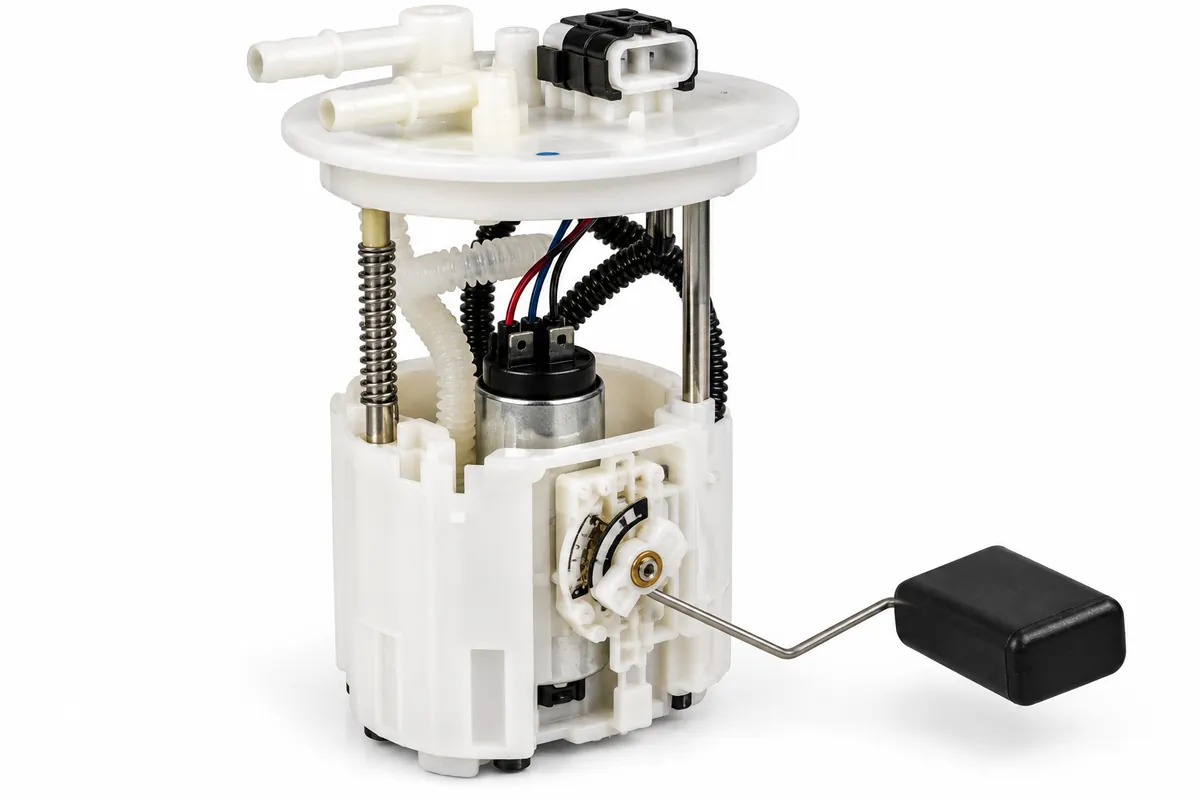
Mobile Fuel Pump Diagnostics in Daytona Beach
A no-start condition does not automatically mean the fuel pump is bad.
Depending on the vehicle and symptoms, fuel pump diagnosis can include checking:
- Fuel pressure
- Fuel pressure while cranking
- Fuel pressure under load
- Fuel-pressure retention
- Fuel volume or delivery
- Fuel-pump electrical power
- Fuel-pump ground
- Fuel-pump current draw
- Fuel-pump fuse
- Fuel-pump relay
- Fuel-pump control module
- Pump command from the engine computer
- Wiring and connectors
- Fuel-pressure sensor data
- Low-pressure and high-pressure fuel systems where applicable
- Fuel level
- Relevant diagnostic trouble codes
The goal is to determine whether the pump itself has failed or whether another part of the fuel-delivery or electrical-control system is preventing normal operation.
What Does a Car Fuel Pump Do?
The fuel pump moves fuel from the fuel tank toward the engine.
On many gasoline vehicles, an electric pump located inside the fuel tank supplies pressurized fuel to the engine.
Depending on the fuel system, that fuel may then be delivered to:
- Port fuel injectors
- A high-pressure direct-injection pump
- Fuel rail
- Pressure regulator
The fuel pump must provide enough fuel at the correct pressure for the engine’s operating conditions.
A pump that works at idle but cannot maintain pressure under acceleration can still be defective.
In-Tank Electric Fuel Pump
Most modern passenger vehicles use an electric fuel pump mounted inside the fuel tank.
The pump may be part of a larger fuel-pump module containing:
- Electric pump
- Fuel-level sending unit
- Strainer
- Reservoir or bucket
- Pressure-regulation components
- Electrical connector
- Fuel outlet
On some vehicles, the complete module is replaced.
On others, individual components may be serviceable separately.
Fuel Pump Module
A fuel-pump module is more than just the electric motor.
Depending on design, the assembly can include:
- Pump
- Fuel strainer
- Fuel-level sender
- Fuel-pressure regulator
- Jet pump or transfer system
- Reservoir
- Wiring
- Fuel-line fittings
When diagnosing a module problem, it is important to identify which part of the assembly has actually failed.
Low-Pressure Fuel Pump
Gasoline direct-injection vehicles commonly use a low-pressure electric pump in the fuel tank.
Its job is to supply fuel to the engine-mounted high-pressure pump.
A weak low-pressure pump can cause:
- Hard starting
- Lean running
- Power loss
- High-pressure fuel problems
- Stalling
The high-pressure side cannot perform correctly if the low-pressure supply is inadequate.
High-Pressure Fuel Pump
Many direct-injection engines use a mechanically driven high-pressure fuel pump mounted on the engine.
This pump raises fuel pressure dramatically before fuel reaches the direct injectors.
A high-pressure pump is different from the electric in-tank pump.
Diagnosis may require comparing:
- Low-side fuel pressure
- Commanded rail pressure
- Actual rail pressure
Replacing the in-tank pump will not correct a failed engine-mounted high-pressure pump, and vice versa.
Low-Pressure vs. High-Pressure Fuel Pump
On a direct-injection system, there may be two distinct pumping stages.
Low-Pressure Pump
Moves fuel from the tank to the engine.
High-Pressure Pump
Raises fuel pressure to the level required for direct injection.
A pressure problem should be traced to the correct side of the system before replacement.
Mechanical Fuel Pump
Older gasoline engines and some specialty applications use mechanically driven fuel pumps rather than electric in-tank pumps.
Mechanical pumps may be driven by:
- Camshaft
- Eccentric
- Pushrod
Possible failures include:
- Torn diaphragm
- Weak output
- Leakage
- Internal check-valve failure
The diagnostic procedure differs from a modern electric fuel-pump system.
Signs of a Bad Fuel Pump
Possible fuel-pump symptoms include:
- Engine cranks but will not start
- Hard starting
- Long crank time
- Engine stalls
- Loss of power
- Hesitation during acceleration
- Engine runs poorly under load
- Fuel pressure too low
- Fuel pressure drops intermittently
- Whining or unusual noise from fuel tank
- Vehicle starts after repeated key cycles
- Fuel-pump circuit trouble code
These symptoms overlap with many other engine problems, so testing should confirm pump performance.
Engine Cranks but Won’t Start
A failed fuel pump can cause a crank-no-start condition because the engine receives insufficient fuel.
However, a crank-no-start can also result from:
- No ignition spark
- Crankshaft sensor failure
- Security-system issue
- Injector-control problem
- Low compression
- Engine timing problem
Fuel pressure should be measured or otherwise verified rather than assuming the pump is responsible.
No Fuel Pressure
If fuel pressure is absent, possible causes include:
- Failed fuel pump
- No electrical power to pump
- Bad fuel-pump relay
- Blown fuse
- Damaged wiring
- Poor ground
- Fuel-pump control-module fault
Before replacing the pump, the electrical circuit should be checked to determine whether the pump is actually being supplied with power.
Low Fuel Pressure
A weak pump may still operate but fail to produce adequate pressure.
Low fuel pressure can cause:
- Hard starting
- Lean condition
- Hesitation
- Poor acceleration
- Misfire
- Loss of power
Possible causes other than the pump include:
- Restricted fuel filter
- Pressure-regulator fault
- Low voltage at pump
- Fuel-line restriction
- Fuel-system leak
The cause should be identified before replacement.
Fuel Pressure Under Load
A weak pump may produce acceptable pressure at idle yet fail when fuel demand increases.
This can show up during:
- Acceleration
- Highway driving
- Heavy load
- High engine speed
Fuel pressure that drops when demand increases can indicate insufficient pump output, but electrical supply and restrictions should also be considered.
Fuel Volume Testing
Fuel pressure alone does not always tell the complete story.
A pump may sometimes produce pressure but not enough fuel volume to support the engine under load.
Fuel-delivery testing can help evaluate whether the pump can supply the required quantity of fuel.
The correct procedure depends on the vehicle and fuel-system design.
Fuel Pressure Test
Fuel-pressure testing compares actual system pressure with the vehicle’s specified range.
Depending on the system, pressure may be measured:
- At a service port
- With an inline adapter
- Through scan-tool data
- At the low-pressure supply circuit
Modern vehicles vary significantly, so the correct test point and expected pressure are application-specific.
Fuel Rail Pressure
The fuel rail distributes fuel to the injectors.
On some vehicles, rail pressure can be monitored electronically through a scan tool.
This is especially useful on direct-injection systems where fuel pressure may be extremely high.
Actual rail pressure can be compared with commanded pressure to help determine whether the system is meeting demand.
Fuel Pressure Sensor
A fuel-pressure sensor reports pressure information to the engine-control module.
A sensor fault can sometimes produce misleading pressure data.
If scan-tool readings appear inconsistent with engine behavior, pressure may need to be verified by another appropriate method.
A bad sensor should not be mistaken for a bad pump.
Fuel Pressure Drops After Shutdown
Fuel pressure may normally remain in the system for a period after the engine is shut off.
Rapid pressure loss can contribute to:
- Long crank
- Hard restart
- Extended cranking after sitting
Possible causes include:
- Pump check-valve leakage
- Leaking injector
- Pressure-regulator problem
- Internal fuel-system leak
Pressure decay does not automatically prove the fuel pump is defective.
Fuel Pump Check Valve
Many electric fuel pumps incorporate a check valve that helps retain fuel pressure after shutdown.
If the valve leaks internally, fuel pressure may bleed down.
Possible symptoms include:
- Extended cranking after sitting
- Engine starts faster after cycling key several times
This can provide a diagnostic clue, but injector or regulator leakage must also be considered.
Car Starts After Cycling the Key Several Times
If repeatedly turning the ignition on and off before cranking improves starting, it can indicate that fuel pressure is slowly rebuilding.
Possible causes include:
- Weak fuel pump
- Fuel pressure bleeding down
- Check-valve problem
- Pressure-regulation issue
Fuel-pressure testing can help determine what is happening.
Hard Starting When Cold
A fuel-delivery problem can contribute to difficult cold starts if the system does not build pressure quickly enough.
However, cold-start problems can also involve:
- Coolant temperature sensor
- Battery condition
- Ignition
- Injector operation
- Engine compression
Fuel pressure should be measured rather than inferred from temperature alone.
Hard Starting When Hot
A weak fuel pump can sometimes become more problematic as it heats up.
Possible symptoms include:
- Long crank when hot
- Stalling after extended driving
- Vehicle restarts after cooling
Heat-sensitive electrical connections or control modules can produce similar symptoms, so pump power and pressure should be checked during the failure.
Fuel Pump Works When Cold but Fails Hot
An electric pump can develop internal wear that becomes more noticeable when hot.
Possible causes include:
- Worn brushes
- Internal motor resistance
- Mechanical wear
If the problem only occurs after extended driving, diagnosis is most useful while the symptom is present.
Intermittent Fuel Pump Failure
Fuel pumps do not always fail permanently at once.
An intermittent problem can result from:
- Pump motor wear
- Loose connector
- Fuel-pump relay
- Control module
- Wiring
- Ground connection
A vehicle may run normally one day and fail to start the next.
Intermittent electrical testing is important before condemning the pump.
Fuel Pump Whining Noise
Electric fuel pumps often make some sound during normal operation.
An unusually loud whining, buzzing, or groaning noise can indicate:
- Pump wear
- Low fuel level
- Restricted inlet
- Contamination
Noise alone does not prove that fuel pressure or volume is inadequate.
The pump should be tested.
Fuel Pump Humming but Car Won’t Start
Hearing a pump run does not prove that it is producing sufficient pressure.
A pump can operate electrically while being unable to supply enough fuel.
A humming pump with a no-start condition may still require:
- Fuel-pressure test
- Fuel-volume evaluation
- Injector testing
- Ignition testing
Sound confirms operation, not performance.
Can You Hear the Fuel Pump Turn On?
Many vehicles briefly run the electric fuel pump when the ignition is switched on.
However, this varies by vehicle and control strategy.
Some pumps are quiet, and some systems may not prime in the way expected.
Not hearing the pump is a clue, not a definitive diagnosis.
Fuel Pump Prime
Fuel-pump priming builds pressure before or during engine startup.
The pump may run:
- Briefly with ignition on
- During cranking
- Once the engine-control module sees the required signals
Control logic varies by manufacturer.
A pump that does not run with key-on may still need circuit testing before being declared faulty.
Fuel Pump Fuse
The fuel-pump electrical circuit is commonly protected by a fuse.
A blown fuse can prevent pump operation.
If the fuse is open, the cause should be investigated.
Possible reasons include:
- Shorted pump motor
- Wiring short
- Damaged connector
- Other circuit fault
Replacing a fuse repeatedly without locating the cause can create additional electrical damage.
Fuel Pump Relay
Many vehicles use a relay to switch electrical power to the pump.
A defective relay can cause:
- No-start
- Intermittent stalling
- Pump not running
- Loss of fuel pressure
Relay diagnosis can involve checking:
- Relay command
- Power supply
- Ground or control
- Switched output
A failed relay can closely imitate a failed fuel pump.
Fuel Pump Relay vs. Fuel Pump
If voltage is not reaching the pump, the pump itself should not immediately be condemned.
The fault may be upstream in:
- Relay
- Fuse
- Wiring
- Control module
- Engine-control command
If proper voltage and ground reach the pump but it does not operate, pump failure becomes much more likely.
Fuel Pump Control Module
Many newer vehicles use a dedicated fuel-pump control module.
Instead of simply switching the pump on and off, the module may regulate pump speed according to demand.
A control-module fault can cause:
- Low pressure
- No pump operation
- Intermittent operation
- Fuel-pump circuit codes
Testing may require evaluating command, power, ground, and output to the pump.
Variable-Speed Fuel Pump
Some modern fuel systems vary pump speed rather than operating the pump continuously at full output.
The control system may use:
- Pulse-width modulation
- Variable voltage
- Dedicated control module
A lower voltage reading at the pump does not automatically mean the circuit is defective.
The expected control strategy must be considered.
Fuel Pump Voltage Testing
Electrical testing can determine whether the pump is receiving adequate voltage.
Possible checks include:
- Voltage at pump connector
- Voltage during cranking
- Voltage under load
- Voltage drop on positive side
A simple open-circuit voltage reading may be misleading if a damaged wire can show voltage but cannot carry current.
Fuel Pump Ground Testing
The pump also needs a low-resistance ground path.
A poor ground can cause:
- Slow pump operation
- Low fuel pressure
- Intermittent operation
- Pump overheating
Ground-side voltage-drop testing can reveal resistance that is not obvious visually.
Fuel Pump Voltage Drop
Voltage-drop testing measures electrical loss across the pump’s power and ground circuits while current is flowing.
Excessive voltage drop can be caused by:
- Corroded connector
- Damaged wire
- Poor ground
- Relay contacts
- Overheated terminals
A good fuel pump cannot perform correctly if it is not receiving adequate electrical power.
Fuel Pump Current Draw
An electric pump draws current while operating.
Current testing can sometimes reveal pump condition.
Abnormal current can be associated with:
- Internal mechanical wear
- Restricted pump
- Electrical motor fault
- Poor electrical supply
Current draw should be interpreted with pressure and voltage information rather than used alone.
Fuel Pump Current Ramp
More advanced diagnosis may examine pump current behavior over time.
A current waveform can sometimes reveal irregularities in the electric motor’s internal commutator and brushes.
This can help identify a worn pump before complete failure in certain applications.
The technique depends on the pump design and available test equipment.
Fuel Pump Connector
Fuel-pump connectors can fail because they carry significant current.
Problems can include:
- Burned terminals
- Melted connector
- Loose pin fit
- Corrosion
- Heat discoloration
A replacement pump will not correct a high-resistance connector.
The connector should be inspected when pump failure or overheating is found.
Melted Fuel Pump Connector
An overheated connector can develop from:
- High electrical resistance
- Loose terminals
- Excessive pump current
If the connector is melted, both the electrical connection and pump condition should be evaluated.
Simply plugging a new pump into a damaged connector can lead to another failure.
Fuel Pump Wiring Problems
Wiring between the power source, control circuit, and pump can be damaged by:
- Corrosion
- Heat
- Abrasion
- Previous repairs
- Water intrusion
- Rodents
Circuit testing should verify continuity and load-carrying ability where necessary.
Fuel Pump Trouble Codes
Depending on vehicle design, fuel-system faults can generate codes related to:
- Pump control circuit
- Low fuel pressure
- High fuel pressure
- Fuel-pressure sensor
- Control-module communication
A trouble code identifies a circuit or performance problem—it does not automatically identify the part that should be replaced.
P0627 Fuel Pump Control Circuit/Open
A code such as P0627 generally indicates a problem in the fuel-pump control circuit.
Possible causes can include:
- Open wiring
- Connector problem
- Relay or control issue
- Fuel-pump electrical fault
- Module problem
The circuit should be tested before replacing the pump.
Fuel Pump and Fuel Filter
Some fuel systems use a separately serviceable fuel filter.
Others integrate filtration into the fuel-pump module or use a filter intended for long-term service.
A restricted filter can reduce fuel delivery and imitate a weak pump.
Whether the filter is separately serviceable depends on the vehicle.
Fuel Pump Strainer
In-tank pumps commonly use a strainer at the pump inlet.
The strainer helps prevent large debris from entering the pump.
A heavily contaminated strainer can restrict fuel flow.
When replacing an in-tank pump or module, the condition of the tank and strainer should be considered.
Fuel Tank Contamination
Dirt, rust, water, or degraded fuel can damage a fuel pump.
If contamination is present, installing a new pump without addressing the tank can lead to repeat failure.
Inspection may be necessary for:
- Debris
- Water
- Rust
- Incorrect fuel
The new pump should not be exposed to the same condition that damaged the old one.
Running a Car Low on Fuel
In-tank electric fuel pumps are commonly cooled and lubricated by the fuel surrounding or passing through them.
Repeated operation at extremely low fuel levels may increase pump heat in some designs.
Running out of fuel can also cause the pump to draw air.
Keeping adequate fuel in the tank is generally better for pump operation.
Fuel Pump and Empty Tank
A vehicle that shows fuel on the gauge can still be out of usable fuel if:
- Fuel-level sender is inaccurate
- Transfer system between tank sections fails
- Gauge reading is incorrect
Before condemning a fuel pump for a no-start, the actual presence of fuel should be confirmed when there is any doubt.
Fuel Pump and Fuel-Level Sending Unit
The fuel-level sending unit is often part of the fuel-pump module but performs a different job.
It tells the instrument cluster how much fuel is in the tank.
A bad sending unit can cause:
- Incorrect gauge reading
- Gauge stuck empty
- Gauge stuck full
- Erratic fuel level
This does not necessarily mean the pump motor has failed.
Saddle Fuel Tanks
Some vehicles use a saddle-shaped fuel tank divided by the driveshaft or body structure.
These systems may use:
- Main electric pump
- Transfer pump
- Jet-pump system
A transfer problem can cause one side of the tank to contain fuel while the pump side becomes empty.
This can imitate fuel-pump failure.
Fuel Pump vs. Fuel Injector
The fuel pump supplies fuel to the injection system.
The injectors meter fuel into individual cylinders.
A weak pump often affects multiple cylinders because the entire engine lacks sufficient fuel pressure.
A single defective injector more commonly affects one cylinder.
Testing fuel pressure and injector operation helps distinguish the two.
Fuel Pump vs. Ignition Problem
A no-start caused by lack of spark can feel exactly like a no-start caused by lack of fuel.
Diagnosis may need to establish:
- Fuel pressure
- Injector operation
- Ignition spark
- Engine-speed signal
Replacing the fuel pump without confirming fuel delivery can result in an unnecessary repair.
Fuel Pump vs. Crankshaft Position Sensor
A failed crankshaft position sensor can prevent:
- Ignition spark
- Injector command
- Fuel-pump continuation on some systems
If the engine computer does not recognize engine rotation, it may intentionally stop the fuel pump.
A pump that stops because it is not being commanded should not be mistaken for a failed pump.
Fuel Pump vs. Security-System Problem
Some anti-theft systems can disable:
- Fuel injectors
- Fuel pump
- Starter
depending on vehicle design.
Security warning indicators and scan data may need to be considered if the vehicle cranks but will not run.
Fuel Pump vs. Fuel-Pressure Regulator
The pressure regulator controls fuel pressure within the designed range.
A regulator fault can cause:
- Pressure too high
- Pressure too low
- Pressure loss after shutdown
The pump may be capable of normal output even when the regulated pressure is incorrect.
Return-Type Fuel System
Traditional return-type fuel systems circulate excess fuel back to the tank.
They commonly use:
- Fuel pump
- Fuel rail
- Pressure regulator
- Return line
Diagnosis can involve checking whether the regulator and return circuit are affecting pressure.
Returnless Fuel System
Many newer vehicles use returnless fuel systems.
Pressure may be controlled:
- Inside fuel-pump module
- Electronically through pump speed
- By a dedicated control module
These systems should not be diagnosed using assumptions from older return-style systems.
Fuel Pump and Fuel Rail
The fuel rail receives fuel from the pump system and distributes it to the injectors.
Pressure measured at the rail reflects the combined operation of:
- Pump
- Regulator
- Supply lines
- Filter
- Control system
Low rail pressure does not identify the pump by itself.
Fuel Pump Cavitation
Fuel-pump noise or poor delivery can sometimes result from the pump drawing:
- Air
- Vapor
- Restricted fuel supply
The pump should have a proper supply of clean liquid fuel.
Operating conditions that cause cavitation can damage the pump over time.
Fuel Pump Replacement
Once diagnostics confirm that the fuel pump or pump module has failed, replacement can generally involve:
- Confirm the pump fault. We verify that pressure, delivery, or electrical operation indicates actual pump failure.
- Check the electrical circuit. Power, ground, fuse, relay, and control operation are evaluated as appropriate.
- Identify the fuel-system design. In-tank, external, low-pressure, high-pressure, or module configuration is determined.
- Relieve fuel-system pressure safely.
- Disconnect battery power where appropriate.
- Gain access to the pump. This may be through a service opening or by lowering the fuel tank.
- Disconnect electrical connectors.
- Disconnect fuel lines using the correct procedure.
- Clean the area around the pump opening before removal.
- Remove the retaining ring or mounting hardware.
- Remove the pump or module carefully.
- Inspect the tank for contamination where accessible.
- Compare the replacement pump or module with the original.
- Install the correct new seal or O-ring.
- Install the replacement pump or module.
- Secure the retaining ring or mounting hardware correctly.
- Reconnect fuel lines.
- Reconnect electrical connectors.
- Reinstall the tank or access cover as required.
- Restore electrical power.
- Prime the fuel system.
- Check carefully for fuel leaks.
- Start the engine.
- Verify fuel pressure and engine operation.
- Clear applicable fault codes and verify the repair.
Fuel is highly flammable, so fuel-system service requires careful handling and proper procedures.
Fuel Pump Access Panel
Some vehicles provide an access panel beneath:
- Rear seat
- Trunk floor
- Interior trim
This can allow the pump module to be serviced without removing the fuel tank.
Other vehicles do not have an access panel and require the tank to be lowered.
Access design has a major effect on replacement complexity.
Dropping the Fuel Tank
If the pump is accessible only from the top of the tank and no service opening exists, the fuel tank may need to be lowered.
This can require:
- Supporting tank
- Disconnecting filler connections
- Disconnecting vapor lines
- Disconnecting fuel lines
- Disconnecting wiring
- Removing tank straps
The amount of fuel in the tank also affects the weight and difficulty of the procedure.
Fuel Pump Replacement With a Full Tank
A full fuel tank is substantially heavier than an empty one.
If the tank must be lowered, fuel quantity can affect:
- Safety
- Tank weight
- Repair complexity
The appropriate handling method depends on the vehicle and service conditions.
Fuel Pump O-Ring or Seal
In-tank pump modules generally use a large seal between the module and fuel tank.
This seal should be:
- Correct size
- Correct material
- Properly seated
An incorrectly installed seal can cause:
- Fuel leak
- Fuel vapor leak
- Evaporative-emissions fault
A new seal is generally installed when the module is removed.
Fuel Pump Lock Ring
Many pump modules are secured by a lock ring.
The ring must be:
- Removed safely
- Inspected
- Reinstalled correctly
A damaged or incorrectly seated lock ring can prevent the module from sealing properly.
Fuel Line Quick Connectors
Modern fuel lines often use quick-connect fittings.
The connector and retaining mechanism should be handled carefully because damage can lead to:
- Fuel leakage
- Poor retention
The correct disconnect method should be used rather than forcing the fitting apart.
Fuel Pump Replacement and Fuel Filter
Whether the filter should be replaced with the pump depends on the vehicle.
If the system uses a separately serviceable filter and restriction or contamination is present, replacement may be appropriate.
Some pumps include a new strainer as part of the module.
There is no universal rule requiring a separate fuel filter with every pump replacement.
Fuel Pump Replacement After Contaminated Fuel
If contamination caused pump failure, simply installing another pump may not provide a lasting repair.
The fuel tank and supply system may need to be addressed before the replacement pump is put into service.
This is especially important when there is:
- Rust
- Water
- Dirt
- Incorrect fuel
Fuel Pump Replacement After Running Dry
A pump that has been operated without sufficient fuel can overheat or wear internally.
If the vehicle ran out of fuel once and then operates normally, that does not automatically mean the pump requires replacement.
Actual pressure and pump performance should determine the need for repair.
Fuel Pump Replacement and Relay
A fuel-pump relay does not automatically need replacement with the pump.
It should be replaced if testing indicates that it is:
- Intermittent
- Burned
- High resistance
- Electrically defective
Replacing unrelated parts merely because they are in the same circuit is unnecessary.
Fuel Pump Replacement and Connector
Some replacement pumps or modules include an updated electrical connector.
This may be provided because the original connector design was prone to:
- Heating
- Loose terminals
- Current-related damage
If the replacement requires an updated connector, the wiring should be installed according to the supplied application-specific procedure.
New Fuel Pump but Car Still Won’t Start
If a new pump has been installed and the vehicle still does not start, possible causes include:
- Pump not receiving power
- Poor ground
- Incorrect pump
- Fuel-pressure regulator problem
- Injector problem
- Ignition failure
- Crankshaft sensor fault
- Security-system issue
- Engine mechanical problem
A new part does not replace the need to verify pressure and engine operation.
New Fuel Pump Is Loud
A replacement pump may sound somewhat different from the original.
Abnormally loud operation can result from:
- Incorrect pump
- Poor installation
- Restricted inlet
- Low fuel level
- Contamination
- Pump module contacting tank
Pressure and installation should be checked if noise is excessive.
New Fuel Pump Has Low Pressure
Low pressure after pump replacement can be caused by:
- Incorrect replacement pump
- Low supply voltage
- Poor ground
- Faulty regulator
- Restricted filter
- Installation problem
- Leaking internal connection in module
The system should be retested rather than assuming the new pump itself is defective.
OEM vs. Aftermarket Fuel Pump
Replacement fuel pumps are available from:
- Original-equipment manufacturers
- Established aftermarket suppliers
- Economy aftermarket brands
Important considerations include:
- Correct pressure
- Correct flow
- Electrical compatibility
- Module configuration
- Connector design
- Reliability
- Warranty
A pump that physically fits may not provide the correct performance.
High-Flow Fuel Pump
High-flow aftermarket fuel pumps are generally intended for modified engines with increased fuel demand.
Examples include vehicles with:
- Turbocharger upgrades
- Supercharger upgrades
- Significant engine modifications
- Alternative fuels
A higher-flow pump is not automatically better for a stock vehicle.
Fuel-system control and regulator compatibility must be considered.
12-Volt Electric Fuel Pump
Most modern automotive electric fuel pumps operate from the vehicle’s electrical system.
The fact that a pump is advertised as “12 volt” does not mean it is suitable for every vehicle.
Important specifications include:
- Pressure
- Flow
- Current draw
- Fuel compatibility
- In-tank vs. external design
- Connector and mounting
A generic 12-volt pump should not replace an application-specific pump simply because the voltage matches.
Inline Electric Fuel Pump
External or inline fuel pumps are used in some older vehicles, specialty systems, and modified applications.
They may be mounted along the fuel line rather than inside the tank.
Correct installation requires consideration of:
- Pump pressure
- Flow rate
- Mounting position
- Electrical supply
- Fuel-line compatibility
Most modern passenger vehicles use application-specific in-tank pump modules instead.
Diesel Fuel Pump
Diesel fuel systems can use multiple pumps, including:
- Low-pressure lift pump
- High-pressure injection pump
These systems operate differently from typical gasoline fuel systems.
High-pressure common-rail diesel injection involves extremely high fuel pressure and specialized safety procedures.
A generic gasoline fuel-pump diagnosis should not be applied directly to a diesel high-pressure system.
Fuel Pump Replacement Cost
Fuel pump replacement cost depends on factors such as:
- Vehicle year, make, and model
- Pump type
- Pump vs. complete module
- Access panel vs. tank removal
- Amount of disassembly required
- Low-pressure vs. high-pressure system
- Electrical connector condition
- Tank contamination
- Fuel-line condition
- Programming or relearn requirements where applicable
A pump accessible beneath a rear-seat service panel can be very different from a pump requiring complete fuel-tank removal.
Call Jimmy’s Mobile Care at (386) 308-2509 with your vehicle information and symptoms so we can determine the appropriate fuel-system diagnostic service.
Why Diagnose a Fuel Pump Before Replacing It?
Several different faults can produce the same symptoms as a bad fuel pump.
Is Fuel Pressure Actually Low?
A crank-no-start condition can have non-fuel causes.
Is the Pump Receiving Power?
A good pump cannot run without adequate voltage.
Does the Pump Have a Good Ground?
Ground resistance can reduce pump output.
Is the Fuel-Pump Relay Working?
A failed relay can prevent pump operation.
Is a Control Module Commanding the Pump?
Modern variable-speed pump systems require proper electronic control.
Is the Fuel Filter or Supply Restricted?
A restriction can reduce pressure and volume.
Is the Pressure Regulator Working?
Incorrect regulation can imitate pump failure.
Is the High-Pressure Pump the Actual Problem?
Direct-injection vehicles can have separate low- and high-pressure pumps.
Is There Actually Fuel in the Pump Side of the Tank?
A fuel-level sender or tank-transfer problem can create a false pump diagnosis.
Testing these areas helps prevent unnecessary fuel-pump replacement.
Mobile Fuel Pump Diagnostics in Daytona Beach
Jimmy’s Mobile Care provides mobile car fuel pump diagnostics in Daytona Beach for vehicles experiencing:
- Crank-no-start
- Hard starting
- Long crank
- Engine stalling
- Hesitation
- Loss of power
- Low fuel pressure
- Intermittent no-start
- Suspected fuel-pump failure
- Fuel-pump circuit codes
We evaluate fuel pressure, electrical supply, control circuits, and related fuel-system conditions to determine whether the pump itself is responsible.
Mobile Fuel Pump Replacement in Daytona Beach
When diagnostics confirm fuel-pump failure and the repair is appropriate for mobile service, Jimmy’s Mobile Care can replace many fuel pumps and fuel-pump modules at your Daytona Beach location.
After replacement, we can verify:
- Fuel-pump operation
- Fuel pressure
- Electrical connection
- Fuel-line connections
- Absence of fuel leaks
- Engine starting
- Engine operation
Some vehicles require the fuel tank to be removed, specialized direct-injection procedures, or extensive disassembly. We can determine what is involved after identifying the vehicle and diagnosing the failure.
Schedule Car Fuel Pump Diagnostics & Replacement in Daytona Beach
A car that cranks but does not start does not automatically need a fuel pump.
The actual problem may be a relay, fuse, wiring fault, poor ground, control module, pressure regulator, high-pressure pump, ignition problem, or another engine-control fault.
Jimmy’s Mobile Care diagnoses fuel pressure and pump operation before replacement so the fuel pump is replaced only when testing supports it.
Call Jimmy’s Mobile Care at (386) 308-2509 to schedule car fuel pump diagnostics and replacement in Daytona Beach, FL. Call today and we'll come to your location.