
Car Battery Cable Diagnostics & Replacement in Daytona Beach, FL
Battery cables carry high electrical current between the battery, starter, alternator, engine, and vehicle ground system. A cable can look normal on the outside while corrosion, broken strands, loose terminals, or internal resistance prevents enough current from flowing.
Jimmy’s Mobile Care provides car battery cable diagnostics and replacement in Daytona Beach, FL. We test the positive and negative battery cables under electrical load before replacing them so a weak battery, bad starter, charging problem, loose terminal, or poor ground connection is not mistaken for a failed cable.
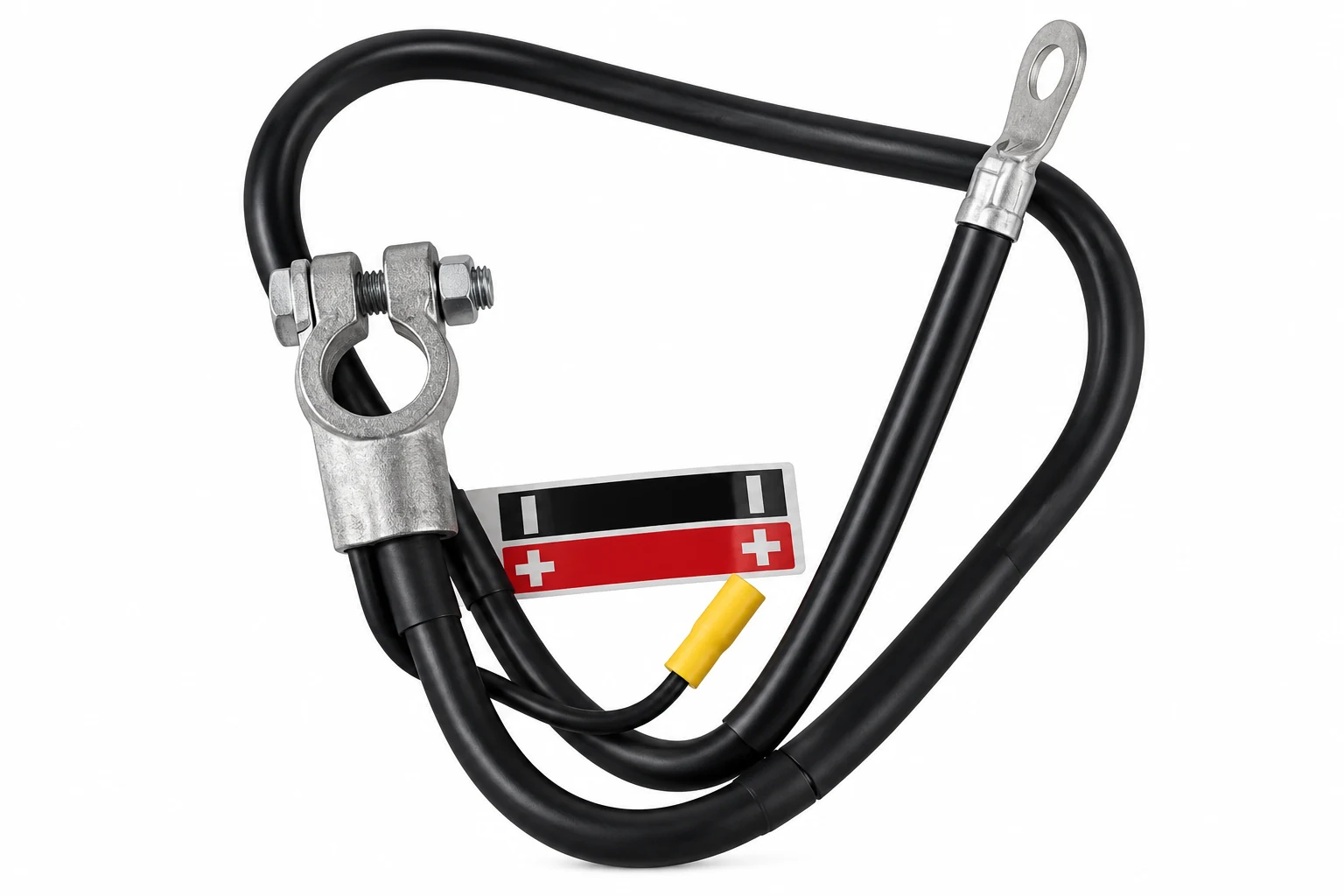
Mobile Battery Cable Diagnostics in Daytona Beach
Battery-cable diagnosis should determine whether the cable can actually carry the current demanded by the starting and charging systems.
Depending on the vehicle and symptoms, testing can include checking:
- Positive battery cable
- Negative battery cable
- Battery cable terminals
- Battery posts
- Starter cable connection
- Alternator charging cable
- Engine ground connection
- Chassis ground
- Ground straps
- Cable insulation
- Cable crimps
- Corrosion
- Heat damage
- Voltage drop during cranking
- Charging-circuit voltage drop
- Cable temperature under load
- Terminal tightness
- Fuse or fusible-link assemblies built into battery cables
The goal is to locate excessive resistance or physical cable damage rather than replacing parts based only on appearance.
What Does a Battery Cable Do?
A 12-volt automotive battery operates at relatively low voltage but can supply very high current.
The battery cables provide the heavy electrical paths needed for that current to travel safely through the vehicle.
The two primary cables are:
- Positive battery cable
- Negative battery cable
Both are essential.
A problem on either side of the circuit can prevent the starter or charging system from operating correctly.
Positive Battery Cable
The positive battery cable carries electrical power away from the positive battery post.
Depending on vehicle design, it may connect to:
- Starter motor
- Starter solenoid
- Under-hood fuse box
- Alternator
- Power distribution block
Some positive cable assemblies branch into several separate circuits.
Others incorporate:
- Fusible links
- High-current fuses
- Pyrotechnic disconnect devices
- Battery monitoring components
The exact construction should be identified before replacement.
Negative Battery Cable
The negative battery cable completes the electrical circuit back to the battery.
It commonly connects the negative battery terminal to:
- Engine block
- Transmission housing
- Chassis
Because the starter motor grounds through the engine, the engine needs a low-resistance path back to the battery negative terminal.
A bad negative cable can cause the same slow-crank or no-crank symptoms as a bad positive cable.
Battery Ground Cable
The negative battery cable is often called the:
- Battery ground cable
- Ground cable
- Negative cable
Its job is to provide a reliable return path for electrical current.
Poor ground connections can affect more than starting.
They can also cause:
- Charging problems
- Sensor problems
- Module communication problems
- Flickering lights
- Electrical instability
Engine Ground Strap
Many vehicles use one or more additional ground straps between the:
- Engine
- Transmission
- Chassis
- Body
These straps allow electrical current to move between components that are mechanically mounted through rubber bushings or insulated mounts.
A broken engine ground strap can create unusual electrical symptoms even if the primary negative battery cable appears good.
Signs of a Bad Battery Cable
Possible symptoms include:
- Slow cranking
- Clicking when trying to start
- Intermittent no-start
- No crank
- Battery appears good but starter turns slowly
- Vehicle starts when cable is moved
- Charging voltage low at battery
- Headlights dim during cranking
- Hot battery cable
- Burning smell near cable connection
- Visible cable corrosion
- Melted insulation
- Loose battery terminal
- Electrical power cuts in and out
These symptoms can also result from other electrical faults, so testing should confirm cable condition.
Battery Cable Corrosion
Corrosion can develop:
- At battery terminal
- Inside cable terminal
- Under insulation
- At starter connection
- At engine ground
- At chassis ground
- At cable splice or crimp
Visible corrosion at the battery is easy to identify.
Internal corrosion is more difficult because the outside of the cable may still look acceptable.
Internal Battery Cable Corrosion
Battery acid vapors and moisture can sometimes migrate into the cable strands.
Corrosion can travel underneath the insulation, especially near the battery end.
Possible signs include:
- Green or white corrosion under insulation
- Swollen cable
- Stiff cable
- Discolored copper strands
- Excessive voltage drop
This internal deterioration can dramatically increase electrical resistance.
Battery Cable Looks Good but Is Bad
Yes.
A battery cable can pass a visual inspection and still fail electrically.
Possible hidden problems include:
- Corrosion under insulation
- Broken copper strands
- Poor terminal crimp
- Internal heat damage
- High resistance at connection
This is why voltage-drop testing under load is more useful than appearance alone.
Positive Battery Cable Corrosion
Corrosion at the positive cable can reduce the current available to the starter and electrical system.
Possible symptoms include:
- Slow crank
- No crank
- Intermittent starting
- Low charging voltage at battery
- Hot connection
The cable may also contain power-distribution or fuse components that need inspection.
Negative Battery Cable Corrosion
Corrosion on the negative cable can increase resistance between the battery and:
- Engine
- Chassis
- Starter ground path
Possible symptoms include:
- Slow cranking
- Clicking
- Electrical resets
- Charging problems
- Unusual sensor behavior
Ground-side resistance can be just as important as resistance on the positive side.
Battery Cable Voltage Drop Testing
Voltage-drop testing is one of the best ways to evaluate a high-current cable.
The test measures how much voltage is lost across a cable or connection while current is flowing.
For starting-system diagnosis, testing is often performed while the engine is cranking.
This can reveal resistance that does not appear during a simple continuity test.
Positive-Side Voltage Drop
Positive-side testing can evaluate the path from the battery positive post toward the starter.
Excessive voltage loss may indicate resistance at:
- Battery terminal
- Cable
- Cable crimp
- Starter connection
- Intermediate junction
The circuit can be divided into smaller sections to locate exactly where the voltage is being lost.
Ground-Side Voltage Drop
Ground-side testing evaluates the return path from the starter or engine back to the battery negative post.
Excessive voltage drop can result from:
- Negative battery cable
- Engine ground connection
- Chassis ground
- Ground strap
- Corroded mounting point
A ground cable can be defective even when no corrosion is visible.
Continuity Test vs. Voltage Drop Test
A continuity test can show that electricity can pass through a cable.
But a starter cable may still have enough resistance to fail under several hundred amps of starting current.
A voltage-drop test under load is usually much more meaningful for high-current battery cables.
A cable can show continuity and still be unable to carry sufficient current.
Battery Cable Resistance
Battery cables should have extremely low electrical resistance.
Even a small amount of resistance becomes important when very high current flows through the cable.
Excessive resistance can cause:
- Voltage loss
- Heat generation
- Slow starter speed
- Low charging performance
That is why cable condition cannot be judged by resistance values alone without considering load and circuit behavior.
Hot Battery Cable
A battery cable or terminal that becomes unusually hot can indicate electrical resistance.
Heat may develop at:
- Battery terminal
- Cable crimp
- Starter connection
- Ground connection
- Fuse block connection
High current passing through a poor connection converts electrical energy into heat.
A hot connection should be investigated promptly.
Melted Battery Cable
A battery cable can become damaged by excessive heat from:
- High resistance
- Short circuit
- Loose connection
- Contact with exhaust
- Overheated starter circuit
Possible evidence includes:
- Melted insulation
- Burned terminal
- Discolored copper
- Deformed connector
A heat-damaged cable should be replaced after the underlying cause is identified.
Battery Cable Burning Smell
A burning odor near the battery or starter circuit can indicate:
- Overheated cable
- Melted insulation
- Loose electrical connection
- Starter drawing excessive current
- Short circuit
The vehicle should be inspected before continued starting attempts create further damage.
Loose Battery Cable
A loose cable connection can cause:
- Intermittent no-start
- Clicking
- Electrical power loss
- Charging problems
- Vehicle stalling in severe cases
Repeated tightening is not always the correct repair.
The terminal may be:
- Stretched
- Cracked
- Damaged
- Incorrect size
The cable end and battery post should both be inspected.
Battery Cable Terminal
The cable terminal is the metal connection that attaches the cable to the battery post.
It can be damaged by:
- Corrosion
- Overtightening
- Cracking
- Improper repair
- Repeated removal
Some cable terminals are replaceable separately.
Others are permanently crimped or molded into the cable assembly.
Battery Cable vs. Battery Terminal
These are related but not always the same component.
The battery cable is the heavy conductor carrying current.
The battery terminal is the connection at the battery post.
A terminal can be bad while the cable itself remains usable.
Likewise, a clean-looking terminal can be attached to a cable with internal corrosion.
Positive Battery Terminal
The positive terminal connects the battery to the vehicle's power distribution system.
It may include:
- Main cable
- Fuse block
- Multiple smaller wires
- Current-distribution connections
Damage at this terminal can affect several vehicle systems at once.
Negative Battery Terminal
The negative terminal connects the battery to the vehicle ground system.
A poor negative connection can affect:
- Starter current
- Charging
- Engine electronics
- Chassis electronics
The battery post and terminal need clean metal-to-metal contact.
Side-Post Battery Cables
Some batteries use side-mounted terminals instead of top posts.
Side-post connections require proper:
- Terminal bolts
- Cable ends
- Contact surfaces
Overtightening can damage the battery terminal insert, while loose connections can create resistance.
The correct hardware should be used.
Top-Post Battery Cables
Top-post batteries use clamp-style terminals around tapered battery posts.
The connection should be:
- Fully seated
- Properly tightened
- Free from damaging corrosion
A terminal that bottoms out before becoming secure may be stretched or damaged.
Battery Post Damage
A battery post can be damaged by:
- Excessive force
- Corrosion
- Improper terminal repair
- Loose terminal movement
A damaged battery post can prevent a secure cable connection.
In some cases, the battery itself may require replacement even if the cable is still serviceable.
Battery Cable Crimp Failure
Many battery terminals are mechanically crimped onto the cable conductor.
A poor or deteriorated crimp can create resistance between:
- Cable strands
- Terminal end
The outside may look normal while the internal connection overheats under starter current.
A failed factory crimp often means the cable assembly should be replaced.
Frayed Battery Cable
Exposed or broken cable strands reduce the cable's current-carrying ability.
Fraying can result from:
- Improper terminal replacement
- Physical damage
- Corrosion
- Repeated bending
A severely damaged cable should not be repaired by twisting the strands back together.
Cracked Battery Cable Insulation
The insulation protects the cable from:
- Moisture
- Abrasion
- Short circuits
Cracks or cuts can allow corrosion to spread into the conductor.
Damage on a positive cable is particularly important because exposed conductor can short directly to vehicle ground.
Battery Cable Short Circuit
A positive battery cable contacting grounded metal can create an extremely high-current short circuit.
Possible consequences include:
- Melted cable
- Burned wiring
- Blown fuse
- Electrical fire
- Battery damage
Proper cable routing and insulation are critical.
Battery Cable Routing
Replacement cables should follow the intended factory routing.
A battery cable should be kept away from:
- Exhaust components
- Sharp edges
- Moving belts
- Pulleys
- Fans
- Steering components
Incorrect routing can lead to abrasion, heat damage, or a dangerous short circuit.
Battery Cable and Starter
The starter motor requires very high electrical current.
A bad battery cable can cause symptoms that look like a bad starter, including:
- Slow cranking
- Single click
- No crank
- Intermittent starting
Starter diagnosis should include the high-current cables before the starter motor is condemned.
Positive Battery Cable to Starter
The main positive starter cable commonly runs from the battery or power-distribution point to the starter solenoid.
Possible failures include:
- Internal cable corrosion
- Loose starter stud
- Corroded terminal
- Heat damage near engine
- Cable rubbing against surrounding components
Because this cable carries very high current, even small amounts of resistance can significantly reduce starter performance.
Negative Battery Cable and Starter Ground
The starter usually grounds through:
- Starter housing
- Engine block
- Ground cable
- Battery negative terminal
If the engine ground is poor, starter current cannot return efficiently to the battery.
The starter may crank slowly even with a fully charged battery.
Battery Cable and Alternator
The charging system also depends on low-resistance connections.
Alternator output must travel through the charging circuit back to the battery.
A bad cable can cause:
- Low battery charging
- Alternator working harder than necessary
- Charging warning
- Voltage difference between alternator and battery
Replacing the alternator will not correct a high-resistance cable.
Alternator Cable vs. Battery Cable
On some vehicles, the alternator output cable is incorporated into the main battery cable assembly.
On others, it is a separate high-current cable.
The charging path should be identified before deciding which cable requires replacement.
Main Battery Cable and Fuse Box
Modern positive battery cables may connect directly to a high-current fuse or power-distribution box.
This assembly can include:
- Starter feed
- Alternator feed
- Main vehicle electrical feed
Damage at this junction can affect multiple circuits simultaneously.
Fusible Link in Battery Cable
Some vehicles use a fusible link or integrated high-amperage fuse in the battery cable assembly.
It protects the electrical system from severe overcurrent.
If the fusible link opens, symptoms may include:
- No charging
- No vehicle power
- Specific systems losing power
The reason the fuse opened should be identified before it is replaced.
Battery Safety Terminal
Some vehicles use a pyrotechnic battery safety terminal, sometimes called a battery safety terminal or BST.
During a serious collision, the system can disconnect high-current battery circuits.
A deployed safety terminal may cause:
- No crank
- Loss of starter power
- Specific electrical systems losing power
This is not repaired the same way as a conventional battery cable.
The correct replacement assembly and safety procedures are required.
Battery Current Sensor on Negative Cable
Many newer vehicles have a battery-monitoring sensor attached to the negative battery terminal or cable.
The sensor can monitor:
- Battery current
- State of charge
- Charging demand
Care must be taken not to bypass or damage this sensor when replacing the negative cable or adding electrical accessories.
Battery Cable and Smart Charging Systems
Modern charging systems may rely on accurate battery-current information and low-resistance cable connections.
A damaged cable or incorrectly routed replacement can interfere with:
- Battery monitoring
- Alternator control
- Start-stop operation
Replacement should preserve the original electrical architecture.
Battery Cable and Start-Stop Vehicles
Vehicles with automatic start-stop can place greater electrical demands on:
- Battery
- Cables
- Ground connections
Reliable high-current connections are especially important because the engine may restart repeatedly during normal driving.
Cable repairs should maintain factory conductor size and connection quality.
Battery Cable Gauge
Automotive battery cables use large conductors because starter current is high.
Cable gauge depends on:
- Cable length
- Starter current
- Vehicle design
- Electrical load
Using a cable that is too small can cause:
- Voltage drop
- Heat
- Slow cranking
A replacement should match the electrical capacity of the original cable.
12-Volt Battery Cable
Automotive battery cables are often described as 12-volt cables, but conductor sizing is primarily determined by current demand and circuit length.
A cable suitable for a small accessory is not necessarily adequate for a starter circuit simply because both systems operate at 12 volts.
Starter cables need substantially greater current capacity.
Universal Battery Cables
Universal replacement battery cables are available for some applications.
They may be appropriate when they correctly match:
- Cable gauge
- Cable length
- Terminal style
- Mounting points
- Electrical connections
However, many modern vehicles use molded or multi-branch cable assemblies that cannot be replaced properly with a simple universal cable.
Custom Battery Cable
A custom-fabricated battery cable may be appropriate for certain older or modified vehicles.
A proper cable requires:
- Correct conductor gauge
- High-quality terminals
- Proper crimp
- Heat protection
- Correct routing
A poorly crimped homemade cable can create more resistance than the damaged cable it replaces.
Battery Cable Repair vs. Replacement
Whether a cable can be repaired depends on where the damage is located.
A localized replaceable terminal may sometimes be serviceable.
Complete cable replacement is generally more appropriate when there is:
- Internal corrosion
- Damaged conductor
- Heat damage
- Failed molded terminal
- Multiple damaged branches
- Integrated fuse assembly failure
The repair should restore full current capacity, not merely make the cable appear connected.
Clamp-On Battery Cable Ends
Universal clamp-on battery terminals are commonly available.
They can provide a temporary or practical repair in certain simple applications, but they should not automatically replace a properly crimped factory cable end.
Potential problems include:
- Exposed strands
- Corrosion
- Loose hardware
- Increased resistance
A high-current starter circuit needs a strong, low-resistance connection.
Battery Cable Splices
Splicing a heavy battery cable requires appropriate:
- Connector
- Crimping method
- Conductor size
- Insulation
- Heat protection
Ordinary household wire connectors are not suitable for starter-cable current.
When practical, replacing the full damaged cable assembly can provide a more reliable repair.
Cleaning Battery Cable Connections
Not every cable problem requires replacement.
If the cable conductor is sound and the issue is limited to minor surface corrosion, the connection may sometimes be cleaned.
Cleaning may involve:
- Disconnecting battery
- Removing corrosion
- Cleaning battery post
- Cleaning terminal contact surface
- Reinstalling and tightening properly
Severe internal corrosion cannot be corrected by cleaning only the outside terminal.
Battery Terminal Protectant
After a clean, secure electrical connection has been established, an appropriate corrosion protectant can help reduce future corrosion.
Protectant should not be placed between dirty electrical contact surfaces as a substitute for cleaning.
The metal-to-metal connection must be sound first.
Battery Cable Replacement
Once diagnostics confirm a cable is defective, replacement can generally include:
- Confirm the cable fault. We verify excessive resistance, internal corrosion, damaged conductors, heat damage, or failed connections.
- Identify the affected cable. Positive, negative, starter, alternator, or multi-branch assembly is determined.
- Disconnect battery power safely.
- Document cable routing.
- Remove retainers and protective covers.
- Disconnect the cable from the battery.
- Disconnect the opposite cable connections. These may include the starter, engine block, chassis, alternator, or fuse box.
- Inspect mounting points and studs.
- Clean appropriate electrical contact surfaces.
- Compare the replacement cable. Length, gauge, terminals, branches, fuse components, and routing points are verified.
- Install the replacement cable in the factory routing.
- Secure all cable supports and heat shields.
- Tighten electrical connections correctly.
- Reconnect the battery.
- Verify starting performance.
- Repeat voltage-drop testing where appropriate.
- Verify charging-system operation.
- Check that cables remain cool and clear of moving or hot components.
A cable replacement should restore both the mechanical connection and the cable's ability to carry high current with minimal voltage loss.
Positive Battery Cable Replacement
Positive cable replacement can involve connections at:
- Battery
- Starter
- Alternator
- Fuse box
- Power-distribution block
Because the positive cable remains capable of shorting to ground, battery power must be disconnected before the cable is removed.
The replacement must preserve any factory:
- Fuses
- Branch circuits
- Protective coverings
- Heat shields
Negative Battery Cable Replacement
Negative cable replacement may involve:
- Battery negative terminal
- Engine block connection
- Chassis ground
- Battery monitoring sensor
Ground surfaces should be:
- Clean
- Secure
- Free of severe corrosion
Painting, rust, or contamination between the terminal and mounting surface can create unwanted resistance.
Engine Ground Strap Replacement
A damaged engine ground strap may be replaced separately from the main battery cable.
The new strap should connect to the intended factory points and provide adequate current capacity.
A small accessory ground wire is not a substitute for the heavy engine ground needed by the starter.
Battery Cable Replacement After Corrosion
If corrosion has traveled deeply into the conductor, cutting off the visible green section may not remove all of the damage.
The cable should be inspected far enough back to determine whether clean, healthy conductor remains.
Extensive internal corrosion generally favors complete cable replacement.
Battery Cable Replacement After Overheating
A cable that has overheated may have suffered damage to:
- Copper conductor
- Terminal crimp
- Insulation
The reason for overheating should also be identified.
Possible causes include:
- Loose connection
- Starter drawing excessive current
- Short circuit
- Poor crimp
Replacing the cable without addressing the underlying problem can lead to another failure.
New Battery Cable but Car Still Won’t Start
If the cable has been replaced and the vehicle still does not crank, other possible causes include:
- Battery failure
- Starter motor
- Starter solenoid
- Starter relay
- Neutral safety switch
- Ignition switch
- Control-module issue
Battery cables are only one part of the starting circuit.
Battery Cable Replacement Cost
Battery cable replacement cost depends on factors such as:
- Vehicle year, make, and model
- Positive vs. negative cable
- Cable length
- Number of cable branches
- Battery location
- Starter accessibility
- Alternator connections
- Integrated fuse block
- Battery monitoring sensor
- Corrosion at mounting points
- Additional terminal or ground repairs
A simple negative ground cable can be substantially different from a complex positive cable assembly containing multiple fused branches.
Call Jimmy’s Mobile Care at (386) 308-2509 with your vehicle information and starting or charging symptoms so we can determine the appropriate diagnostic service.
Why Diagnose a Battery Cable Before Replacing It?
Battery cables often look simpler than they actually are.
Is the Battery Fully Charged?
A discharged battery can mimic cable resistance.
Does the Cable Have Excessive Voltage Drop?
A cable can look good and still fail electrically.
Is the Problem Only at the Terminal?
The cable itself may still be serviceable.
Is the Engine Ground Good?
A poor ground strap can create the same symptoms as a bad negative cable.
Is the Starter Drawing Excessive Current?
An overloaded cable may become hot because of a failing starter rather than because the cable caused the problem.
Is the Charging Circuit Affected?
A high-resistance positive cable can prevent alternator output from reaching the battery.
Is Corrosion Hidden Under the Insulation?
Surface cleaning will not repair internal deterioration.
Does the Cable Contain Integrated Electronics or Fuses?
Modern cable assemblies may require application-specific replacement rather than a universal cable.
Testing these areas identifies whether the cable itself actually requires replacement.
Mobile Battery Cable Diagnostics in Daytona Beach
Jimmy’s Mobile Care provides mobile car battery cable diagnostics in Daytona Beach for vehicles experiencing:
- Slow cranking
- Clicking
- Intermittent no-start
- Hot battery cables
- Corroded cables
- Loose battery connections
- Low charging voltage
- Electrical power loss
- Suspected ground problems
We test the high-current starting and charging paths to identify where voltage is being lost.
Mobile Battery Cable Replacement in Daytona Beach
When diagnostics confirm a failed battery cable and the repair is appropriate for mobile service, Jimmy’s Mobile Care can replace many positive, negative, starter, and ground cable assemblies at your Daytona Beach location.
After replacement, we can verify:
- Secure battery connections
- Correct cable routing
- Low voltage drop
- Proper starter operation
- Charging-system performance
- Ground integrity
Complex cable assemblies containing integrated safety disconnects, electronic battery sensors, or major power-distribution components may require additional application-specific procedures.
Schedule Car Battery Cable Diagnostics & Replacement in Daytona Beach
A battery cable can look clean and still have enough internal resistance to cause slow cranking, charging problems, or an intermittent no-start.
Jimmy’s Mobile Care tests the positive and negative sides of the high-current circuit under load so the cable is replaced only when the evidence supports it.
Call Jimmy’s Mobile Care at (386) 308-2509 to schedule car battery cable diagnostics and replacement in Daytona Beach, FL. Call today and we'll come to your location.