
Car Neutral Safety Switch Diagnostics & Replacement in Daytona Beach, FL
The neutral safety switch helps prevent an automatic-transmission vehicle from starting while the transmission is in Drive, Reverse, or another drive range. If the switch fails, becomes misadjusted, or sends the wrong gear-position signal, the vehicle may refuse to crank in Park, start only in Neutral, start intermittently, or display the wrong transmission position.
Jimmy’s Mobile Care provides car neutral safety switch replacement in Daytona Beach, FL. Before replacing the switch, we check the starting behavior, transmission range indication, electrical connections, adjustment where applicable, and related starter-control circuit so a starter or battery problem is not mistaken for a neutral safety switch failure.
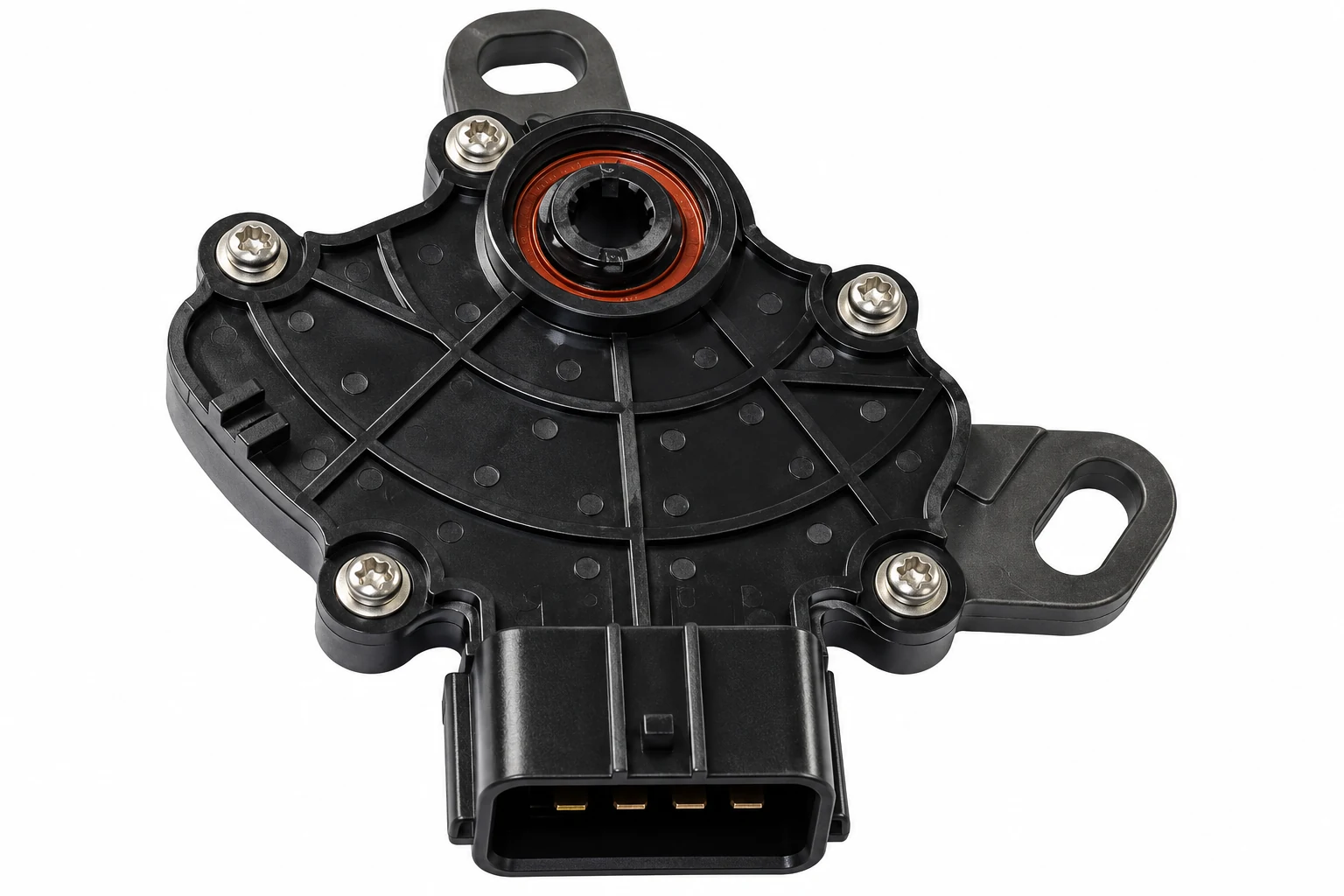
Mobile Neutral Safety Switch Service in Daytona Beach
A neutral safety switch problem usually affects the starter-control circuit rather than the starter motor itself.
Depending on the vehicle, evaluation can include checking:
- Whether the engine cranks in Park
- Whether the engine cranks in Neutral
- Gear-selector position
- Transmission range displayed on the dash
- Reverse-light operation
- Starter-control signal
- Neutral safety switch connector
- Wiring near the transmission
- Shift linkage or cable adjustment
- Switch alignment
- Transmission range sensor data
- Relevant diagnostic trouble codes
The purpose is to determine whether the switch is actually failing or whether the vehicle is receiving an incorrect gear-position signal for another reason.
What Does a Neutral Safety Switch Do?
The neutral safety switch is part of the starting interlock system.
Its primary job is to allow the starter to operate only when the transmission is in an approved starting position, typically:
- Park
- Neutral
If the transmission is in:
- Reverse
- Drive
- Another forward gear
the switch helps prevent the starter from cranking the engine.
This reduces the risk of the vehicle unexpectedly moving when the engine starts.
Neutral Safety Switch vs. Transmission Range Sensor
Depending on the vehicle, the component may be called a:
- Neutral safety switch
- Park/neutral switch
- Transmission range switch
- Transmission range sensor
- Inhibitor switch
- Park/neutral position switch
These terms can describe similar functions, but modern vehicles may use a more sophisticated transmission range sensor rather than a simple on/off neutral safety switch.
A transmission range sensor can tell the vehicle's computers which gear has been selected, including:
- Park
- Reverse
- Neutral
- Drive
- Other ranges
The starter interlock is then only one of several functions that depend on that signal.
What Is an Inhibitor Switch?
Inhibitor switch is another term used by some manufacturers for the park/neutral starting switch.
Its function is to inhibit starter operation when the transmission is in a drive range.
Depending on the vehicle, the inhibitor switch may also provide information for:
- Reverse lights
- Transmission control
- Gear-position display
- Engine management
So a failed inhibitor switch can sometimes cause more than a simple no-crank condition.
Signs of a Bad Neutral Safety Switch
Possible symptoms include:
- Engine will not crank in Park
- Engine starts in Neutral but not Park
- Intermittent no-crank
- Starter works when the shifter is moved
- Vehicle starts only when shifter is held in a certain position
- Reverse lights do not operate correctly
- Reverse lights operate in the wrong gear
- Gear indicator does not match shifter position
- Transmission range codes
- Vehicle unexpectedly cranks in a drive range
The exact symptoms depend on how the manufacturer uses the switch or range sensor.
Car Won't Start in Park but Starts in Neutral
This is one of the classic symptoms associated with a neutral safety switch or transmission range problem.
If the engine will not crank in Park but cranks normally in Neutral, possible causes include:
- Misadjusted neutral safety switch
- Worn switch contacts
- Transmission range sensor fault
- Shift-cable adjustment problem
- Worn shifter linkage
- Connector or wiring issue
This symptom does not automatically prove the switch itself needs replacement, but it makes the park/neutral input an important area to inspect.
Starts in Park but Not Neutral
A properly functioning system will commonly allow starting in both Park and Neutral.
If the vehicle starts in Park but not Neutral, possible causes can include:
- Internal switch wear
- Incorrect switch adjustment
- Transmission range sensor problem
- Shift linkage not reaching the correct position
- Wiring problem
The switch positions should be tested before replacement.
Moving the Shifter Makes the Car Start
If the vehicle will not crank until the shifter is:
- Moved back and forth
- Held toward Park
- Moved slightly out of Park
- Shifted into Neutral
the gear-position signal may not be aligning correctly.
Possible causes include:
- Worn neutral safety switch
- Misadjusted switch
- Worn shifter mechanism
- Shift cable adjustment
- Transmission linkage movement
This type of symptom is especially useful because it links the starting problem directly to gear-selector position.
Intermittent Neutral Safety Switch Problems
A failing switch may work normally one time and fail the next.
Intermittent operation can result from:
- Worn internal contacts
- Corrosion
- Loose connector
- Damaged wiring
- Mechanical wear
- Temperature-related changes
- Slight misalignment
An intermittent switch can be more difficult to diagnose because it may test normally when the vehicle happens to start correctly.
Reproducing the failure is often valuable.
No Crank in Park or Neutral
If the starter does not operate in either Park or Neutral, the neutral safety switch is only one possibility.
Other causes can include:
- Weak battery
- Battery-cable problem
- Starter failure
- Starter relay
- Ignition switch
- Security system
- Broken starter-control wire
- Engine-control problem
A neutral safety switch should not be replaced simply because the engine does not crank.
The rest of the starting circuit needs to be considered.
Neutral Safety Switch and Starter Problems
A failed neutral safety switch can prevent the starter from receiving a start command.
That can make a good starter appear defective.
For example:
- Driver turns key or presses start button.
- Battery is good.
- Starter motor is good.
- Neutral safety switch does not report Park or Neutral.
- Starter-control circuit remains disabled.
- Engine does not crank.
Testing the start command helps distinguish between a starter problem and a neutral-safety problem.
Neutral Safety Switch and Starter Relay
On many vehicles, the neutral safety switch is part of the circuit that allows the starter relay to activate.
If the transmission position is not recognized correctly, the relay may never receive permission to energize.
That means a no-crank condition can occur even though:
- Starter motor is good
- Battery is good
- Main starter cable is good
The fault can exist entirely on the control side of the circuit.
Neutral Safety Switch and Ignition Switch
The ignition switch and neutral safety switch perform different functions.
Ignition Switch
Requests engine starting when the key is turned to the start position.
Neutral Safety Switch
Determines whether the transmission is in an allowed position for starting.
Both must work correctly for the starter circuit to operate on many vehicles.
A missing starter command can therefore require testing both systems.
Neutral Safety Switch and Push-Button Start
Push-button start vehicles may still use a Park/Neutral position input even though there is no traditional ignition key.
The vehicle's control modules may check:
- Brake-pedal input
- Key authorization
- Gear position
- Start-button request
before allowing the starter to operate.
If the transmission range sensor incorrectly reports that the vehicle is in Drive, the computer may refuse to crank the engine.
Neutral Safety Switch and Reverse Lights
On many vehicles, the same switch assembly also controls or helps control the reverse lights.
A fault can therefore produce symptoms such as:
- Reverse lights do not come on in Reverse
- Reverse lights work intermittently
- Reverse lights illuminate in the wrong gear
Reverse-light behavior can provide useful evidence when diagnosing a range-switch problem.
However, a separate bulb, fuse, or wiring problem can also cause reverse-light failure.
Wrong Gear Display on the Dashboard
A transmission range sensor may provide gear-position information to the instrument cluster or control modules.
If the display shows the wrong gear, flashes, or does not consistently match the shifter position, possible causes include:
- Range sensor fault
- Sensor adjustment
- Shift-cable problem
- Connector issue
- Wiring problem
- Internal transmission position issue
This type of symptom can help separate a range-sensor problem from a simple starter failure.
Vehicle Shows Drive While in Park
If the vehicle electronically reports the wrong gear, the starting system may refuse to crank because it does not recognize Park or Neutral.
This can occur from:
- Misadjusted transmission range sensor
- Worn sensor
- Shift linkage problem
- Electrical fault
The actual shifter position and the position seen by the control module should agree.
Can a Bad Neutral Safety Switch Cause Transmission Problems?
Depending on vehicle design, yes.
A modern transmission range sensor can provide information used by the transmission-control system.
An incorrect range signal may affect:
- Gear engagement logic
- Gear-position display
- Backup lights
- Starter authorization
- Transmission fault codes
However, internal transmission shifting problems should not automatically be blamed on the neutral safety switch.
The range signal needs to be verified.
Can a Bad Neutral Safety Switch Cause a Check Engine Light?
On vehicles where the transmission range sensor is monitored electronically, a fault may set a diagnostic trouble code and illuminate a warning light.
Possible codes can relate to:
- Transmission range sensor circuit
- Incorrect range signal
- Implausible gear-position data
- Park/neutral position input
A code identifies the circuit or condition detected by the vehicle.
It does not automatically prove the sensor itself must be replaced.
Neutral Safety Switch Diagnostic Trouble Codes
Modern vehicles can store transmission range or park/neutral circuit codes.
Diagnosis may involve:
- Reading stored codes
- Viewing live transmission-range data
- Comparing scan data with actual shifter position
- Checking switch voltage
- Checking wiring
- Inspecting connector condition
If the scan tool reports the correct gear position consistently, the switch may not be the cause of the no-crank complaint.
Transmission Range Sensor Live Data
On electronically controlled vehicles, scan-tool data can be especially useful.
As the shifter is moved through:
- Park
- Reverse
- Neutral
- Drive
the reported gear position should correspond to the actual selector position.
An inconsistent or impossible reading can help identify:
- Sensor failure
- Adjustment problem
- Wiring issue
- Shift linkage problem
This can provide stronger evidence than replacing the sensor based only on symptoms.
Neutral Safety Switch Electrical Testing
Depending on switch design, testing can involve checking:
- Continuity
- Voltage
- Ground
- Start-circuit output
- Gear-position circuits
A basic switch may simply open and close a starter circuit.
A modern range sensor may send multiple voltage or digital signals to a control module.
The correct test procedure depends on the vehicle.
Checking Power and Ground
If the transmission range sensor requires external power and ground, both should be verified before replacing it.
A sensor cannot provide a reliable signal if it is missing:
- Supply voltage
- Ground
- Reference voltage
A wiring or connector fault can make a good sensor appear defective.
Neutral Safety Switch Connector Problems
The switch is often mounted on or near the transmission where it may be exposed to:
- Heat
- Water
- Road splash
- Oil
- Transmission fluid
- Dirt
Connector problems can include:
- Corrosion
- Broken terminals
- Loose pins
- Damaged locks
- Fluid contamination
- Chafed wiring
The connector should be inspected before the switch is condemned.
Wiring Damage Near the Transmission
Wiring near the transmission can be affected by:
- Heat
- Road debris
- Previous repairs
- Exhaust components
- Vibration
- Fluid contamination
A broken wire can interrupt the park/neutral signal even if the switch itself is working normally.
Repairing the wiring may solve the problem without replacing the switch.
Neutral Safety Switch Adjustment
Some neutral safety switches are adjustable.
The switch must be aligned with the transmission selector position so that it recognizes the correct ranges.
If it is misadjusted, the vehicle may:
- Fail to start in Park
- Start only in Neutral
- Have incorrect reverse-light operation
- Report the wrong gear
Adjustment should follow the vehicle's specified alignment procedure.
Can a Neutral Safety Switch Be Adjusted Instead of Replaced?
Sometimes.
If the switch is electrically functional but its position is incorrect, adjustment may restore proper operation.
Replacement may not be necessary if the problem is simply:
- Switch alignment
- Shift-cable adjustment
- Loose mounting
But if internal contacts or sensor electronics have failed, adjustment will not correct the problem.
Shift Cable Problems That Mimic a Bad Neutral Safety Switch
The shifter may indicate Park even though the transmission lever has not fully reached the Park position.
This can occur because of:
- Stretched shift cable
- Misadjusted cable
- Worn cable bushing
- Damaged linkage
The neutral safety switch may then correctly report that the transmission is not fully in Park.
Replacing the switch would not fix the underlying linkage problem.
Shifter Linkage and Neutral Safety Switch Operation
The neutral safety switch depends on the actual position of the transmission selector shaft or linkage.
Excessive movement or wear in the linkage can create inconsistent switch operation.
The mechanical system should therefore be inspected when symptoms change depending on how the shifter is moved.
Can a Neutral Safety Switch Prevent the Engine From Starting?
Yes, if it prevents the starter from cranking.
But the distinction between no-crank and crank-no-start is important.
No Crank
The engine does not rotate.
A neutral safety switch can cause this.
Cranks But Does Not Start
The starter rotates the engine normally, but the engine does not run.
A neutral safety switch is generally not the primary cause once the starter is already cranking, although specific vehicle strategies can vary.
This distinction helps avoid unnecessary replacement.
Can a Bad Neutral Safety Switch Cause the Car to Stall?
A basic neutral safety switch typically controls starter authorization rather than keeping the engine running.
However, vehicles using an integrated transmission range sensor may use the gear-position signal for other control functions.
If the complaint is an engine stall while driving, the switch should not automatically be blamed without diagnostic evidence.
Can a Car Start in Drive With a Bad Neutral Safety Switch?
A serious switch or adjustment failure can potentially allow starter operation in a drive range on some systems.
That is a safety concern.
If the engine can crank while the transmission is in Drive or Reverse, the vehicle should be inspected promptly.
The starting interlock is specifically intended to prevent this condition.
Neutral Safety Switch Replacement
Once testing confirms that the switch or range sensor has failed, replacement can include:
- Confirm the symptom. We verify whether the vehicle fails to start in Park, Neutral, or both.
- Check the starting system. Battery, starter, and starter-control operation are considered so another failure is not mistaken for the switch.
- Inspect gear selection. The actual transmission position and shifter indication are compared.
- Check switch or range-sensor data. Electrical signal or scan data is evaluated where applicable.
- Inspect wiring and connector. Damage, corrosion, and loose terminals are ruled out.
- Disconnect battery power as appropriate.
- Gain access to the switch. Covers, brackets, air-intake components, or other parts may need removal depending on location.
- Disconnect the electrical connector.
- Mark or note switch position where adjustment is required.
- Remove the old switch or range sensor.
- Inspect the selector shaft and mounting area.
- Install the replacement switch.
- Adjust or align the switch according to vehicle procedure.
- Reconnect the electrical connector.
- Restore removed components.
- Verify Park and Neutral starting.
- Check Reverse and gear-position indication.
- Clear and recheck applicable diagnostic codes where appropriate.
The replacement should restore correct gear-position recognition as well as proper starter interlock operation.
Neutral Safety Switch Location
Location varies by vehicle.
The switch may be mounted:
- On the side of the transmission
- Around the transmission selector shaft
- Near the shift linkage
- On the steering column on some older vehicles
- Integrated into a transmission range assembly
Because designs vary, a neutral safety switch should not be assumed to be located in the same place on every car.
Steering Column Neutral Safety Switches
Some older vehicles use a neutral safety switch mounted on the steering column rather than directly on the transmission.
Column-mounted systems can be mechanically linked to the gear selector.
Possible problems can involve:
- Switch wear
- Adjustment
- Column linkage
- Electrical contacts
These older designs should be diagnosed according to their actual mechanical layout rather than treated like a modern transmission-mounted range sensor.
Transmission-Mounted Neutral Safety Switch
Many vehicles mount the switch or range sensor directly on the transmission selector shaft.
This allows the component to sense the transmission's actual selected position.
Potential problems include:
- Water intrusion
- Corrosion
- Heat damage
- Internal wear
- Misalignment
- Damaged connector
- Selector-shaft issues
Access can vary significantly between vehicles.
Does a Neutral Safety Switch Need Programming?
A conventional neutral safety switch usually does not require programming.
Some modern transmission range sensors may require:
- Calibration
- Range learning
- Initialization
- Scan-tool procedures
depending on the vehicle.
The correct service procedure should be followed for the specific application rather than assuming every range sensor is simply bolt-on-and-go.
Neutral Safety Switch Replacement and Adjustment
Correct adjustment is particularly important on switches with slotted mounting holes or alignment marks.
If installed incorrectly, a brand-new switch can create symptoms such as:
- No start in Park
- No start in Neutral
- Reverse lights in wrong position
- Incorrect gear display
Replacement is not complete until the switch position has been verified throughout the selector range.
Why a New Neutral Safety Switch May Not Fix the Problem
If another fault is responsible for the incorrect gear signal, installing a new switch may not solve anything.
Possible causes include:
- Shift cable misadjustment
- Worn cable bushing
- Damaged transmission selector shaft
- Broken wiring
- Corroded connector
- Missing power or ground
- Starter relay fault
- Starter failure
- Battery problem
- Module communication issue
This is why testing before replacement matters.
Neutral Safety Switch vs. Starter Failure
The two problems can create a similar symptom: the engine does not crank.
A useful distinction is whether the starter receives the proper command.
If the starter receives a valid start signal and has proper power and ground but does not crank, the starter becomes more suspect.
If the starter never receives the command because the vehicle does not recognize Park or Neutral, the range-switch circuit becomes more suspect.
Proper diagnosis separates the two.
How Much Does Neutral Safety Switch Replacement Cost?
Neutral safety switch replacement cost depends on the vehicle and switch design.
Factors can include:
- Vehicle year, make, and model
- Standalone switch vs. transmission range sensor
- Component cost
- Accessibility
- Adjustment procedure
- Connector or wiring damage
- Shift-cable problems
- Required calibration
- Additional starting-system faults
A simple external switch can be very different from a range sensor that requires substantial access or electronic setup.
Call Jimmy’s Mobile Care at (386) 308-2509 with your vehicle information and starting symptoms so we can determine the appropriate service.
Why Check the Neutral Safety Switch Before Replacing It?
Several different problems can produce the same no-crank symptom.
Does the Vehicle Start in Neutral?
If it starts in Neutral but not Park, the range circuit deserves closer inspection.
Does Moving the Shifter Change the Symptom?
That can point toward switch alignment or linkage problems.
Does the Dashboard Show the Correct Gear?
An incorrect range display can provide additional evidence.
Do the Reverse Lights Work Correctly?
On some vehicles, reverse-light operation helps reveal switch or adjustment problems.
Is the Starter Receiving a Command?
A missing command may trace back to the range-switch circuit.
Is the Shift Cable Adjusted Correctly?
The switch may be correctly reporting that the transmission has not actually reached Park.
Are the Wiring and Connector Good?
A broken wire can imitate a failed sensor.
Checking these areas helps avoid replacing a switch that is not the cause of the problem.
Mobile Neutral Safety Switch Replacement in Daytona Beach
Jimmy’s Mobile Care provides mobile neutral safety switch replacement in Daytona Beach for vehicles with park/neutral starting problems and related transmission-range symptoms.
If your vehicle:
- Will not crank in Park
- Starts only in Neutral
- Starts when the shifter is moved
- Has intermittent park/neutral recognition
- Displays the wrong gear
- Has a confirmed range-switch fault
we can inspect the system and determine whether the switch, sensor, wiring, adjustment, or shift linkage is responsible.
When replacement is appropriate and suitable for mobile service, we can install and adjust the correct switch or transmission range sensor and verify starting operation afterward.
Schedule Neutral Safety Switch Diagnostics or Replacement in Daytona Beach
A vehicle that refuses to crank in Park does not automatically need a starter.
The problem may be the park/neutral interlock, transmission range sensor, switch adjustment, shift linkage, or associated wiring.
Jimmy’s Mobile Care checks the starting and gear-position system so the actual fault can be identified before parts are replaced.
Call Jimmy’s Mobile Care at (386) 308-2509 to schedule car neutral safety switch replacement in Daytona Beach, FL. Call today and we'll come to your location.