
Car Coolant Temperature Sensor Diagnostics & Replacement in Daytona Beach, FL
The engine coolant temperature sensor tells the vehicle’s computer how hot or cold the engine coolant is. That information can affect fuel delivery, ignition strategy, idle speed, radiator-fan operation, emissions controls, transmission behavior, dashboard temperature information, and how the engine runs during warm-up.
When the coolant temperature sensor becomes inaccurate, loses its electrical reference, develops excessive resistance, shorts internally, or has a damaged connector or wiring circuit, the engine computer may receive a temperature reading that is much hotter or colder than the engine actually is.
The result can include hard starting, rich or lean running, poor fuel economy, radiator fans running incorrectly, an inaccurate temperature gauge, rough idle, excessive fuel consumption, a check-engine light, or false overheating indications.
Jimmy’s Mobile Care provides car coolant temperature sensor diagnostics and replacement in Daytona Beach, FL. We test the coolant-temperature signal, electrical circuit, actual engine temperature behavior, coolant level, thermostat influence, and related cooling-system operation before recommending replacement so a thermostat, low coolant condition, air pocket, radiator-fan problem, wiring fault, or true overheating problem is not mistaken for a bad sensor.
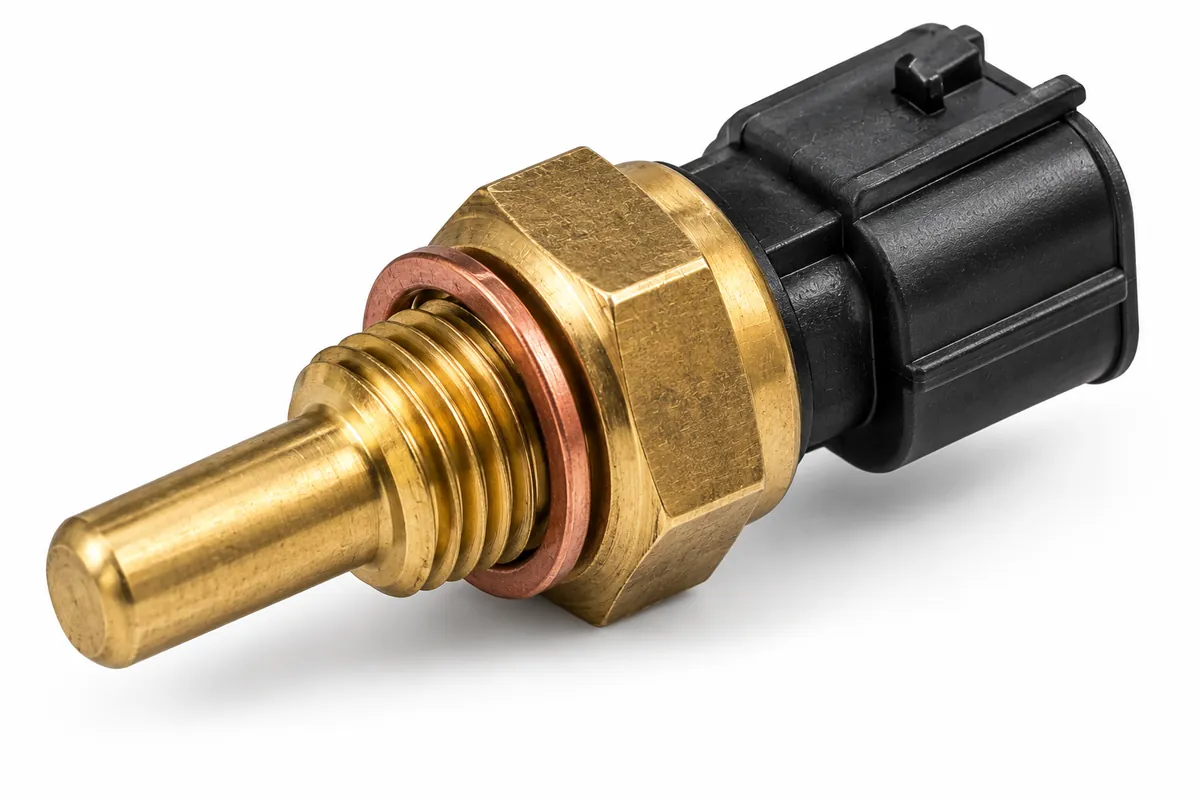
Mobile Coolant Temperature Sensor Diagnostics in Daytona Beach
A coolant-temperature-related trouble code or abnormal dashboard gauge does not automatically mean the engine coolant temperature sensor is defective.
Depending on the vehicle and symptoms, diagnosis can include checking:
- Engine coolant temperature scan data
- Cold-engine temperature plausibility
- Warm-up rate
- Sensor voltage
- Sensor resistance where appropriate
- Reference-voltage circuit
- Sensor ground
- Signal circuit
- Connector condition
- Wiring harness
- Coolant level
- Cooling-system leaks
- Thermostat operation
- Radiator-fan operation
- Actual engine temperature
- Intake air temperature comparison
- Ambient-temperature comparison
- Fuel trims
- Cold-start behavior
- Related diagnostic trouble codes
- Freeze-frame data
The objective is to determine whether the sensor itself is reporting temperature incorrectly or whether the reading reflects a real cooling-system condition.
What Is an Engine Coolant Temperature Sensor?
The engine coolant temperature sensor is an electronic temperature sensor installed where it can monitor engine coolant temperature.
It may be located in or near the:
- Cylinder head
- Engine block
- Thermostat housing
- Coolant outlet
- Intake manifold
- Coolant crossover pipe
The exact location depends on engine design.
The sensor is commonly abbreviated:
ECT sensor
for engine coolant temperature sensor.
What Does the Coolant Temperature Sensor Do?
The engine-control module uses coolant temperature to determine the engine’s thermal condition.
That information can influence:
- Cold-start enrichment
- Fuel injection
- Ignition timing
- Idle speed
- Radiator-fan command
- Emissions strategy
- Evaporative-emissions operation
- Closed-loop fuel control
- Transmission operation on some vehicles
- Temperature warning information
A false coolant-temperature signal can therefore affect much more than the dashboard gauge.
ECT Sensor vs. Temperature Gauge Sender
Older vehicles may use separate components for:
- Engine computer
- Dashboard gauge
One sensor may report temperature to the PCM while a separate sender operates the dashboard gauge.
Newer vehicles often use one coolant-temperature sensor, with the PCM sharing temperature information electronically with the instrument cluster.
This distinction matters.
A faulty gauge does not automatically mean the engine-control coolant sensor is bad.
Coolant Temperature Sensor vs. Thermostat
The coolant temperature sensor measures temperature.
The thermostat controls coolant flow between the engine and radiator.
ECT Sensor
Reports temperature electronically.
Thermostat
Mechanically or electronically regulates engine operating temperature.
A thermostat stuck open can cause the sensor to correctly report an engine that is running too cool.
A thermostat stuck closed can cause the sensor to correctly report excessive engine temperature.
Replacing the sensor will not repair a failed thermostat.
Coolant Temperature Sensor vs. Radiator Fan
The coolant sensor may provide the temperature information used by the PCM to decide when to operate the radiator fan.
However, the sensor does not physically move air.
A fan that does not run can be caused by:
- Fan motor
- Fan relay
- Fuse
- Wiring
- Fan control module
- PCM command issue
- Sensor input problem
The complete fan-control system must be considered.
Coolant Temperature Sensor vs. Coolant Level Sensor
These are different sensors.
Coolant Temperature Sensor
Measures coolant temperature.
Coolant Level Sensor
Detects whether coolant level is low in the reservoir or cooling system.
A low-coolant warning does not automatically indicate a failed temperature sensor.
How a Coolant Temperature Sensor Works
Most engine coolant temperature sensors use a thermistor.
A thermistor changes electrical resistance as temperature changes.
The PCM interprets that resistance through an electrical circuit and converts it into a temperature value.
The most common type used for engine coolant measurement is a:
negative temperature coefficient thermistor, or NTC thermistor.
NTC Coolant Temperature Sensor
With a negative-temperature-coefficient sensor:
- Cold coolant = higher resistance
- Hot coolant = lower resistance
As the engine warms, sensor resistance decreases.
The engine-control module interprets the corresponding change in signal voltage as rising coolant temperature.
Coolant Temperature Sensor Resistance
Resistance values depend on sensor design.
A typical ECT sensor may have:
- High resistance when cold
- Much lower resistance when hot
The exact resistance at a given temperature must be compared with the correct manufacturer specification.
There is no universal resistance value that applies to every vehicle.
Coolant Temperature Sensor Voltage
Many ECT circuits use a reference voltage supplied by the PCM.
As sensor resistance changes, the signal voltage changes.
On many systems:
- Cold temperature produces a higher signal voltage
- Hot temperature produces a lower signal voltage
The exact voltage relationship depends on circuit design.
A single generic voltage should not be used to condemn every sensor.
5-Volt Reference and ECT Sensor
Many engine-management sensors operate through a 5-volt reference or pull-up circuit from the PCM.
The coolant temperature circuit may use:
- Reference or pull-up voltage
- Sensor ground
- Signal return
If the reference circuit is missing or shorted, the temperature reading may become implausible even if the sensor itself is good.
Sensor Ground
The ECT sensor must have an accurate electrical ground or low-reference circuit.
A poor ground can cause:
- Incorrect temperature reading
- Intermittent reading
- Extremely hot or cold scan data
The sensor ground should be tested rather than assumed to be good.
Sensor Signal Circuit
The signal circuit carries temperature information back to the PCM.
Possible electrical faults include:
- Open circuit
- Short to ground
- Short to voltage
- Excessive resistance
- Intermittent connection
Any of these can create a false temperature value.
Coolant Temperature Sensor Connector
The connector should be inspected for:
- Corrosion
- Coolant intrusion
- Loose terminals
- Bent pins
- Broken locking tab
- Heat damage
- Oil contamination
- Harness damage
A new sensor will not correct a damaged connector.
Coolant Inside the Electrical Connector
A leaking sensor can sometimes allow coolant to enter or migrate toward the electrical connector.
Coolant intrusion can lead to:
- Corrosion
- High resistance
- Intermittent contact
If the connector is contaminated or damaged, both the sensor and connector condition need to be addressed.
Signs of a Bad Coolant Temperature Sensor
Possible symptoms include:
- Check-engine light
- Hard cold start
- Hard hot start
- Rough idle
- Poor fuel economy
- Rich running
- Lean running
- Black exhaust smoke
- Radiator fan running constantly
- Radiator fan not turning on when expected
- Temperature gauge reading incorrectly
- Engine temperature warning
- High idle
- Poor warm-up behavior
- Increased emissions
- Unusual fuel trims
These symptoms overlap with many other faults.
The sensor should be tested before replacement.
Coolant Temperature Sensor and Hard Starting
The PCM uses coolant temperature during starting to determine how much fuel enrichment is needed.
If the sensor reports the engine as much colder than it actually is, the computer may command excessive fuel.
If it reports the engine as much hotter than it really is, the computer may command too little cold-start enrichment.
Either condition can contribute to poor starting.
Hard Cold Start
A cold engine usually needs a richer mixture than a fully warmed engine.
If the coolant temperature sensor falsely reports a warm engine during a cold start, possible symptoms include:
- Extended cranking
- Poor initial idle
- Stall immediately after starting
Other causes of cold-start problems must still be considered.
Hard Hot Start
If the sensor falsely reports an extremely cold engine when the engine is already hot, the PCM may command excessive enrichment.
Possible results include:
- Difficult restart
- Fuel odor
- Rich mixture
However, hot-start problems can also be caused by:
- Fuel pressure
- Injector leakage
- Crankshaft sensor
- Starter performance
The ECT reading should be checked during the fault.
Coolant Temperature Sensor and Rich Running
If the sensor tells the PCM that the engine is much colder than reality, the computer may enrich the fuel mixture unnecessarily.
Possible symptoms include:
- Poor fuel economy
- Fuel smell
- Black smoke
- Fouled spark plugs
- Negative fuel trims once feedback becomes active
The sensor reading should be compared against actual engine temperature.
Coolant Temperature Sensor and Lean Running
If a cold engine is falsely reported as already hot, the computer may provide insufficient cold enrichment.
This can contribute to:
- Hard starting
- Poor cold idle
- Hesitation
Once the engine is fully warm and oxygen-sensor feedback is active, other control strategies may compensate to some degree.
Coolant Temperature Sensor and Fuel Economy
An inaccurate low-temperature reading can cause the engine to operate richer than necessary.
Possible effects include:
- Increased fuel consumption
- Carbon buildup
- Higher emissions
Poor fuel economy alone does not prove the ECT sensor is faulty because many other engine problems affect fuel usage.
Coolant Temperature Sensor and Black Smoke
A severely false cold reading can contribute to excessive fueling.
Possible symptoms include:
- Black exhaust smoke
- Fuel odor
- Rough running
However, black smoke can also result from:
- Leaking injectors
- Excessive fuel pressure
- MAF fault
- Other rich-running conditions
The actual cause should be diagnosed.
Coolant Temperature Sensor and Rough Idle
An inaccurate temperature input can cause an incorrect fuel or idle strategy.
But rough idle can also result from:
- Vacuum leak
- Ignition misfire
- Fuel injector
- MAF sensor
- Throttle-body problem
- Compression issue
The coolant reading should be evaluated alongside other engine data.
Coolant Temperature Sensor and High Idle
During cold operation, the PCM may command a higher idle speed.
If the sensor falsely indicates a very cold engine, the engine may stay in an inappropriate cold-start strategy longer than expected.
High idle can also come from:
- Vacuum leak
- Electronic throttle issue
- Idle-control fault on older vehicles
Diagnosis is required.
Coolant Temperature Sensor and Radiator Fan
The engine computer may use ECT information to decide when to activate cooling fans.
A false high-temperature signal may cause fans to run unnecessarily.
A false low-temperature signal may delay normal fan command.
However, fan operation also depends on:
- AC demand
- Vehicle speed
- Fan-control strategy
- Pressure sensor inputs
- Other operating conditions
Fan behavior should not be interpreted from coolant temperature alone.
Radiator Fan Runs Constantly
A fan that runs immediately or continuously can be caused by:
- ECT circuit open
- Sensor unplugged
- Implausible temperature signal
- Fan relay stuck
- Fan control module fault
- AC system request
- PCM failsafe strategy
Many vehicles intentionally command full fan operation when the PCM cannot trust the coolant-temperature signal.
This is a protective strategy, not proof that the engine is actually overheating.
Radiator Fan Does Not Turn On
Possible causes include:
- Fan motor
- Fuse
- Relay
- Fan control module
- Wiring
- PCM command
- Incorrect ECT signal
If the PCM correctly sees high coolant temperature but does not command or operate the fan, the sensor may be functioning properly.
Coolant Temperature Sensor and Temperature Gauge
On many modern vehicles, the instrument cluster receives temperature information from the PCM.
A false ECT reading can therefore affect the gauge.
However, gauge problems may also come from:
- Instrument cluster
- Communication network
- Separate gauge sender
- Wiring
The scan-tool temperature should be compared with the dashboard indication.
Temperature Gauge Reads Cold
Possible causes include:
- Thermostat stuck open
- Sensor reading too cold
- Open sensor circuit
- Gauge problem
- Cluster problem
An engine that takes too long to reach operating temperature should prompt thermostat evaluation before assuming a bad sensor.
Temperature Gauge Reads Hot
Possible causes include:
- Actual overheating
- False high sensor reading
- Shorted sensor circuit
- Gauge or cluster problem
A hot gauge should never automatically be dismissed as a sensor problem.
Actual engine temperature should be verified before continued operation.
Temperature Gauge Jumps Around
Rapid or implausible gauge changes may suggest:
- Loose connector
- Broken wire
- Intermittent sensor
- Electrical ground problem
- Low coolant exposing the sensor intermittently
The cooling system and electrical circuit should both be inspected.
Coolant Temperature Sensor and Actual Overheating
A good ECT sensor can correctly report a genuinely overheating engine.
Possible overheating causes include:
- Low coolant
- Coolant leak
- Thermostat stuck closed
- Water pump problem
- Radiator restriction
- Radiator fan failure
- Air trapped in cooling system
- Head-gasket or internal engine problem
Replacing the ECT sensor will not correct these failures.
Sensor Says Engine Is Hot but Engine Is Not
If scan data indicates an unrealistic high temperature while the engine is physically cold or only mildly warm, possible causes include:
- Sensor shorted internally
- Signal short to ground
- Wiring problem
The reading should be compared with:
- Ambient temperature
- Intake-air temperature
- Infrared or contact temperature measurements where appropriate
Sensor Says Engine Is Cold but Engine Is Hot
If the engine is fully warm but scan data remains very low, possible causes include:
- Open sensor
- Open signal circuit
- Poor connector
- High-resistance circuit
A thermostat stuck open can also keep the engine genuinely cooler than expected, so warm-up behavior matters.
Cold-Engine Plausibility Test
One of the most useful coolant-temperature checks can be performed before the engine is started after sitting long enough to become completely cold.
At that point, the ECT reading should generally be reasonably close to:
- Intake air temperature
- Ambient temperature
The values will not always be identical, but a large difference before startup can indicate an implausible sensor or circuit.
ECT vs. Intake Air Temperature
After the vehicle has sat overnight, the engine coolant and intake air are usually near the same ambient temperature.
For example, if:
- Intake air reads approximately 75°F
- Coolant reads -30°F or 250°F
before startup, the coolant-temperature signal deserves immediate investigation.
This comparison can be extremely useful because it does not require the engine to be running.
Coolant Temperature During Warm-Up
A normally operating engine should generally show coolant temperature rising progressively after startup.
The pattern should usually be:
- Gradual increase
- Stabilization near intended operating range
Abnormal patterns can include:
- Reading stuck at one value
- Sudden jumps
- Extremely rapid unrealistic increase
- Temperature remaining unusually low
These patterns can help separate electrical from cooling-system faults.
Thermostat Opening and Scan Data
As the engine warms, the thermostat eventually opens and allows greater coolant flow through the radiator.
Depending on vehicle design and driving conditions, scan data may show:
- Temperature rise
- Small stabilization or drop
- Normal regulation around operating range
A thermostat fault can alter this warm-up pattern even when the sensor is accurate.
Thermostat Stuck Open
A thermostat stuck open may cause:
- Slow warm-up
- Heater performance problems
- Low operating temperature
- P0128
The ECT sensor may be functioning perfectly while correctly reporting low coolant temperature.
P0128 Coolant Thermostat Code
P0128 generally indicates the engine is not reaching the expected operating temperature within the anticipated time or conditions.
Possible causes include:
- Thermostat stuck open
- Low coolant
- Sensor reading inaccurately low
- Cooling fan running excessively
P0128 does not automatically mean the coolant-temperature sensor needs replacement.
Thermostat Stuck Closed
A thermostat that does not open can cause real overheating.
The sensor may accurately report very high coolant temperature.
Replacing the sensor because the reading is high would leave the actual overheating problem unresolved.
Coolant Temperature Sensor and Low Coolant
Low coolant can affect temperature-sensor behavior if the sensor is no longer fully immersed in coolant.
Possible symptoms include:
- Erratic readings
- Sudden temperature changes
- Overheating
Low coolant should be corrected only after locating the reason the level is low.
Air Pocket Around ECT Sensor
Air trapped in the cooling system can create inconsistent temperature behavior.
Possible causes include:
- Recent cooling-system repair
- Improper bleeding
- Coolant leak
- Low coolant level
An air pocket can cause the sensor reading to change sharply without the sensor itself being defective.
Coolant Leak Near Temperature Sensor
The sensor or its sealing point can sometimes leak coolant.
Possible leak points include:
- Sensor threads
- O-ring
- Sealing washer
- Housing around sensor
A leak at the sensor does not necessarily mean the sensor’s electrical function has failed.
ECT Sensor O-Ring
Some coolant sensors seal with an O-ring.
A hardened or damaged O-ring can cause coolant leakage.
When the sensor is replaced, a new seal should generally be installed when required.
Threaded Coolant Temperature Sensor
Other sensors screw directly into:
- Cylinder head
- Intake manifold
- Coolant housing
They may use:
- Tapered threads
- Sealing washer
- Specified thread sealant
The correct installation method depends on the sensor design.
Thread Sealant on ECT Sensor
Thread sealant should only be used where the manufacturer specifies it.
Some threaded sensors rely on:
- Specific thread design
- Electrical grounding through threads
- Pre-applied sealant
Using excessive or inappropriate sealant can interfere with:
- Sensor seating
- Electrical grounding on certain designs
The correct procedure matters.
Coolant Temperature Sensor Trouble Codes
Common ECT-related codes include:
- P0115
- P0116
- P0117
- P0118
- P0119
- P0125
- P0128
The code family provides useful direction, but it does not automatically identify the failed part.
P0115 Engine Coolant Temperature Circuit
P0115 generally indicates a fault involving the engine coolant temperature circuit.
Possible causes include:
- Sensor
- Wiring
- Connector
- PCM circuit
The electrical path should be tested.
P0116 Coolant Temperature Range/Performance
P0116 commonly indicates that coolant-temperature behavior is outside the expected range or changes in an implausible manner.
Possible causes include:
- Sensor drifting
- Intermittent connection
- Thermostat problem
- Actual cooling-system issue
A range/performance code often requires evaluating temperature behavior rather than simply checking for an open or short.
P0117 Coolant Temperature Circuit Low Input
On many NTC ECT circuits, a low signal voltage corresponds to a very hot indicated temperature.
Possible causes include:
- Sensor shorted
- Signal circuit shorted to ground
- Wiring problem
The sensor should not be replaced without circuit testing.
P0118 Coolant Temperature Circuit High Input
On many systems, high signal voltage corresponds to an extremely cold indicated temperature.
Possible causes include:
- Open sensor
- Unplugged connector
- Broken signal wire
- Poor terminal connection
If a sensor is unplugged and the scan tool displays an extremely cold value, that may be normal failsafe behavior for an open circuit.
P0119 Intermittent Coolant Temperature Circuit
P0119 commonly indicates intermittent ECT operation.
Possible causes include:
- Loose connector
- Broken wire
- Sensor internal dropout
- Harness movement
Monitoring temperature data while carefully moving the harness may help locate the fault.
Extremely Cold Scan-Tool Reading
Some vehicles display an extreme low value such as approximately:
- -40°F
when the ECT circuit is open.
The exact number depends on software and manufacturer strategy.
An extreme cold reading on a hot engine often points toward an open circuit rather than an engine that is actually cold.
Extremely Hot Scan-Tool Reading
A shorted ECT circuit may cause the PCM to display a temperature at or near the upper limit of its programmed range.
If the engine is cold but scan data shows an extremely high value, inspect:
- Signal short to ground
- Sensor short
- Connector damage
Actual temperature should be verified.
Open-Circuit ECT Test
Disconnecting an ECT sensor may force the scan data toward the cold end of the range on many vehicles.
This can help establish how the PCM interprets an open circuit.
However, vehicle-specific circuit design should be considered.
The test should not be used carelessly to conclude the sensor is faulty.
Short-to-Ground Test
On many NTC systems, grounding the signal may make the PCM interpret the circuit as extremely hot.
This type of circuit test can help verify PCM and wiring response when performed correctly.
Improperly shorting the wrong circuit can damage electronics, so wiring diagrams and proper test methods should be used.
Resistance Testing an ECT Sensor
A disconnected sensor can often be measured with an ohmmeter.
Resistance can then be compared with:
- Actual sensor temperature
- Manufacturer resistance chart
A sensor whose resistance does not correspond reasonably with temperature may be defective.
Hot-Water Sensor Test
A removed thermistor-type sensor can sometimes be tested by monitoring resistance as its temperature changes in controlled water.
The resistance should change:
- Smoothly
- Predictably
Sudden open circuits or erratic changes can indicate an internal sensor problem.
Vehicle-specific specifications remain important.
Sensor Resistance Should Change Smoothly
A thermistor should not usually jump unpredictably between:
- Open circuit
- Very low resistance
- Normal resistance
as temperature changes gradually.
Intermittent electrical behavior can indicate:
- Internal fracture
- Connector problem
Comparing Scan Data to Actual Temperature
One of the strongest ECT diagnostic methods is comparing reported temperature to an independent temperature measurement.
Possible methods can include:
- Infrared thermometer
- Contact temperature probe
- Cooling-system temperature measurement
Measurement location matters because surface temperatures can differ from actual coolant temperature.
Infrared Thermometer Limitations
An infrared thermometer can help establish whether the engine is:
- Cold
- Warm
- Very hot
but it measures surface temperature rather than coolant directly.
Factors such as:
- Surface material
- Emissivity
- Measurement location
can affect accuracy.
It should be used as supporting evidence rather than treated as a perfect substitute for coolant measurement.
Coolant Temperature Sensor and Fuel Trims
An incorrect ECT reading can influence fuel strategy.
If the PCM believes the engine is cold when it is actually hot, it may command more fuel.
This can eventually produce:
- Negative fuel trims
- Rich exhaust feedback
However, fuel trims should not be used alone to diagnose the temperature sensor.
Coolant Temperature Sensor and Oxygen Sensors
The ECT reading influences when the PCM expects the engine and oxygen sensors to reach normal operating conditions.
Once the engine is warm, oxygen-sensor feedback becomes an important part of fuel control.
A false coolant reading can alter those strategies.
The oxygen sensor itself should not be blamed merely because the ECT input is wrong.
Coolant Temperature Sensor and MAF Sensor
The MAF sensor measures incoming air mass.
The ECT sensor measures engine coolant temperature.
Both inputs can influence fuel calculations.
A rich or lean condition should therefore be evaluated using multiple data points rather than replacing whichever sensor appears suspicious first.
Coolant Temperature Sensor and MAP Sensor
The MAP sensor measures intake-manifold pressure.
The ECT sensor reports thermal condition.
These sensors serve different functions.
A MAP-related drivability issue does not ordinarily indicate a coolant sensor fault.
Coolant Temperature Sensor and Spark Plugs
If an inaccurate cold reading causes prolonged rich operation, spark plugs may become:
- Carbon fouled
- Fuel fouled
However, replacing spark plugs will not correct the false coolant-temperature signal.
Likewise, fouled plugs do not prove the ECT sensor caused the condition.
Coolant Temperature Sensor and Catalytic Converter
Severely rich running over an extended period can increase the burden on the catalytic converter.
A coolant sensor that causes excessive fueling could contribute indirectly.
The underlying mixture problem should be corrected promptly.
Coolant Temperature Sensor and Transmission Operation
Some vehicles use engine coolant temperature as one factor in transmission control strategy.
Cold-engine operation may affect:
- Shift timing
- Torque-converter clutch operation
A false cold reading could therefore change transmission behavior without the transmission itself being defective.
The specific strategy varies by manufacturer.
Coolant Temperature Sensor and Heater Performance
The sensor does not directly produce cabin heat.
Poor heater performance is more commonly associated with:
- Low coolant
- Thermostat stuck open
- Restricted heater core
- Blend-door problem
A low ECT reading may simply be correctly reporting an engine that is not getting warm enough.
Coolant Temperature Sensor and AC Operation
On some vehicles, the PCM can alter or disable AC compressor operation during:
- Excessive engine temperature
A false high coolant-temperature signal may therefore affect AC operation indirectly.
However, an AC problem should not automatically be attributed to the ECT sensor.
Coolant Temperature Sensor and Engine Protection
If the PCM believes coolant temperature is dangerously high, it may use protective strategies such as:
- Running cooling fans at high speed
- Disabling AC compressor
- Reducing engine power
- Setting warning messages
The exact strategy varies by vehicle.
Coolant Temperature Sensor and Limp Mode
An implausible temperature input may trigger a failsafe strategy.
The PCM may substitute a default temperature and alter operation.
Symptoms can include:
- Cooling fans running constantly
- Check-engine light
- Reduced performance
Failsafe behavior does not necessarily mean the engine is physically overheating.
Intermittent Coolant Temperature Sensor
An ECT sensor can fail intermittently due to:
- Internal electrical fracture
- Heat
- Vibration
Possible symptoms include:
- Temperature reading suddenly jumping
- Fan turning on unexpectedly
- Stalling or drivability changes
- P0119
The signal should be monitored when the failure occurs.
Wiring Wiggle Test
When an intermittent connector or harness problem is suspected, carefully moving the wiring while observing live coolant temperature can reveal:
- Sudden temperature jumps
- Open-circuit reading
- Shorted reading
The harness should not be pulled aggressively.
Harness Damage Near ECT Sensor
Sensor wiring may be exposed to:
- Engine heat
- Oil
- Coolant
- Vibration
- Previous repair work
Damaged insulation or broken conductors near the connector are common areas to inspect.
Coolant Temperature Sensor and Corroded Connector
Coolant and moisture can cause terminal corrosion.
Corroded terminals can increase resistance and cause:
- Incorrect readings
- Intermittent readings
Cleaning may be possible in minor cases, while severely damaged terminals may require connector repair.
New Coolant Temperature Sensor but Code Returns
If an ECT code returns after sensor replacement, possible causes include:
- Wiring
- Connector
- Reference circuit
- Ground problem
- Incorrect sensor
- PCM fault
- Actual thermostat or cooling-system problem
Another sensor should not automatically be installed.
New ECT Sensor Still Reads Cold
Possible causes include:
- Thermostat stuck open
- Open circuit
- Connector problem
- Incorrect replacement sensor
- Air pocket
- Actual low operating temperature
The complete system should be rechecked.
New ECT Sensor Still Reads Hot
Possible causes include:
- Actual overheating
- Signal short
- Wrong sensor
- Wiring problem
Actual engine temperature should be verified immediately.
New Sensor but Radiator Fan Still Runs Constantly
Possible causes include:
- Stored failsafe condition
- Fan relay stuck
- Fan-control module issue
- AC request
- Wiring fault
- PCM strategy
The fan circuit should be diagnosed separately.
New Sensor but Temperature Gauge Is Still Wrong
Possible causes include:
- Instrument cluster
- Separate gauge sender
- Communication problem
- Wiring
- Actual engine-temperature issue
Comparing scan data with gauge position can help identify which side of the system is incorrect.
Coolant Temperature Sensor Replacement
Once diagnostics confirm that the sensor itself is faulty, replacement generally includes:
- Verify the complaint and diagnostic codes.
- Compare cold ECT data with intake-air or ambient temperature.
- Monitor warm-up behavior.
- Verify actual engine temperature when necessary.
- Check coolant level.
- Inspect for cooling-system leaks.
- Evaluate thermostat operation where indicated.
- Verify sensor electrical supply and ground.
- Inspect signal circuit.
- Inspect connector terminals and harness.
- Allow the engine to cool before opening the cooling system.
- Relieve cooling-system pressure safely when required.
- Locate the coolant temperature sensor.
- Disconnect the electrical connector.
- Position a drain container if coolant loss is expected.
- Remove components necessary for sensor access.
- Remove the old sensor carefully.
- Inspect the sensor sealing area.
- Compare the replacement sensor with the original.
- Install a new O-ring, washer, or seal where required.
- Apply specified thread sealant only when required.
- Install the new sensor.
- Tighten it to the correct specification.
- Reconnect the electrical connector.
- Restore any coolant lost during service.
- Bleed trapped air from the cooling system when required.
- Start the engine.
- Check for coolant leaks.
- Monitor coolant-temperature data during warm-up.
- Verify radiator-fan operation when appropriate.
- Confirm normal gauge behavior.
- Clear applicable codes.
- Road-test and verify that the original problem does not return.
The exact procedure varies by vehicle and sensor location.
Why the Engine Must Be Cool Before Replacement
A pressurized cooling system can contain coolant well above normal boiling temperature.
Opening the system while hot can release:
- Steam
- Scalding coolant
The engine should be allowed to cool before removing a coolant sensor or opening the cooling system.
Coolant Loss During Sensor Replacement
Because the ECT sensor often contacts engine coolant directly, removing it can allow coolant to escape.
The amount depends on:
- Sensor location
- Engine design
- Coolant level
The cooling system should be restored to the correct level after service.
Bleeding Air After Sensor Replacement
If enough coolant is lost to introduce air into the system, proper bleeding may be necessary.
Trapped air can cause:
- Unstable temperature readings
- Poor heater performance
- Overheating
Some vehicles have specific filling or vacuum-fill procedures.
Sensor Installed in Thermostat Housing
Many modern engines install the ECT sensor in or near a plastic thermostat housing.
Extra care may be required because aged plastic housings can become:
- Brittle
- Cracked
The housing should be inspected during service.
Sensor Integrated Into a Coolant Housing
On some vehicles, the temperature sensor may be integrated into a larger:
- Thermostat assembly
- Coolant outlet
- Housing
In those applications, the manufacturer may not service the sensor separately.
Correct service-part identification is important.
Sensor Integrated With Thermostat Assembly
Certain electronically controlled thermostat assemblies may combine:
- Thermostat
- Housing
- Sensor-related components
A code must still be diagnosed correctly because replacing an integrated assembly can be more involved than replacing a simple threaded sensor.
Engine Has More Than One Coolant Temperature Sensor
Some vehicles use multiple temperature sensors.
They may monitor:
- Engine coolant
- Cylinder head temperature
- Radiator outlet temperature
- Secondary cooling circuit
The code and scan data should be matched to the correct sensor before replacement.
Cylinder Head Temperature Sensor vs. ECT Sensor
Some engines use a cylinder-head-temperature sensor instead of or in addition to a conventional coolant sensor.
A CHT sensor measures cylinder-head temperature rather than coolant directly.
The diagnostic principles overlap, but they are not necessarily the same component.
Radiator Outlet Temperature Sensor
Some cooling systems monitor coolant temperature at the:
- Radiator outlet
- Lower hose
This can help the control system evaluate radiator performance.
That sensor should not be confused with the primary engine coolant temperature sensor.
OEM vs. Aftermarket Coolant Temperature Sensor
Temperature-sensor calibration matters.
The PCM expects a particular relationship between:
- Temperature
- Resistance
- Voltage
A sensor with incorrect calibration can physically fit but produce inaccurate temperature readings.
Using a quality sensor matched to the correct application helps avoid repeat problems.
Cheap Coolant Temperature Sensor Problems
A poorly calibrated replacement can cause:
- Incorrect gauge behavior
- Fuel mixture problems
- Fan operation problems
- Recurring trouble codes
If the problem begins immediately after replacement, sensor accuracy and part compatibility should be reconsidered.
Used Coolant Temperature Sensor
A used temperature sensor may appear functional, but its:
- Age
- Heat-cycle history
- Internal condition
are unknown.
A quality new sensor is generally a more predictable repair.
Does a Coolant Temperature Sensor Need Programming?
A conventional engine coolant temperature sensor generally does not require programming.
Once installed, the PCM reads its electrical value directly.
Some vehicles may require:
- Code clearing
- Adaptation reset
but basic sensor programming is normally unnecessary.
Coolant Temperature Sensor Replacement Cost
Coolant temperature sensor replacement cost depends on factors such as:
- Vehicle year, make, and model
- Sensor location
- Accessibility
- Sensor-only vs. integrated housing
- Coolant loss
- Cooling-system bleeding requirements
- Wiring or connector damage
- Diagnostic time
A sensor mounted directly on top of the engine can be much easier to replace than one buried beneath an intake assembly or integrated into a thermostat housing.
Call Jimmy’s Mobile Care at (386) 308-2509 with your vehicle information and symptoms so we can determine the appropriate coolant-temperature-sensor diagnostic service.
Why Diagnose the Coolant Temperature Sensor Before Replacing It?
Temperature-related symptoms often overlap with actual cooling-system problems.
Does the Cold Sensor Reading Match Ambient Conditions?
A large difference before startup can immediately point toward a signal problem.
Does the Temperature Rise Smoothly During Warm-Up?
Erratic jumps can suggest an electrical fault.
Does the Engine Actually Reach Operating Temperature?
A thermostat stuck open can keep the engine genuinely cool.
Is the Engine Truly Overheating?
A high sensor reading may be completely accurate.
Is the Coolant Level Correct?
Low coolant or trapped air can produce erratic temperature behavior.
Does the Sensor Have the Correct Electrical Reference?
A missing supply or ground cannot be repaired with a new sensor.
Is the Connector Corroded?
Poor terminal contact can imitate sensor failure.
Do the Cooling Fans Respond Correctly to PCM Command?
A fan fault should not be blamed on the temperature sensor if the PCM already sees the correct temperature.
Is the Gauge Wrong but Scan Data Correct?
That can point toward the instrument cluster or gauge circuit rather than the ECT sensor.
Is a P0128 Really a Thermostat Problem?
An engine warming too slowly commonly requires thermostat evaluation rather than automatic sensor replacement.
Testing these areas helps prevent unnecessary sensor replacement and makes sure a real overheating problem is not overlooked.
Mobile Coolant Temperature Sensor Diagnostics in Daytona Beach
Jimmy’s Mobile Care provides mobile car coolant temperature sensor diagnostics in Daytona Beach for vehicles experiencing:
- P0115
- P0116
- P0117
- P0118
- P0119
- P0128
- Hard cold starting
- Hard hot starting
- Incorrect temperature gauge
- Cooling fan running constantly
- Cooling fan not operating as expected
- Poor fuel economy
- Rich running
- Erratic temperature readings
- Suspected ECT wiring or connector problems
We compare coolant-temperature data with actual engine conditions, electrical circuit behavior, warm-up rate, coolant level, thermostat operation, and related cooling-system information before determining whether the sensor itself needs replacement.
Mobile Coolant Temperature Sensor Replacement in Daytona Beach
When diagnostics confirm a defective engine coolant temperature sensor and the repair is appropriate for mobile service, Jimmy’s Mobile Care can replace many ECT sensors at your Daytona Beach location.
After replacement, we can verify:
- Correct sensor installation
- Proper connector engagement
- No coolant leak at sensor
- Plausible cold-temperature reading
- Normal warm-up behavior
- Correct gauge response where applicable
- Cooling-fan operation where appropriate
- No immediate return of the original fault
If the actual problem is a stuck thermostat, low coolant, trapped air, radiator-fan failure, coolant leak, wiring problem, or genuine overheating condition, that issue must be addressed instead of unnecessarily replacing the sensor.
Schedule Car Coolant Temperature Sensor Diagnostics & Replacement in Daytona Beach
An inaccurate temperature gauge, cooling fan running constantly, hard starting, poor fuel economy, P0118 code, or P0128 code can point toward a coolant-temperature-related problem—but the sensor itself is only one possible cause.
The same symptoms can result from a thermostat that is stuck open or closed, low coolant, trapped air, a damaged connector, wiring problems, fan-control faults, or an engine that is genuinely overheating.
Jimmy’s Mobile Care tests the engine coolant temperature sensor and the related cooling-system and electrical information before replacement so the part is replaced only when the diagnosis supports it.
Call Jimmy’s Mobile Care at (386) 308-2509 to schedule car coolant temperature sensor diagnostics and replacement in Daytona Beach, FL. Call today and we'll come to your location.